From Code Commit to Security Report: Running PentestCode in Your CI/CD Workflow
What stands out about a tool like PentestCode is not the claim that it “does pentesting.” What matters is where it lives in your delivery pipeline and what kind of evidence it produces when nobody is carefully babysitting it.
My take is straightforward: an AI pentest agent belongs in CI/CD as a constrained security control, not as a release oracle. If you point it at real targets with broad credentials, open network access, and no human review path, you will get noisy results and probably a dangerous false sense of confidence.
Why automated pentesting belongs in a delivery pipeline
A delivery pipeline already checks code quality, dependency risk, and basic security regressions. Automated pentesting fits there because it tests the thing static analysis often misses: the deployed behavior of the app.
That matters for teams shipping web apps, APIs, and internal tools because a lot of real bugs are not syntax problems. They are:
- missing authorization checks,
- stale or exposed endpoints,
- unsafe default access,
- bad assumptions about authentication state,
- and regressions that only show up once the app is reachable.
If an automated agent can walk a staging environment and produce structured evidence, it can catch some of those issues earlier than a quarterly manual test. That is the good case.
The failure mode is just as clear: once the agent is treated as authoritative, teams start trusting a noisy scan as proof that a release is safe. That is where I draw the line. Pentest automation is useful as a control, but it does not replace review, threat modeling, or manual testing of logic flaws.
What the PentestCode report actually claims
The source material I was given is a news-discovery item, not the vendor’s own documentation. The confirmed claim is narrow: PentestCode is described as a new AI agent that automates penetration testing with 18 specialized tools, and the linked news item is dated 2026-07-17.
That is enough to justify a practical discussion, but not enough to assume the product is production-safe.
The 18-tool agent model and why that matters
The “18 specialized tools” detail matters because it points to breadth, not depth.
In practice, a multi-tool pentest agent usually needs separate capabilities for things like:
- discovery,
- request replay,
- form submission,
- auth checks,
- content extraction,
- parameter mutation,
- and reporting.
That breadth can help in CI/CD because it increases coverage across the app surface. It also raises the odds of:
- duplicate findings,
- false positives from weak inference,
- state-changing requests that were never meant to run in automation,
- and load spikes against a shared staging system.
So the tool count is not the interesting part. The control plane around those tools is.
What is confirmed by the source vs what still needs verification
| Category | Confirmed by the source | Still needs verification | Why it matters |
|---|---|---|---|
| Product claim | PentestCode is described as an AI agent for automated penetration testing | Exact implementation and vendor details | Avoid assuming more than the headline says |
| Tooling | The report says it uses 18 specialized tools | What those tools are, and how they behave | Tool mix determines blast radius and coverage |
| Operational safety | Not stated | Auth model, rate limits, safe-mode behavior, isolation model | These decide whether CI use is realistic |
| Accuracy | Not stated | False-positive rate, benchmark method, reproducibility | This determines whether the output is actionable |
| Deployment fit | Not stated | Whether it supports staging-only, allowlists, or read-only scanning | This affects whether it can be safely automated |
The source is thin enough that I would not treat any “PentestCode can fully automate pentesting” claim as confirmed. I would treat it as a product claim that still needs independent testing.
Where this fits in CI/CD without turning builds into chaos
Pre-merge checks, nightly jobs, and release gates
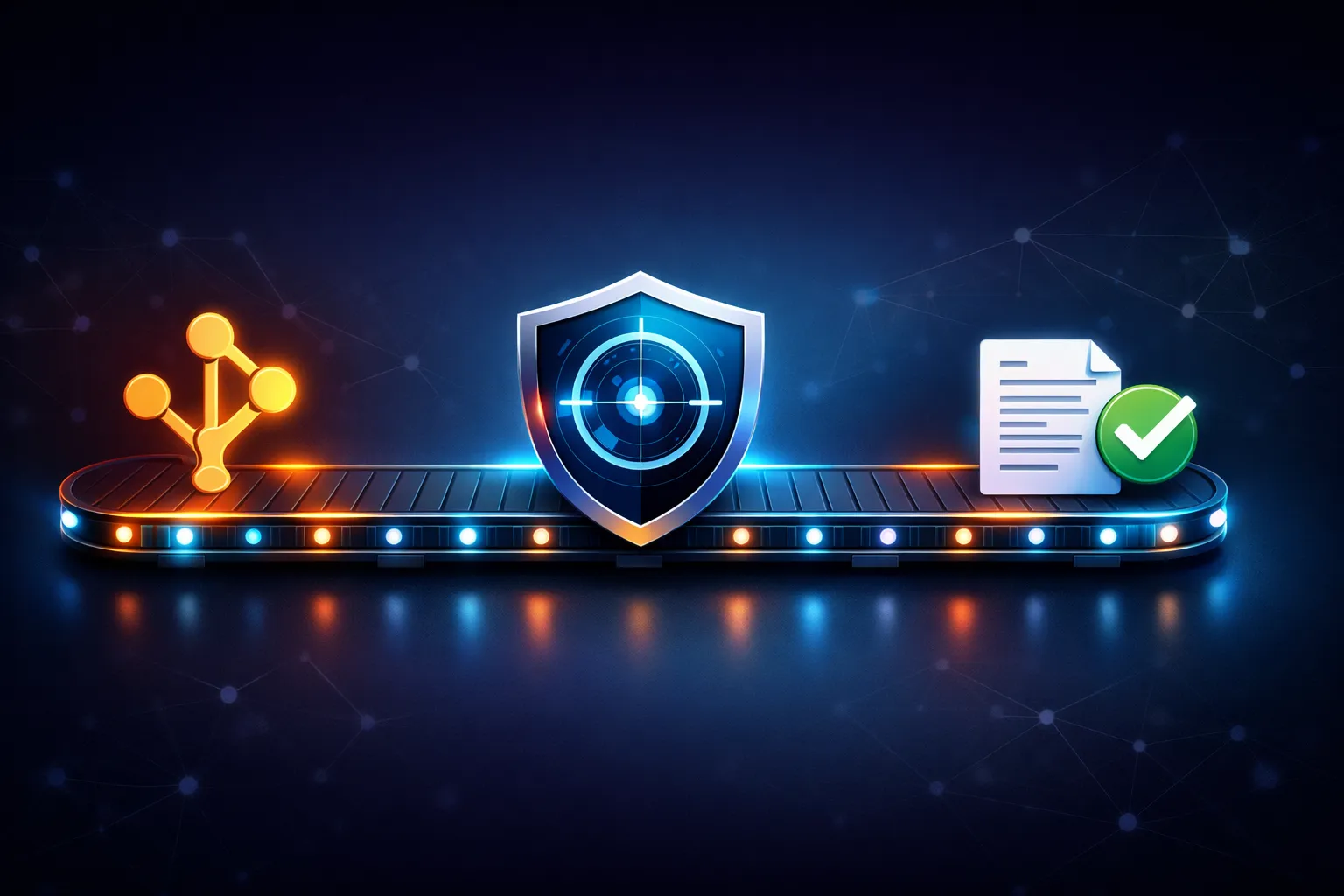
I would split the workflow into three layers.
-
Pre-merge checks
Keep these cheap. Use them for static validation, unit tests, and maybe very narrow security checks against mock services or ephemeral test fixtures. I would not run a broad AI pentest on every pull request. -
Nightly jobs
This is the best place for broad automated pentesting. Nightly runs can scan staging, compare drift, and give you a baseline for what changed since yesterday. That is where an agent’s breadth is useful. -
Release gates
Use this carefully. I would only gate releases on well-understood, high-confidence findings, and only after the false-positive rate is stable. Otherwise the team will just learn to ignore the gate.
The reason is operational, not philosophical. Security tools that block builds need high precision. If the agent is noisy, release pressure will push developers to waive findings blindly.
Defining scope, targets, and authorization boundaries
If you run a pentest agent in CI, scope has to be explicit.
At minimum, define:
- allowed domains and base URLs,
- allowed accounts and roles,
- allowed HTTP verbs,
- excluded paths,
- maximum request volume,
- and abort conditions.
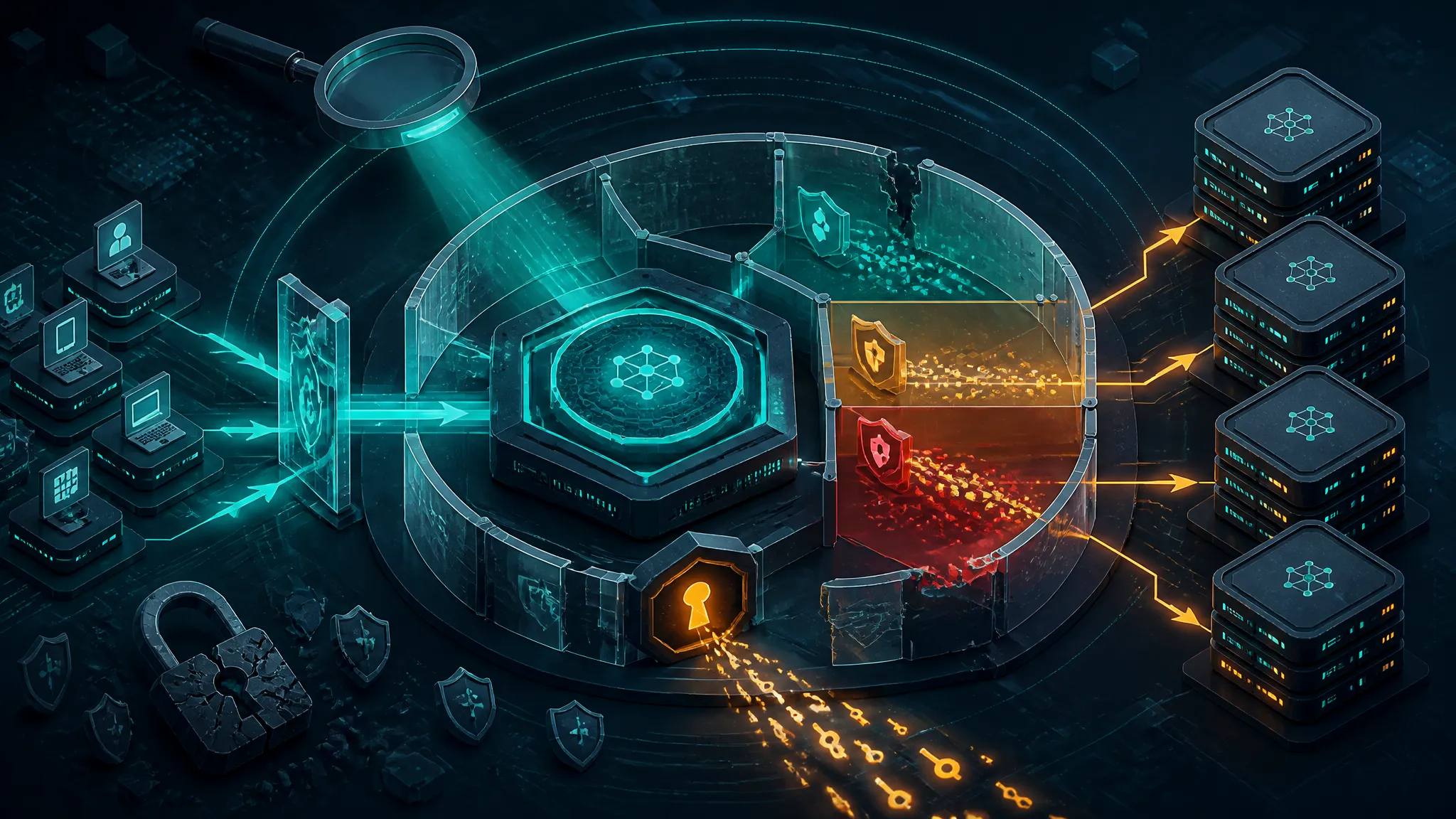
I would enforce this outside the agent as well, with network and job-level controls. That way the runner fails closed even if the agent goes off-script.
A practical boundary looks like this:
| Boundary | Safe default |
|---|---|
| Environment | staging first, not production |
| Credentials | read-only or test-only accounts |
| Hosts | explicit allowlist only |
| Methods | GET/HEAD by default, limited POST only when approved |
| Volume | low, fixed request caps |
| Actions | no destructive operations unless manually enabled |
Designing a safe pipeline for an AI pentest agent
Run the agent in an isolated container or job runner
Do not run the agent on a shared developer machine or a generic CI runner with broad access.
Use an ephemeral job, a locked container, or a dedicated runner with:
- no long-lived secrets,
- a minimal filesystem,
- a pinned tool image,
- and controlled outbound network access.
A safe shape for the invocation looks like this:
docker run --rm \
  --network=bridge \
  --cpus=2 \
  --memory=2g \
  -e TARGET_URL="https://staging.example.com" \
  -e AUTH_TOKEN="$READ_ONLY_TOKEN" \
  -v "$PWD/artifacts:/artifacts" \
  pentestcode:latest \
  run --target "$TARGET_URL" --output /artifacts/report.json
That example is not really about Docker. It is about isolating the blast radius. If the agent misbehaves, it should only be able to talk to the scoped target and write to the artifact directory.
Lock down credentials, allowlists, and network egress
Use the weakest credentials that still let the agent test the intended paths.
I would avoid:
- admin accounts,
- payment-method access,
- user management privileges,
- and any token that can mutate real customer data.
For GitHub Actions or similar systems, keep secrets out of untrusted pull requests, and separate the pentest job from normal build jobs. The agent should not inherit the same credential set your deploy step uses.
A minimal job policy should answer three questions:
- What can it reach?
- What can it authenticate as?
- What can it change?
If you cannot answer all three, you are not ready to automate it.
Prevent destructive actions and control request volume
This is where AI agents can get messy fast.
I would put guardrails in two places:
- At the agent level: disable dangerous verbs or destructive plugins by default.
- At the network or proxy level: block unapproved hosts, cap request rate, and log each request.
A simple method policy is enough to start:
| Method | Default stance | Reason |
|---|---|---|
| GET, HEAD | allow | useful for discovery and verification |
| POST | limited allow | may be needed, but can mutate state |
| PUT, PATCH, DELETE | deny by default | too risky for unattended runs |
If a job needs a state-changing request to verify a real issue, I would require a human to approve that specific test case, not the whole scan.
What evidence should come out of the run
Findings, request traces, response snippets, and severity labels
A pentest agent is only useful if it returns evidence, not just conclusions.
I want the output to include:
- a finding ID,
- affected endpoint,
- request method and path,
- request and response snippets,
- severity,
- confidence,
- and a note about what was actually verified.
A useful finding object looks like this:
{
  "id": "FND-014",
  "severity": "high",
  "confidence": "medium",
  "method": "POST",
  "path": "/api/projects/42/share",
  "summary": "Unauthenticated access to project sharing action was observed in staging.",
  "evidence": {
    "request": "POST /api/projects/42/share",
    "response": "HTTP/1.1 200 OK"
  },
  "status": "needs_human_verification"
}
That format forces the tool to separate proof from interpretation. I like that because it makes review faster and cuts down on “AI said so” reporting.
Converting raw output into a readable security report
Raw JSON is fine for machines. Humans need a short report.
I would transform the output into:
- a summary by severity,
- a top-five list of issues,
- links to evidence artifacts,
- and a short remediation note per finding.
A quick way to inspect the result in CI is with jq:
jq -r '
  .findings[]
  | [.severity, .confidence, .method, .path, .summary]
  | @tsv
' artifacts/report.json
That gives reviewers a compact view they can sort or paste into a ticket. If the tool cannot produce structured output, I would not trust it in a pipeline.
A practical workflow example
A sample GitHub Actions or CI job layout
This is the shape I would start with:
name: pentestcode-nightly

on:
  workflow_dispatch:
  schedule:
    - cron: "15 3 * * *"

jobs:
  scan-staging:
    runs-on: ubuntu-latest
    timeout-minutes: 45
    permissions:
      contents: read

    steps:
      - uses: actions/checkout@v4

      - name: Run PentestCode
        env:
          TARGET_URL: https://staging.example.com
          READ_ONLY_TOKEN: ${{ secrets.STAGING_READ_ONLY_TOKEN }}
        run: |
          mkdir -p artifacts
          pentestcode run \
            --target "$TARGET_URL" \
            --auth-token "$READ_ONLY_TOKEN" \
            --format json \
            --output artifacts/report.json \
            --max-requests-per-minute 30

      - name: Summarize findings
        run: |
          jq -r '.summary' artifacts/report.json || true
          jq -r '.findings[] | [.severity, .path, .summary] | @tsv' artifacts/report.json || true

      - uses: actions/upload-artifact@v4
        with:
          name: pentestcode-report
          path: artifacts/
I would not attach this to every pull request. I would start it on a schedule against staging, then decide whether selected findings should become release blockers.
What the command sequence and artifacts should look like
A healthy run should leave behind a predictable set of artifacts:
artifacts/
  report.json
  request-log.ndjson
  summary.md
  environment.txt
And the report should make the outcome obvious at a glance:
severity  confidence  path                         summary
high      medium      /api/projects/42/share       Unauthenticated access to sharing action was observed in staging
medium    high        /login                       Rate limit behavior was inconsistent under repeated requests
low       medium      /robots.txt                  Sensitive path discovery hints were exposed
That kind of output is useful because it is reviewable, diffable, and easy to archive.
Failure modes that can make the result look better than it is
False positives, missing authentication, and stale test environments
Three things can make an automated pentest look impressive while missing the real risk.
| Failure mode | What happens | Why it misleads you |
|---|---|---|
| Missing authentication | The agent tests anonymous paths only | It misses role-based bugs behind login |
| Stale staging data | Staging differs from production | Findings may not match the live system |
| False positives | The agent misreads redirects or error pages | The report looks busy but is low value |
If the environment is not close to production, the scan can be worse than useless. It can create a false sense of coverage.
Why an AI agent still needs human review on high-risk findings
I would never auto-approve a high-severity result from an AI agent.
Human review is still needed for:
- privilege boundary issues,
- business logic flaws,
- payment or identity flows,
- multi-step authorization failures,
- and anything that claims real-world impact.
The agent can find surface area and produce leads. A human should confirm exploitability, scope, and user impact before a ticket becomes a release blocker.
My recommendation for teams adopting this kind of tool
Start with staging and scheduled scans before blocking releases
If you want the practical rollout plan, it is this:
- Run the agent on staging only.
- Schedule it nightly.
- Record artifacts and compare runs over time.
- Tune scope and allowlists.
- Only then consider selective release gating.
That order matters. It lets you measure noise before you let the tool affect delivery.
Keep manual testing for logic flaws, privilege boundaries, and high-impact changes
My final recommendation is to treat PentestCode-style automation as one layer in a broader security program.
Use it for:
- broad regression checks,
- endpoint discovery,
- response validation,
- and evidence collection.
Keep humans on:
- authz reviews,
- business logic,
- chained attacks,
- and any finding that could change customer access or data integrity.
Conclusion: use the agent as a control, not a verdict
The source claim is simple: PentestCode is a new AI agent with 18 specialized tools for automated penetration testing. That may be useful, but the number of tools is not what makes it safe.
What makes it safe is the pipeline around it:
- narrow scope,
- isolated execution,
- locked-down credentials,
- rate limits,
- structured evidence,
- and mandatory human review for high-risk results.
If you build that system, an AI pentest agent can be a decent control. If you skip it, you are just automating uncertainty faster.