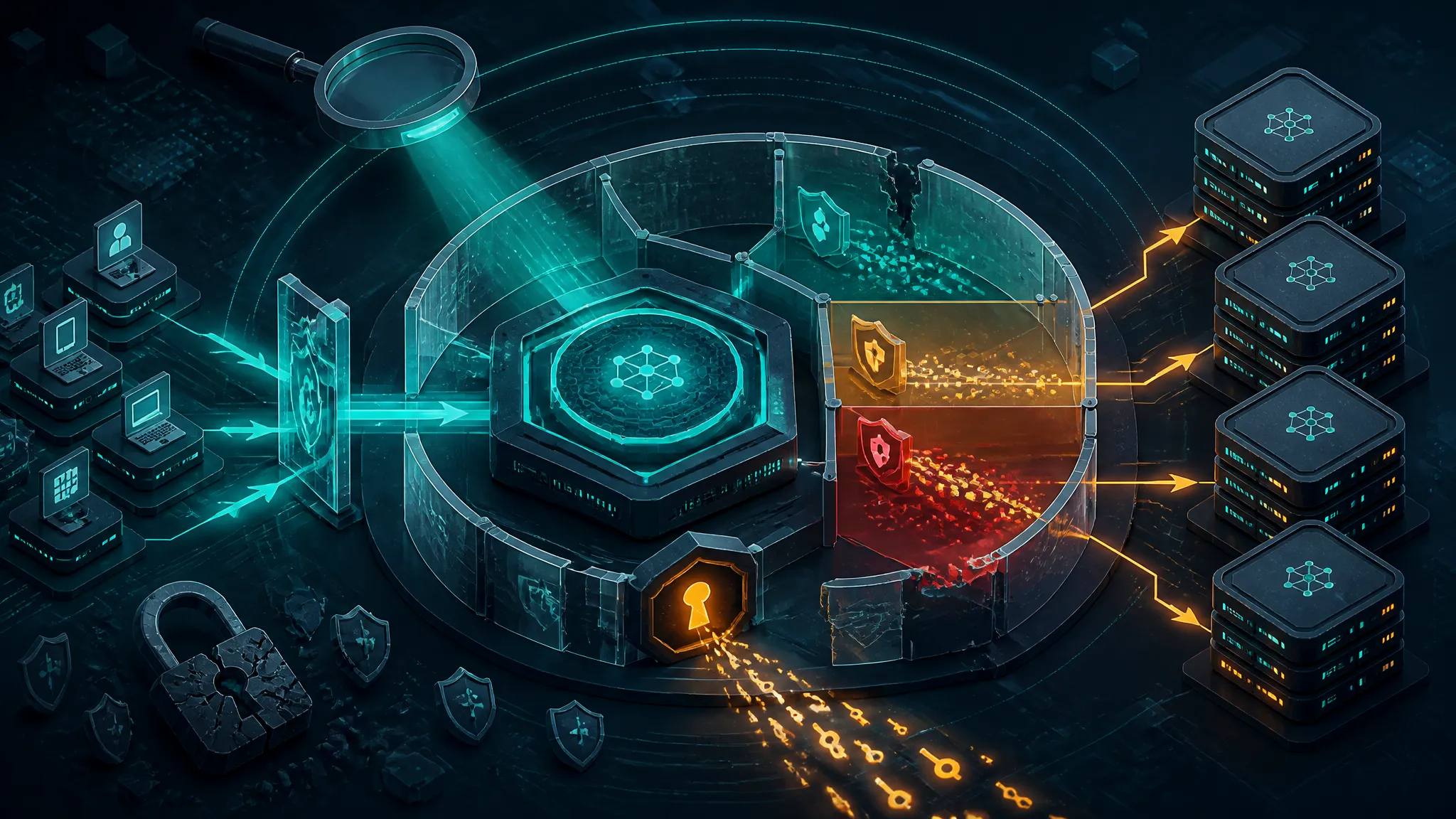
Testing PentestCode: An AI Agent That Automates Penetration Testing from Recon to Exploit
I only have the public report and the headline claim, so I am treating PentestCode as a claim set, not as a product I independently verified. The part that matters is not the word “AI.” It is the reported ability to chain recon into exploitation with 18 specialized tools. That changes the risk model from “chatbot that suggests tests” to “automation that can touch live attack surfaces.”
What PentestCode claims to automate
Separate the confirmed report from the marketing gloss
From the source material I was given, these are the only confirmed facts:
| Claim | Status | Why it matters |
|---|---|---|
| There is a tool called PentestCode | Confirmed by the report title | Establishes the subject |
| It is described as an AI agent | Confirmed by the report title | Suggests orchestration on top of model output |
| It automates penetration testing | Confirmed by the report title | Implies workflow automation, not just advice |
| It covers recon through exploit | Confirmed by the report title and summary | Indicates the agent is not read-only |
| It uses 18 specialized tools | Confirmed by the report title | Tool inventory is the real security boundary |
What I did not confirm from the provided source:
- the exact tool list
- whether the agent runs autonomously or only under supervision
- whether it can execute post-exploitation actions
- whether the product has been tested independently
- any success rate, benchmark, or false-positive rate
That separation matters. A lot of security marketing hides behind the phrase “AI agent,” but the real question is always: what can the tool actually do, and with what privileges?
Why the “18 specialized tools” detail matters more than the AI label
The number of tools tells you more than the branding does. It suggests a workflow engine with an LLM on top, not a single model making guesses.
In security work, tool scope is the boundary that counts:
- a port scanner is noisy but mostly read-only
- an HTTP crawler can trigger rate limits or auth flows
- an exploit validator may change state
- a post-exploitation module can cross into destructive or unauthorized territory
So when a product says “18 specialized tools,” I immediately want the inventory. Not because the count itself is magical, but because the tools define the blast radius. If the list includes only passive recon and reporting helpers, the risk is much lower. If it includes credential testing, exploit validation, or shell execution, then the product is no longer just assisting a pentest. It is operating inside one.
Why this is interesting to defenders and red teamers
The real gain: recon speed, chaining, and report triage
There is a real operational benefit here, and I do not think that is hype. A well-bounded agent can speed up the boring parts of testing:
- collect subdomains and live hosts
- fingerprint services and headers
- correlate versions with known issues
- prioritize likely misconfigurations
- turn raw output into a first-pass report
That helps red teams because recon is often the slowest part of an engagement. It also helps defenders because it turns one-off manual work into repeatable coverage. If the agent really can keep context across tools, it may be better at chaining than a human who is juggling notes, tabs, and terminal windows.
The caveat is simple: speed only helps if the tool is accurate. Fast noise is still noise.
The real risk: an agent that crosses from observation into action
The moment the agent goes from “observe” to “act,” the failure mode changes.
A passive scanner can annoy a service. An active agent can:
- hit lockout thresholds
- trigger MFA or password reset flows
- create helpdesk alerts
- mutate test records
- change state in shared staging environments
- disturb fragile production services if the scope is wrong
That is why I would not judge PentestCode by whether it can produce a flashy demo. I would judge it by whether it can be safely constrained when the target is real.
How an autonomous pentest chain usually works
Reconnaissance inputs: subdomains, ports, headers, exposed services
A typical chain starts with inventory-like data:
- subdomains from DNS or certificates
- open ports and banners
- HTTP headers
- TLS details
- exposed admin panels or API endpoints
This part is low drama, but it matters because everything later depends on the quality of the first pass. If the agent misses one host, the rest of the chain can be beautifully wrong.
Enumeration and hypothesis-building: turning findings into next steps
This is where the “agent” label starts to matter. A decent system should be able to say:
- this banner looks old enough to warrant version validation
- this endpoint appears to require auth
- this admin interface may deserve a safe default-credential check in a lab
- this API response suggests a missing object-level authorization check
That is not exploitation yet. It is hypothesis building. Good tooling narrows the search space. Bad tooling invents certainty.
Exploitation and validation: where tooling becomes operationally sensitive
This is the dangerous part. If the product really validates exploits, then the evaluation criteria need to be stricter than “it found something.”
I would want to know:
- does it validate with safe probes or with destructive payloads?
- does it require explicit approval before any state change?
- does it know the difference between a lab target and production?
- does it log every tool call and parameter?
A pentest agent that performs active validation can be useful in a lab and risky in a live environment. That is not a contradiction. It just means the mode of operation matters as much as the capability.
Post-exploitation claims to treat cautiously unless independently verified
I would be especially skeptical of any implied post-exploitation capability unless it is independently documented.
A lot of products use vague language here. “From recon to exploit” sounds impressive, but it leaves open a critical question: does the agent stop at validating a finding, or does it continue into lateral movement, data access, or persistence-style behavior?
My default posture is simple: if the source material does not clearly and reproducibly show that phase, I treat it as unverified.
Where AI agents tend to fail in security work
False positives, stale context, and tool-output hallucination
This is the failure mode I would expect first.
Agents are good at turning partial signals into a narrative. Security work punishes that habit. A banner can be stale. A reverse proxy can hide the real server. A test endpoint can belong to a shared staging environment. Tool output from one host can get mentally attached to another host if the context window is messy.
The failure is not always “the model made up a fact.” More often it is worse: the model assembled a plausible but wrong story from real fragments.
Authorization boundaries the agent cannot infer safely
An agent cannot safely infer scope from DNS, HTTP headers, or IP ownership alone.
It does not know whether:
- a subdomain is in a bug bounty scope
- a host is production or a canary
- a service is owned by the target team or a vendor
- a route is protected by business rules the tool cannot see
That is why scope must be explicit. If the agent is left to guess, it will eventually cross a boundary you did not mean to give it.
Rate limits, lockouts, and accidental service impact
Even “read-only” recon can cause problems. Large scans, repeated auth checks, and aggressive crawling can trigger rate limits or lockouts. If the agent uses multiple tools in sequence, those effects compound.
This is one reason I prefer low concurrency and hard stop conditions in anything that touches a live environment. A fast agent with no throttle is just a denial-of-service generator with better phrasing.
Unknown unknowns: chained mistakes across multiple tools
The hardest bugs are not in one tool. They are in the handoff between tools.
Example of the pattern, not a claim about PentestCode specifically:
- Tool A fingerprints a service incorrectly.
- Tool B uses that fingerprint to choose the wrong test path.
- Tool C interprets the noisy result as a meaningful signal.
- The report now contains a confident conclusion built on a broken chain.
That is how automation turns small mistakes into polished falsehoods.
A practical way to evaluate a tool like this safely
Test in a lab first with synthetic targets and disposable credentials
If I were evaluating PentestCode, I would start with a disposable local target, not a real customer asset.
A minimal safe target looks like this:
python3 -m http.server 8080
Observed output:
Serving HTTP on 0.0.0.0 port 8080 (http://0.0.0.0:8080/) ...
That is not the tool under test. It is the kind of harmless target I would use to verify that the agent can be constrained to a local allowlist before it ever touches a real system.
Measure precision, not just “successful findings”
A demo that shows one good finding and ten false ones is not impressive. It is expensive.
I would measure:
| Metric | What it tells you |
|---|---|
| Precision | How many findings were actually valid |
| Recall | Whether it missed obvious issues |
| Tool-call count | How noisy the agent is |
| Scope violations | Whether it left the allowlist |
| Human correction rate | How much cleanup the operator must do |
If a product only measures “successful exploit chains,” it is probably optimizing for spectacle, not reliability.
Log every tool call and compare the plan to the outcome
I would want deterministic logs for every step:
{
  "target": "127.0.0.1:8080",
  "tool": "http_probe",
  "action": "request",
  "args": {
    "path": "/"
  },
  "result": "200 OK"
}
The point is not just auditability. It is replayability. If the agent says it found a weakness, a human should be able to trace exactly how it reached that conclusion.
Check whether the agent can be constrained to read-only recon mode
This is the first feature I would test.
If the product cannot be locked into:
- passive recon only
- explicit tool allowlists
- approval for any state-changing action
- denial of credential stuffing or exploit execution
then I would not trust it near a real environment.
Read-only mode is the floor, not the feature.
What I would want to see before trusting it in real workflows
Clear scope controls, approval gates, and per-action policy checks
I want policy enforced at the action level, not just in a prompt. The agent should not be able to decide on its own to “try the next thing” if the next thing is outside scope.
For anything beyond passive recon, I would expect an approval gate that is visible, logged, and revocable.
Deterministic audit logs for prompts, tool calls, and outputs
Good logs should include:
- the prompt or task instruction
- the tool name
- the exact arguments
- the response
- the decision the agent made next
Without that, you cannot explain the result to a client, a teammate, or yourself.
Evidence that findings are reproducible by a human operator
This is the line between a useful assistant and a confidence machine.
If the agent reports a finding, a human should be able to reproduce it with a bounded test and reach the same conclusion. If they cannot, the finding is either unstable or not understood well enough to trust.
Safe defaults that prevent destructive or out-of-scope actions
The safe default should be boring:
- no exploit execution unless explicitly enabled
- no credential reuse without approval
- no write actions against shared systems
- no persistence, lateral movement, or cleanup ambiguity
- no scanning outside the allowlist
If a product ships with the opposite defaults, it is asking for an incident.
Defensive takeaways for security teams
Treat AI pentest agents as high-speed operators, not judgment engines
That is my bottom line. They may be excellent at chaining routine steps and summarizing output. They are not a substitute for human scope judgment, exploit verification, or risk calls.
Harden the obvious choke points: auth, rate limiting, segmentation, logging
The same controls that frustrate human attackers also frustrate agents:
- strong auth boundaries
- segmented management interfaces
- rate limiting and lockout tuning
- alerting on repeated auth or enumeration patterns
- good logs on admin and API activity
If an agent can meaningfully help a tester, it can also amplify a weak perimeter.
Watch for tool abuse patterns that look like legitimate admin activity
One subtle risk is that agent traffic can resemble normal automation:
- repeated endpoint enumeration
- token refresh attempts
- config discovery
- broad API reads
- scripted probes across many hosts
That makes detection harder, not easier. You want baselines that can distinguish sanctioned testing from unexpected automation.
Update policy for external agents the same way you would for contractors
This is the closest analogy I know.
You would not hand a contractor unlimited production access because they asked nicely. You would scope their access, define approval points, log their work, and revoke access when the task is done.
AI agents deserve the same discipline.
My bottom line on PentestCode
Useful for structured recon and validation, not a replacement for human review
My view is straightforward: if PentestCode really does orchestrate 18 specialized tools from recon into exploit, then the product is potentially useful as a force multiplier. That makes it interesting to defenders and red teamers alike.
But it is not interesting because it is “AI.” It is interesting because it can compress time between observation and action.
That also makes it risky.
The security question is not whether it can automate steps, but whether it can be bounded
That is the real test. A bounded agent can help a team enumerate, triage, and document findings. An unbounded agent is just a fast operator with weak judgment.
I would trust PentestCode in real workflows only after I saw:
- strict scope enforcement
- read-only mode by default
- deterministic logs
- reproducible findings
- explicit approval gates for any action that changes state
Until then, I would treat it as promising tooling for controlled recon, not as something to let loose on live systems.
Share this post
More posts

The Claude Penetration-Testing Jailbreak: A Technical Analysis of Alignment Bypass and Prompt Injection Defenses

Why Prompt-Level Guardrails Miss Dangerous Tool Calls in TypeScript Agent Loops