Why Ephemeral CI Runners Break Standard Kernel Patch Triage
Why the Kernel Is the Hardest Part of a CI Stack to Patch
The kernel on a CI runner is the one part of the stack you cannot patch by rebuilding a Dockerfile. Everything else in your CI/CD pipeline carries a version you control: base images, toolchain, action pins, even the runner binary if you build your own. The kernel comes from the node — and on an autoscaling or ephemeral pool, that node is built to disappear before anyone looks at it. This post maps why standard kernel patch triage breaks on that kind of fleet, separates what the public record actually confirms about the current Linux kernel vulnerabilities from what it does not, and closes with a triage checklist you can run against your own runners.
That mismatch ran into reality in September 2026. On 2026-09-19, reporting described CISA adding three Linux kernel vulnerabilities to its Known Exploited Vulnerabilities catalog, with a patch deadline for federal agencies landing that Sunday; a separate report the same day covered a critical "Copy Fail" kernel bug that lets a local attacker reach root. Both land on hosts that get recycled within the hour, which is exactly why the usual triage path falls apart.
What the Public Record Actually Supports
The public reporting here is headline-level. Better to say that outright than to invent version ranges that make the post look finished.
Confirmed From the Reporting
- CyberSecurityNews and The Hacker News both reported on 2026-09-19 that CISA added three Linux kernel vulnerabilities to the Known Exploited Vulnerabilities catalog, with a deadline for federal agencies to patch.
- TechJuice reported on 2026-09-19 a separate critical "Copy Fail" Linux kernel bug that allows local attackers to gain root access. Note that "critical" here is the publisher's characterization in the headline, not a vendor-published severity score.
Not Confirmed by the Reporting
The reporting carries no CVE identifiers, no affected version ranges, no kernel subsystem names, and no vendor-confirmed severity or CVSS score for "Copy Fail." I am not guessing at any of it. The KEV entry is the authoritative list — pull the real CVE IDs from known_exploited_vulnerabilities.json instead of a news summary, then resolve fixed versions from your distribution's own advisory or the upstream stable branch. Treat every version-specific statement below as something to confirm against those sources.
Why Ephemeral Runners Break Normal Kernel Triage
The Kernel Is Not in the Image
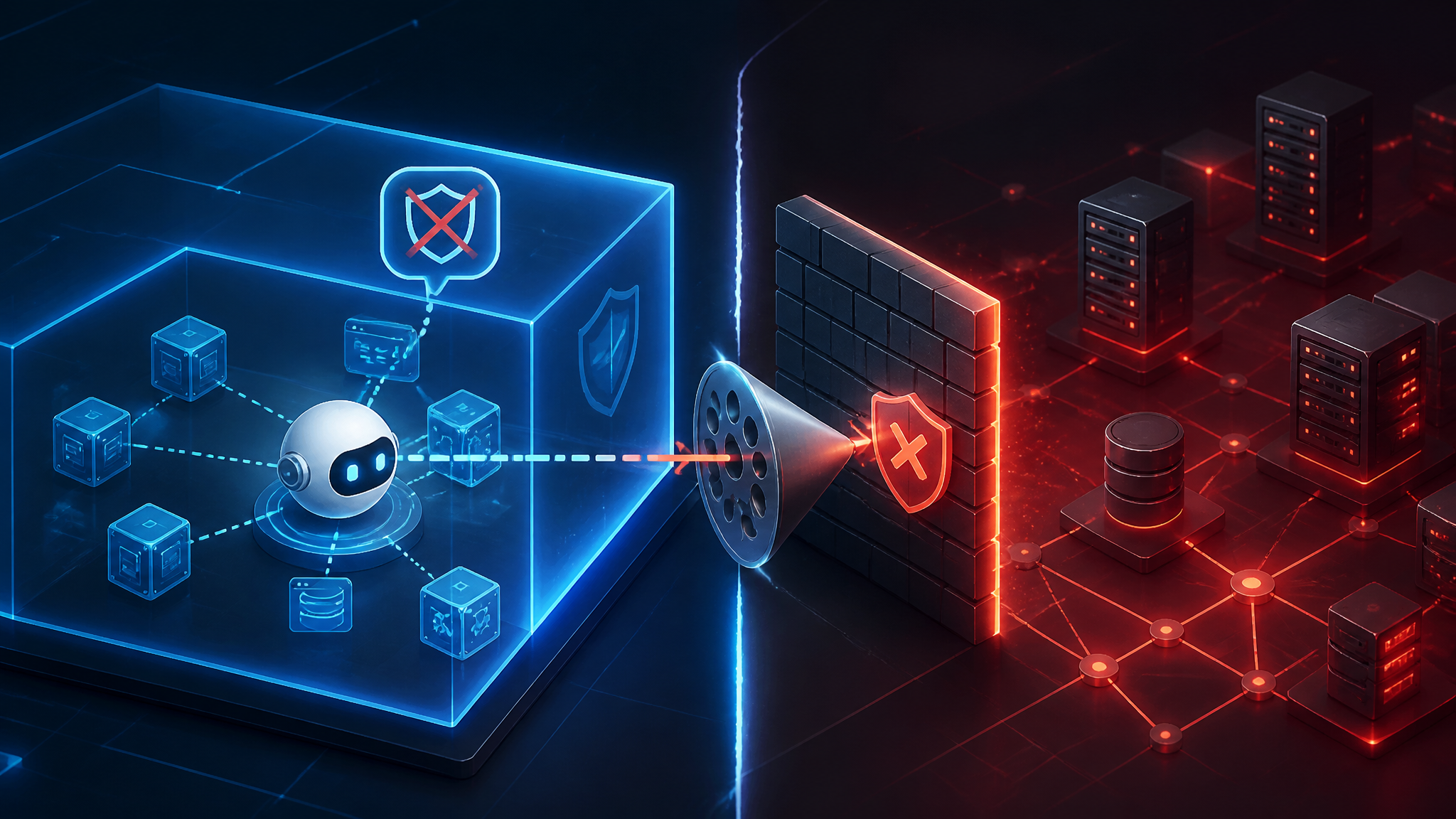
Containers share the host kernel. No FROM line changes the syscall surface the container actually runs on. Build a clean, fully patched base image, schedule it onto a node whose kernel still carries an exploited flaw, and you have produced the feeling of remediation without the substance. This is the mistake I see most often in CI and container security reviews: a passing image build gets presented to me as if it were the same thing as a patched runtime.
Image Scanners Do Not Scan the Node Kernel
A container image scanner enumerates the packages inside image layers and diffs them against distribution feeds. The node kernel version is not in the manifest, so no finding is ever generated for it. The scanner does not fail — it succeeds, and prints a green dashboard for a host running the vulnerable kernel. Nothing in that report is wrong. It just answers a different question than the one you asked.
Host Lifetime Is Shorter Than the Kernel Patch Cadence
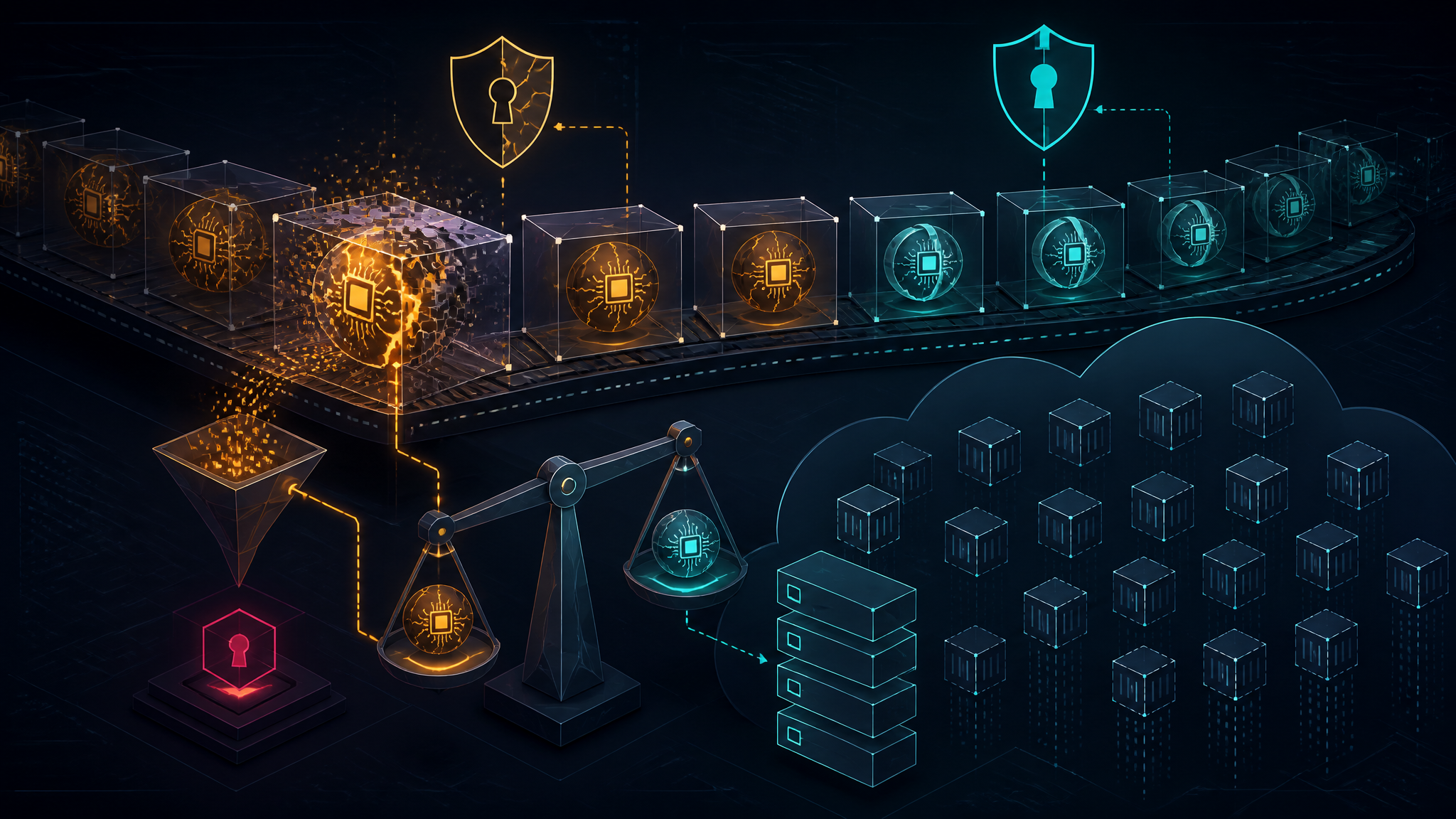
Autoscaled node pools and ephemeral runners recycle in minutes or hours. A fleet that never lives long enough to be patched also never reaches a stable patch state. The tempting read is that short lifetimes act as mitigation. They do not. A local privilege escalation needs one unprivileged execution context on the host, and a single CI job hands an attacker exactly that. There is no persistence required across node recycling — one window inside one job is enough, and then the attacker uses the credentials that job was already holding.
"Rebuild and Redeploy" Is the Wrong Remediation
Fixing a kernel flaw means a new kernel on the node: nodes replaced from a patched image, or a reboot window. Image rebuilds, kubectl rollout restart, container restarts and pod evictions do none of it. If your incident response runbook for a kernel CVE opens with "rebuild the runner image," it is mislabeled.
Mapping the Kernel Bug Classes to CI and Cloud Workloads
Local Privilege Escalation Is the Shared Starting Point
Copy Fail is described as a local attacker gaining root. That is the shape of it: the flaw begins as unprivileged code on the host, and any runner executing untrusted pull-request code already runs unprivileged code. The KEV additions are reported as exploited in the wild rather than as a named bug class, so I will not claim they are all LPEs — that distinction needs the actual CVE text.
Where Local Privilege Escalation Becomes Runner Takeover
Runner configuration decides whether LPE means "a job got root inside its own namespace" or "someone now owns the node and everything attached to it." Concretely: a mounted /var/run/docker.sock, privileged Docker-in-Docker, added capabilities like CAP_SYS_ADMIN, and no seccomp or AppArmor profile all widen that boundary. The job environment widens it further — self-hosted runners that inject registry tokens, cloud role credentials, or shared cache secrets into every job turn a one-shot compromise into access that outlives the node.
| Layer | What is actually vulnerable | How standard triage misses it |
|---|---|---|
| Image layer | OS packages inside the image | Correctly scanned — this is the one part that works |
| Node kernel | The host kernel shared by every container on the node | Not present in any image manifest, so no finding is generated |
| Runner pod config | Capabilities, docker socket, privileged DinD, seccomp profile | Runtime flags are not scored by image scanners and rarely reviewed |
| Job environment | Long-lived registry, cloud, and cache credentials | A single job's window is enough to use them |
A Practical Triage Checklist for Kernel Patches in CI Fleets
Establish a Kernel Inventory You Can Query
You cannot patch what you cannot enumerate, and most CI fleets cannot enumerate this today. Kubernetes exposes kernel version in node status, so one query covers the whole fleet:
kubectl get nodes -o custom-columns='NODE:.metadata.name,KERNEL:.status.nodeInfo.kernelVersion,OS:.status.nodeInfo.osImage'The output shape I expect from a mixed pool:
NODE              KERNEL                OS
runner-pool-a-1   5.15.0-119-generic    Ubuntu 22.04.4 LTS
runner-pool-a-2   5.15.0-113-generic    Ubuntu 22.04.4 LTS
runner-pool-b-1   6.1.0-23-amd64        Debian GNU/Linux 12 (bookworm)
For hosts outside Kubernetes, the equivalent loop is trivial, and it belongs in your inventory job rather than in someone's shell history:
while read -r host; do
  printf '%s ' "$host"
  ssh -o BatchMode=yes -o ConnectTimeout=5 "$host" uname -r || echo "unreachable"
done < runners.txt
Match Inventory Against Real Fixed Versions
With the inventory in hand, compare it against the fixed build for that specific distribution, not against a general upstream version string. Kernel numbers are not comparable across distributions: a 5.15 build from one vendor is not the artifact a 5.15 build from another produces, and point releases carry backports. Pull the changelog for the candidate package before trusting any comparison:
apt-get changelog linux-image-5.15.0-119-generic | head -40
The failure mode I keep watching teams hit is comparing inventory against whatever version a blog post mentioned, deciding they are patched, and closing the ticket.
Separate Must-Reboot-Now From Can-Wait
Rank by three properties, in this order: presence in the KEV catalog or other confirmed exploitation, whether the node runs untrusted code, and whether the runner is privileged. A node running untrusted pull-request code on a privileged runner goes first, ahead of anything handling only trusted internal traffic — even at the same kernel version. Exploitation needs a foothold, and that node type hands one out by design.
Buy Time Without Patching: Livepatching and Compensating Controls
Livepatching — kpatch/kgraft upstream, or Canonical Livepatch on Ubuntu — can close a specific flaw without a reboot where the distro supports it for that CVE. Pair it with raising the cost of privilege escalation: drop unneeded capabilities, unmount the docker socket, enforce a seccomp profile, move untrusted jobs to microVM or sandboxed runtimes. Compensating controls, not fixes. Schedule the reboot anyway.
Fix the Process Failure, Not Just This Incident
Set a maximum node lifetime with a forced recycle onto a patched image, and alert when a node's kernel falls behind the current fleet baseline. The point I want to land: ephemeral CI breaks kernel triage because of missing inventory and lifecycle policy, not a missing scanner. A better scanner cannot find a kernel that was never in the scan target.
What I Confirmed vs. What I Did Not Test
Confirmed from the public record: the KEV additions and the separate "Copy Fail" root-escalation report, both reported 2026-09-19. The blast-radius mapping above is my own reasoning from how these runner configurations behave, not a documented exploitation chain — I tested none of these bugs, and no exploitation was performed while writing this. Every version-specific statement needs confirmation against the KEV entry and your distribution's advisory before you act on it.
What I Would Fix First
If I owned this fleet, the first reboot goes to privileged or self-hosted runners executing untrusted code on unpatched nodes. That is a smaller set than the whole fleet and a much worse set to leave alone. "We only run short-lived runners" does not reduce that risk: a single job is a sufficient window, and the credentials in that job outlive the node. I would also push back on the reflex of treating an image rebuild as kernel patching. Those two actions produce different outcomes on the same ticket, and conflating them is how a fleet stays vulnerable while the dashboard stays green.
Further Reading
- CISA Known Exploited Vulnerabilities catalog — the authoritative list for the KEV additions and the CVE IDs behind them (catalog)
- Linux kernel releases — upstream stable branches and release points for version comparison (upstream releases)
- CVE Program — resolve identifiers and affected versions once published (CVE lookup)