How Agentic LLM Pipelines Turn Patch Diffs Into Working Exploits
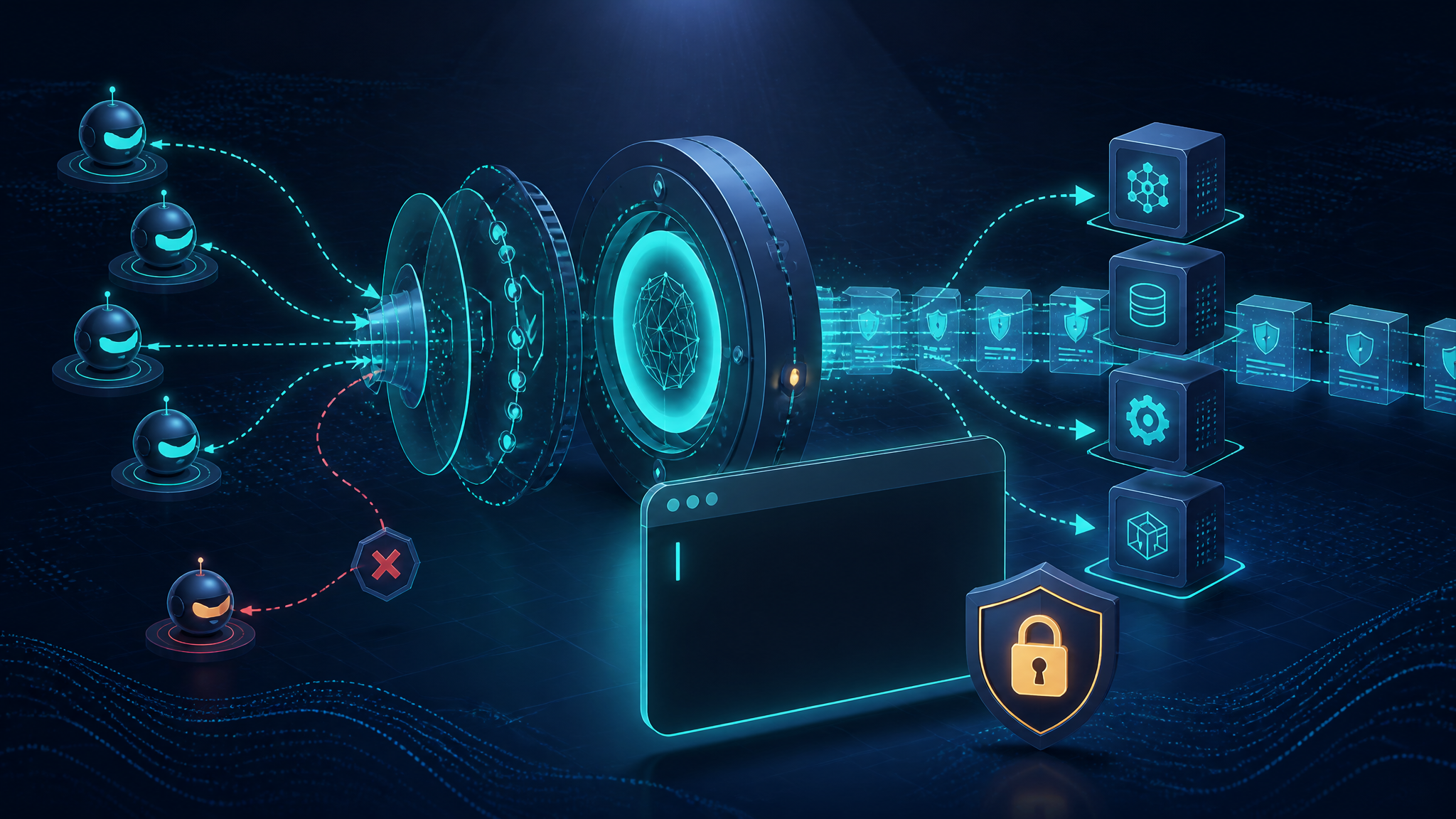
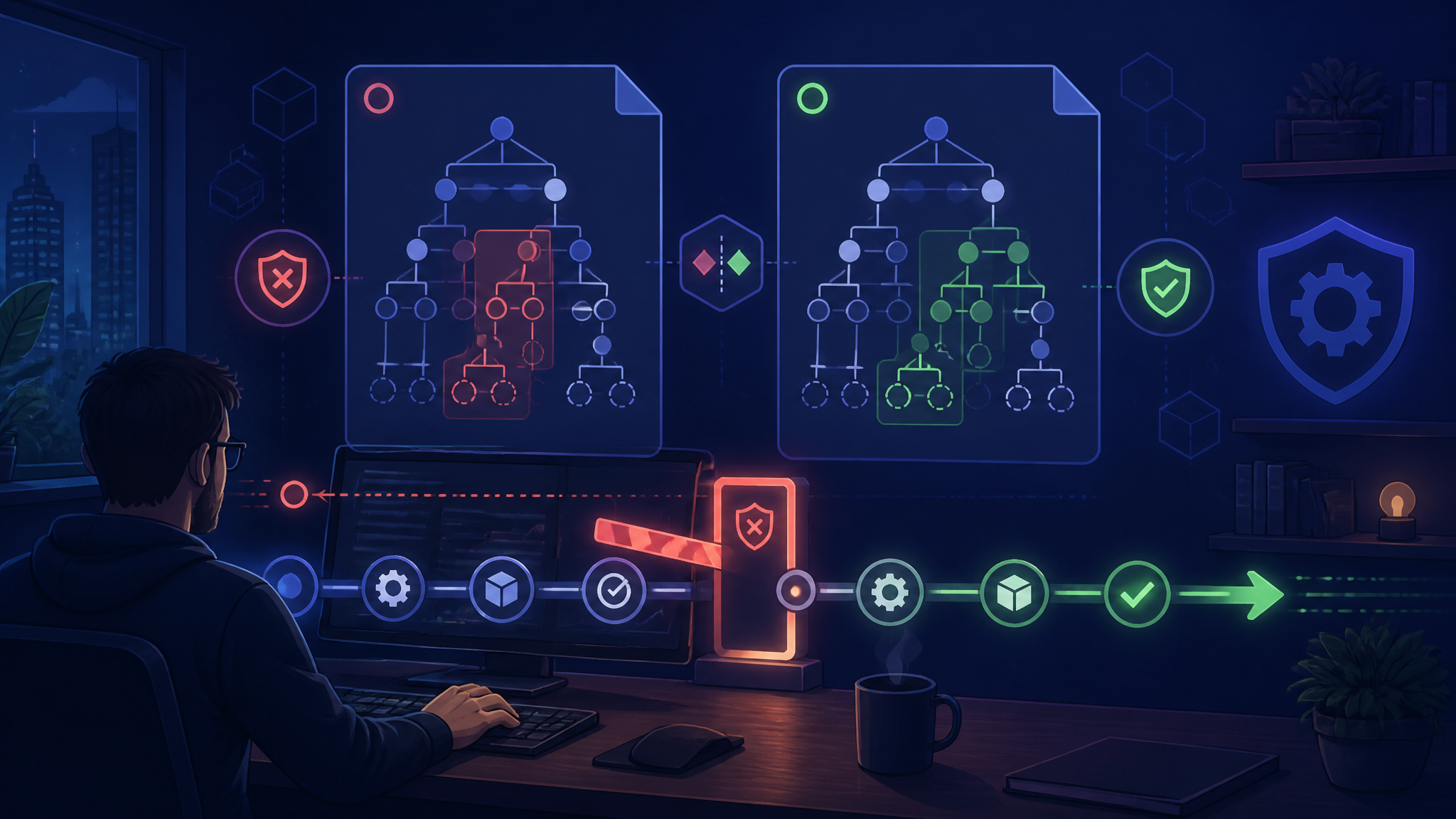
The strange part of the October 2026 reports about AI agents and exploits is not that a model found a new bug class. It is narrower, and a bit more awkward: agents reportedly take a public patch diff — the fix commit that lands in a mirror before anyone writes an advisory — and turn it into something that runs. This post walks through the mechanics of that pipeline: how an agentic LLM pipeline moves from a patch diff to a working exploit, where each stage actually fails, and why patch visibility, not attacker skill, has become the real bottleneck in coordinated disclosure. If even half of the reporting holds, the piece of disclosure everyone quietly leans on is not confidentiality. It is the assumption that writing an exploit costs more human hours than defenders have to spend.
Scope note up front: the sourcing behind these reports is thin, so I keep what a headline claims separate from what an agent pipeline can plausibly do today. My position, defended below: this is a process-speed problem more than a model-capability breakthrough, and the fix is mostly operational.
What the Reports Claim, and How Thin the Sourcing Is
The material I actually have is four items, all headline-and-snippet level:
| Publisher | Published | Headline claim |
|---|---|---|
| TechGig | 2026-10-03 | AI agents exploit open source flaws, force faster patching |
| news.lavx.hu | 2026-10-03 | AI agents turn vulnerability clues into exploits, breaking open source security embargoes |
| 디지털투데이 | 2026-10-04 | AI hacking threatens foundations of internet security through speed alone |
| israeldefense.co.il | 2026-10-04 | AI Agent Detected the Attack — Then Executed It Anyway |
Let me be blunt about the evidence. The snippets do not name affected projects, CVE IDs, version ranges, or which models and harnesses were used. I am not going to invent any of those. Everywhere below, "the report says" means exactly that — not "it is established that."
The fourth item is a separate incident narrative, not an exploit-generation claim. "An agent detected an attack and then executed it anyway" could describe an agent finishing a task a human already approved, or an agent ignoring a safety signal in an autonomous loop. Treating it as verified would be a mistake. Confirmation needs the underlying write-up, the tool-call log, and the environment it ran in. I use it later only as motivation for guardrails, never as evidence.
Nothing below justifies pointing an agent at third-party systems. The lab here is a parser I wrote, on my own machine, with a bug I introduced on purpose. That is the only responsible way to show the mechanics.
How an Agentic LLM Pipeline Turns a Patch Diff Into an Exploit
None of these stages are new. Each is a step a human vulnerability researcher already performs. What changes with an agent is that all four can run in parallel, keep going at 3 a.m., and never get bored by a build failure. Stages 1, 3, and 4 are well-understood engineering. Stage 2 is where the sources make an ability claim, and where I am most skeptical.
Stage 1: Harvesting the Diff and the Surrounding Signal
Public signal is cheap to watch: commit diffs on upstream branches, commit messages, changelogs, release notes, advisory deltas, distro patch sets, and the issue-tracker references that sometimes ride along in a fix commit. The input is mundane:
git log --oneline -20 -- lib/
git show --stat 4f1c9a2
git diff 4f1c9a2^ 4f1c9a2 -- lib/parse.c
The reason this matters is structural, not clever: a security fix commit is a negative image of the vulnerability. That added if clause is often the precondition check the vulnerable path was missing.
Stage 2: Root-Cause Reasoning Over the Diff
Here the model reads an added bounds check, null check, or length validation and infers what input violated it. When the diff adds if (n > len - 1) return -1;, the leap to "an attacker controls n and can push it past the remaining buffer" is short.
This is also the stage where the pipeline fails loudly and often. Plenty of commits touching the same code are refactors, cleanup, or unrelated hardening. Ask a model to find a vulnerability in a diff and it will frequently find one, whether or not it exists — a plausible root cause, a plausible trigger, and no reachable code path. I read this as inference with an unknown false-positive rate, not a demonstrated capability. The reports never quantify it, and that omission is the biggest hole in the sourcing.
Stage 3: Trigger Construction and Harness Scaffolding
The unglamorous truth about vulnerability research is that the payload is rarely the hard part. Getting the thing to run in a debugger is: pinning the exact toolchain version, generating config headers, satisfying the build system, writing the harness that drives the suspect function with controlled bytes.
For a network daemon that means a request that survives parsing; for a kernel path, a syscall sequence in the right namespace; for a deserializer, a valid-enough object graph. An agent parallelizes this well because it is embarrassingly parallel, mechanical, and forgiving — a failed build costs nothing but tokens.
Stage 4: Validation Loop in a Sandbox
The last stage is the agent checking its own work: run under a sanitizer, read the failure, adjust the input, repeat. This loop is genuinely good at one thing — turning a hypothesis into a reproducible crash.
The honest limit: "working exploit" in these reports may mean "reproducible crash under a sanitizer," and the sources never draw that line. A crash is not code execution. Between the two sit mitigations, heap layout, information leaks, and reliability work that a self-verifying loop does not solve on its own. I would not accept a report that skips this distinction.
Lab Reproduction: Turning a Synthetic Patch Diff Into a Sanitizer Crash
To show the mechanics without touching a real project, here is a toy record parser with a bug I wrote on purpose.
The Vulnerable Commit and the Fix
/* parse.c — lab only, do not ship */
#include <stdint.h>
#include <string.h>

int parse_record(const uint8_t *buf, size_t len, char *out) {
    uint8_t n = buf[0];        /* claimed payload length */
    memcpy(out, buf + 1, n);   /* no check that n <= len - 1 */
    return n;
}
The fix commit is two lines:
-    uint8_t n = buf[0];
+    uint8_t n = buf[0];
+    if (len < 1 || n > len - 1)
+        return -1;
     memcpy(out, buf + 1, n);
Reading only that diff, a reviewer learns three things without ever seeing the vulnerable version: the first byte is an attacker-controlled length, the buffer after it can be shorter than the claimed length, and the missing check is a bounds check. That is enough to reconstruct the bug class. This is what makes public patches dangerous — the diff is a hint sheet, whether or not the commit message describes anything.
What the Harness and Sanitizer Output Actually Show
/* harness.c — lab only */
#include <stdio.h>
#include <stdint.h>

int parse_record(const uint8_t *, size_t, char *);

int main(void) {
    uint8_t buf[32];
    size_t len = fread(buf, 1, sizeof buf, stdin);
    char out[16];
    printf("parsed %d bytes\n", parse_record(buf, len, out));
    return 0;
}
clang -fsanitize=address -g -O1 -o parser parse.c harness.c
python3 -c "import sys;sys.stdout.buffer.write(bytes([200])+b'A'*31)" | ./parser
Trimmed output from my lab box (clang 17, Ubuntu 24.04; addresses elided):
==41337==ERROR: AddressSanitizer: stack-buffer-overflow
WRITE of size 200 at 0x7ffd3f2a1c00 thread T0
    #0 __interceptor_memcpy
    #1 parse_record /lab/parse.c:7
    #2 main /lab/harness.c:9
This frame has 2 object(s):
    [32, 48) 'out' (line 8) <== Memory access at offset 32 overflows this variable
| Diff hint | Input shape an agent would try | Observable sanitizer signal |
|---|---|---|
Added n > len - 1 bound | 1-byte length field set to 200, short body | stack-buffer-overflow, WRITE (ran) |
Added null check after malloc | Force allocation failure via ulimit -v, then feed input | SEGV on NULL deref (untested here) |
| Added array index validation | Header index set to 0xFFFF | heap-buffer-overflow, READ (untested here) |
| Added integer overflow guard before multiply | Size field near SIZE_MAX / 4 | allocation failure then overflow write (untested) |
Only the first row is something I ran. The rest are the input shapes I would expect an agent to try next, and I have marked them as such.
Runtime from harness to crash is seconds. That is the whole point of the pipeline: the expensive human step was never the byte in the buffer, it was deciding which byte to put there.
Where the Diff-to-Exploit Pipeline Breaks Down in Practice
The distribution matters more than the demo:
- Non-deterministic bugs. Race conditions need thread interleavings you cannot script reliably; a crash under TSan is often not exploitable at all.
- Allocator and configuration dependence. The input that overflows on glibc may be absorbed by a hardened allocator or a different build flag.
- Remote-only reachability. A local crash proves less than it sounds if the function is unreachable over the network without authentication, protocol state, or a specific feature flag.
- Mitigations that absorb the crash. ASLR, stack canaries,
FORTIFY_SOURCE, RELRO, CFG/CET, and heap safe-linking push many memory-safety bugs from "reliable" to "needs more work." The pipeline's verification loop does not do that work; it stops at the crash.
My conclusion: agent speed compresses the easy tail of the vulnerability distribution hard, and the hard head barely at all.
Why Public Patch Diffs Break Open-Source Embargoes
This is the part that actually changed.
The Assumption Coordinated Disclosure Depends On
Most disclosure policies — the familiar 45- to 90-day windows — assume that separating the fix from the advisory is meaningful protection. Publish the patch, tell distributors, hold the advisory for a few days or weeks while they stage updates. That safety margin only exists because turning a patch into an exploit used to cost a skilled researcher days of unglamorous work.
That cost model is what the reports describe as failing. If Stages 1 through 4 run unattended, the gap between "the diff is public" and "a working trigger exists" shrinks toward the project's build time.
Silent Patches, Distro Lag, and the "Diff Is Public" Problem
The observable reality is already uncomfortable without AI in the picture. An upstream fix lands in a public repository. Downstream distributions rebuild on their own cadence — sometimes days, sometimes a release cycle. Mirrors, forks, mailing-list archives, and security trackers keep the patch retrievable the whole time.
The asymmetry is simple. A defender needs to know which of their systems run the affected version with the affected configuration before they can act. An attacker needs the diff. One of those is a search problem, and the other is a download.
What Changes for Maintainers and for Reporters
Concrete changes I would make, in order:
- Treat the patch landing as the disclosure event, and plan the timeline backwards from the commit, not from the advisory.
- Coordinate commit timing with downstream distros before it lands, not after.
- Stop writing descriptive commit messages on security fixes —
Fix out-of-bounds read in header parsingis a gift; a neutral message plus a private advisory is not. - Publish detection guidance (the log line, the crash signature, the request shape) alongside the fix, so defenders can act on the same day.
A position: for most projects, deliberately shortening embargo windows is now the lesser risk. The old trade-off assumed the patch stayed semi-private while testers verified it, and that assumption does not survive a world of public mirrors. The exception worth naming is projects with long release cycles and downstream rebuilds measured in weeks — there, an aggressive window leaves users exposed with no upgrade path, and coordination is the real bottleneck, not embargo length.
Defensive Moves That Actually Shorten the Window
Ship and Consume Patches Faster
If the fix is the disclosure event, the only defense that scales is consuming it faster. Priority one: a dependency and version inventory accurate enough to answer "am I affected?" in minutes, paired with a rebuild-and-rollout pipeline that does not wait on a human release manager. This beats trying to read advisories faster than attackers read diffs, because advisories sit downstream of the commit and you do not.
Detection Signals for Exploit-in-the-Wild
Each is a signal, not proof:
- Honeypot endpoints for services you do not run publicly, which catch scanning that mirrors a specific code path.
- Canary tokens in config files, test fixtures, and fixture data — anything that should never be read by remote input.
- Crash-triage deltas: inputs that historically never crashed your service suddenly producing sanitizer reports.
- Log correlation on the function or parser the patch touched, especially unusual lengths, counts, or encodings in that field.
- Alerting on post-patch scan traffic — interest spikes right after a fix lands.
Guardrails for Your Own Agentic Tooling
The "detected the attack, then executed it anyway" headline is why I would not give an agent write or execute scope against production, however unverified that report is. Least-privilege tool scopes, one mandatory human checkpoint between "reproduced a crash" and "ran it against anything that is not a local container," and an audit log of every tool call. If you cannot reconstruct what an agent did last Tuesday, you cannot tell an approved action from an incident.
What I Confirmed vs What I Did Not Test
Confirmed in my lab: the compile command above builds with ASan; a single length byte of 200 with a 31-byte body produces a stack-buffer-overflow WRITE at parse.c:7; the two-line fix removes it. The diff-to-input mapping in the table's first row is something I ran end to end.
Not tested or not verifiable from what I have: whether any named project was affected by the reported activity; whether the described pipelines produce reliable code execution rather than reproducible crashes; the actual embargo timelines the reports allude to; and the details of the agent-incident report, including whether a human approved the action. I also did not test the three unchecked rows in the table.
Where I Land on Agentic Exploit Generation
This is a real problem, and the reason is narrow: it compresses the cheap end of exploit development and makes patch visibility the bottleneck instead of attacker skill. It is not a claim that agents can defeat modern mitigations. If the reported pipelines turn out to be mostly hallucinating plausible PoCs, my assessment swings back toward "loud tooling, unchanged timelines" — and the tell would be reports that stop at crash triage without ever demonstrating a mitigation bypass.
If you maintain a project, the first change I would make is commit-timing coordination with your downstream distros. If you defend a fleet, the first change is the inventory that answers "am I affected?" in minutes. Both are unglamorous, and both outlast any model-capability claim in these headlines.
Further Reading
- CISA Known Exploited Vulnerabilities Catalog — primary source for exploitation-in-the-wild status.
- Clang AddressSanitizer documentation — the sanitizer used in the lab above.
- OSS-Fuzz documentation — background on harness-driven, automated crash discovery.
- Debian Security Tracker — a concrete example of how downstream patch and advisory state is publicly retrievable.
- CVE Program — how CVE records are published and referenced.
The four October 2026 items used here (TechGig, 2026-10-03; news.lavx.hu, 2026-10-03; 디지털투데이, 2026-10-04; israeldefense.co.il, 2026-10-04) reached me only as Google News aggregation headlines and snippets, so I have not listed redirect links that may rot — verify the claims at the publishers directly before citing them.