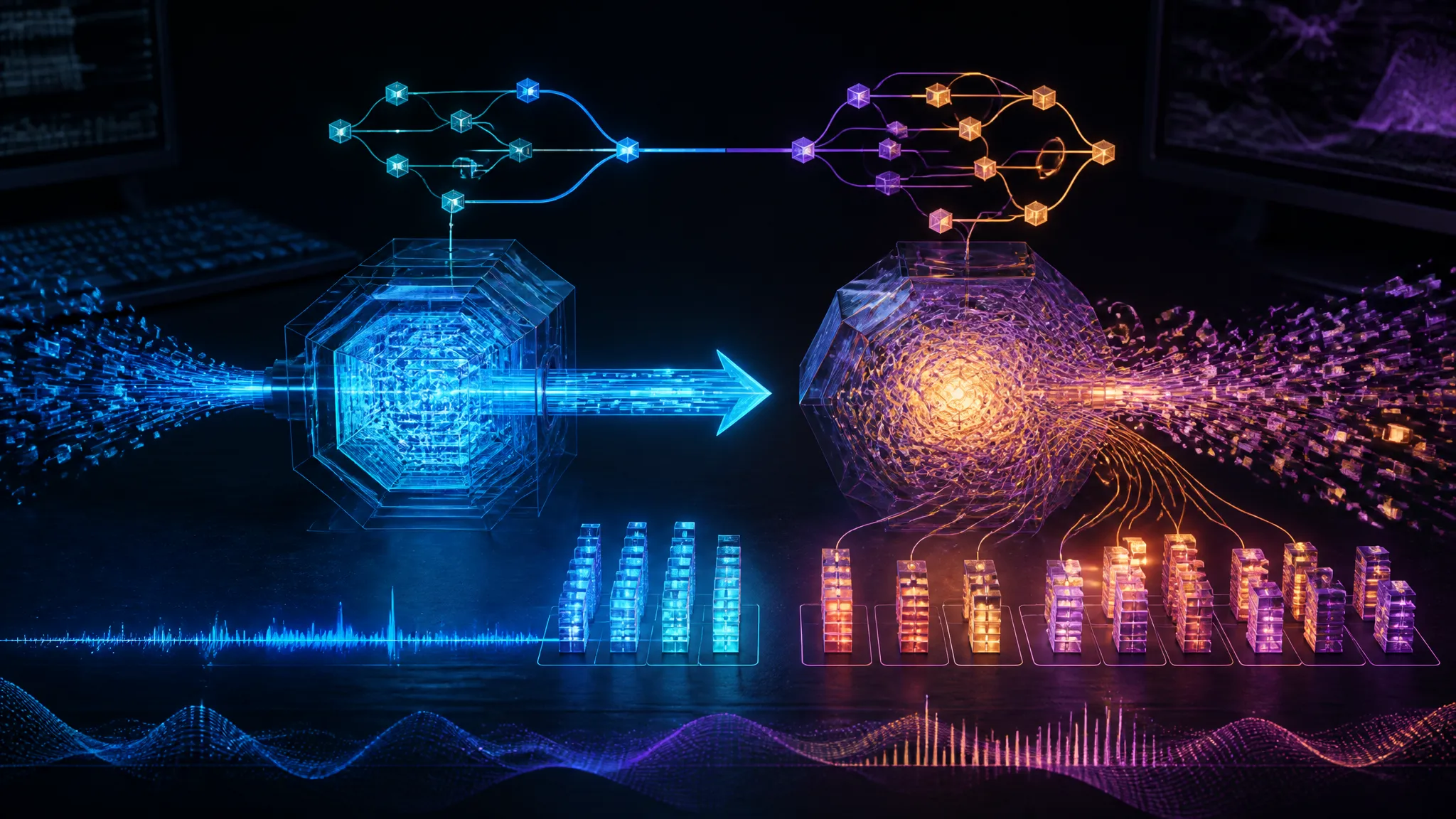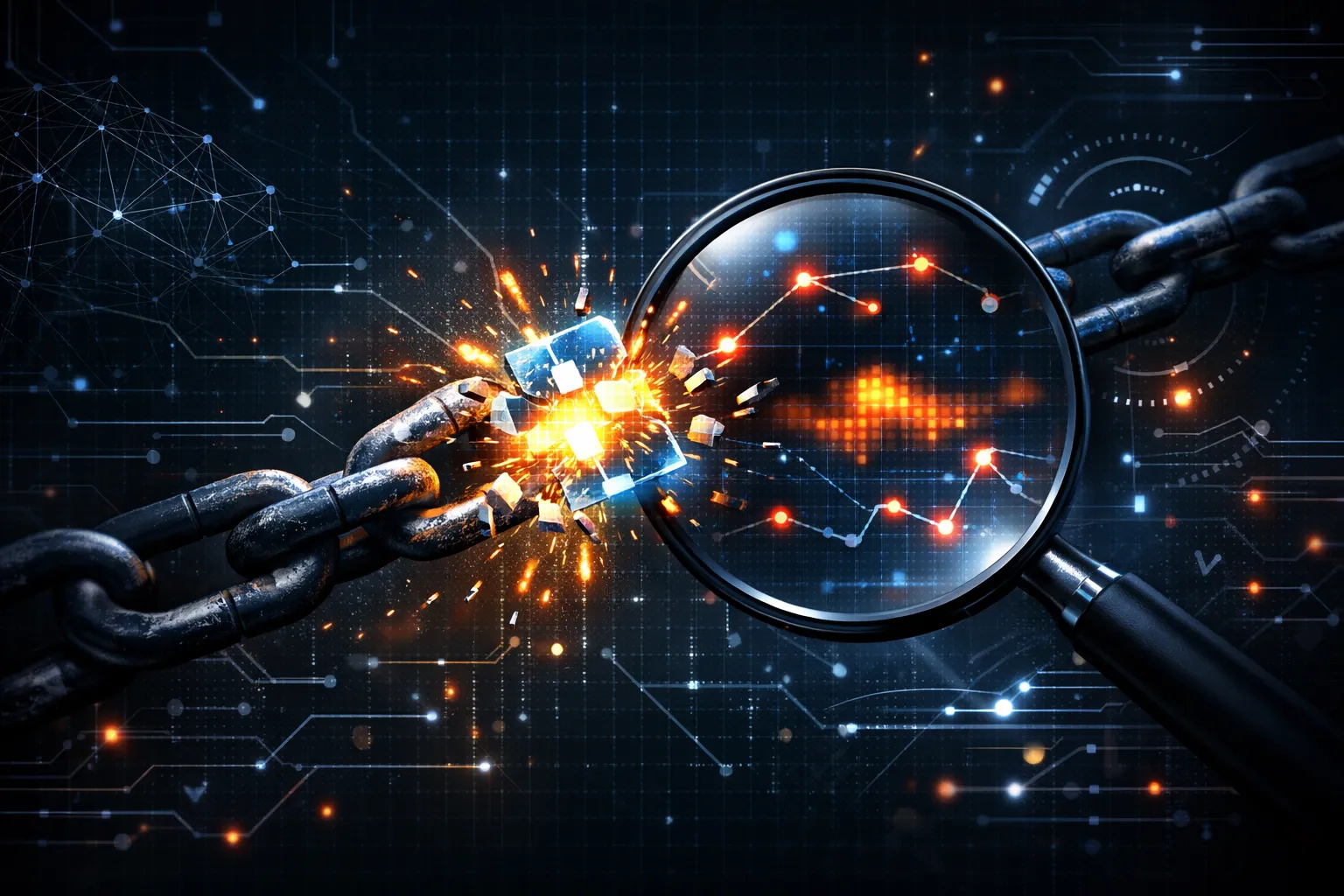
Detecting AI-Assisted Attack Chains: A Practical Look at the Claude Code and DeepSeek Campaigns
What the report actually claims
The public claim is narrow: a report says Chinese operators folded tools like Claude Code and DeepSeek into an AI-assisted campaign against government targets. The important part is not the brand names. It is the tradecraft: AI appears to have been part of the intrusion workflow, not just something used to polish text after the fact.
I want to keep two things separate:
- Confirmed from the reporting: a security report published in the news cycle says these AI tools were used in a government-targeted cyberattack campaign.
- Not confirmed from the public snippet alone: how much was automated, which stages were AI-assisted, and whether the models were used for planning, code generation, translation, or operator support.
That separation matters. Threat coverage often jumps from “AI tools were involved” to “AI caused the breach.” Those are not the same statement.
Separate confirmed reporting from inference
From the way the report is framed, I can say only a few things with confidence:
- the campaign was described as AI-powered,
- the targets were government systems or government-related environments,
- and the operator stack reportedly included Claude Code and DeepSeek.
What I cannot confirm from the snippet alone:
- whether the models were used interactively by a human operator,
- whether they generated payloads, scripts, or recon plans,
- whether the tools were accessed through direct prompts, wrappers, or an agent loop,
- or whether the report observed real exfiltration, persistence, or lateral movement tied to the models.
That is not dodging the point. It is just keeping evidence and inference in different buckets.
Why the Claude Code and DeepSeek detail matters
The model names matter less as products and more as hints about workflow. Claude Code points toward code-heavy assistance. DeepSeek may have been used for reasoning, translation, summarization, or drafting. If both show up in the same report, the likely story is not “malware wrote itself.” It is closer to:
- one model helping draft or repair code,
- another helping with language, summaries, or alternate approaches,
- and a human operator stitching the pieces together.
That is the real operational shift: the bottleneck moves from typing speed to decision quality.
Why AI-assisted attack chains are different from ordinary intrusion tooling
Human speedups versus automation of tradecraft
Traditional intrusion tooling usually automates one narrow part of the job:
- scan hosts,
- run a loader,
- dump creds,
- move laterally,
- beacon out.
AI-assisted attack chains can affect a broader slice of the work around the exploit itself:
- translating logs and target documentation,
- rewriting scripts for a new environment,
- summarizing stolen internal docs,
- generating phishing text that fits a local language or team culture,
- and iterating quickly when a script breaks.
That makes the campaign more adaptable. It does not automatically make it more advanced in the exploit sense. It makes it less brittle.
Where AI changes detection assumptions
Most detection stacks are built around stable technical signatures:
- malware hashes,
- known command lines,
- fixed infrastructure patterns,
- and repeatable C2 behavior.
AI-assisted operators are more likely to vary the surrounding text and tooling. That means the exact script text, ticket wording, prompt phrasing, or email copy may change from one target to the next even when the workflow is the same.
So the defender should stop assuming that the most dangerous artifact is always the binary.
The dangerous artifact may be the sequence:
- discovery,
- translation or summarization,
- code generation,
- execution,
- follow-up refinement.
That sequence is often easier to spot than any one prompt.
Reconstructing the likely attack chain
Initial access and operator workflow
Based on the public framing, the most plausible chain is a human-led intrusion with AI acceleration, not a fully autonomous compromise.
A realistic workflow looks like this:
- The operator gets initial access through a common path: stolen credentials, a vulnerable service, a malicious attachment, or a compromised account.
- The operator gathers environment details: identity provider data, hostnames, cloud metadata, internal docs, and access maps.
- The operator uses an AI tool to summarize the environment, rewrite commands, or produce a script that fits the target stack.
- The operator tests access, expands privileges, and adjusts based on failures.
That is a small but meaningful change. The AI is not the intrusion. It is the force multiplier around it.
Lateral movement, reconnaissance, and payload assistance
The most believable places for AI help are the boring ones:
- recon command generation,
- document parsing,
- log summarization,
- script adaptation,
- privilege escalation checklists,
- and multilingual coordination.
If the campaign touched government infrastructure, AI may have reduced the time needed to understand a messy environment. Government networks are often heterogeneous: old auth systems, mixed cloud and on-prem stacks, legacy endpoints, and sensitive internal documentation. A model can help an operator digest that quickly.
A second likely use is payload or script refinement. Not necessarily novel malware. More often:
- a script fails in PowerShell,
- the operator asks for a corrected variant,
- the model adjusts it to the environment,
- and the operator keeps moving.
That kind of iteration is hard to fingerprint if defenders only hunt the final payload.
Where AI tools may have been used, and where that is still unproven
I would treat these as plausible but unproven uses of the tools named in the report:
- drafting phishing or impersonation text,
- translating target-language material,
- summarizing stolen documents,
- rewriting scripts for compatibility,
- and planning the next operational step.
What I would not assume without stronger evidence:
- autonomous decision-making by the model,
- direct exploitation generated end-to-end by the model,
- or that the attack would have failed without AI.
That last point matters. A common postmortem mistake is to over-credit the assistant and under-credit the operator.
Detection signals defenders should look for
Identity and access anomalies
If AI is helping operators move faster, identity signals are often the first reliable clue.
Look for:
- unusual login times for privileged accounts,
- impossible travel or new device fingerprints,
- fresh OAuth consent activity,
- service account use from odd networks,
- and role changes followed by rapid bursts of activity.
The key pattern is not just one suspicious login. It is the speed of what happens next. If an account authenticates and then immediately starts enumerating resources, dumping configs, or touching multiple admin surfaces, that sequence deserves attention.
Command-line, API, and browser artifacts
AI-assisted workflows often leave mixed artifacts because the human is bouncing between browser, terminal, and web UI.
Useful signals include:
- repeated short bursts of shell activity after browser-based research,
- copy-paste patterns into admin consoles,
- rapid script edits across several attempts,
- API calls that look like environment discovery rather than business use,
- and command histories that show an operator iterating through tooling.
If your endpoint tooling captures parent/child process chains, watch for:
- browsers spawning unusual script runners,
- shells spawning archive tools or cloud CLIs,
- and admin utilities invoked in clusters rather than isolation.
Network and telemetry patterns that stand out
AI-assisted intrusion often changes the tempo of network behavior more than the protocol family.
Watch for:
- bursts of small outbound requests from a workstation that is usually quiet,
- unusual DNS lookups tied to newly created accounts,
- proxy traffic to AI services from machines that should not need them,
- and exfil-like patterns made up of many modest transfers instead of one obvious dump.
That last point is worth repeating in practical terms: if an operator uses AI to process documents or summarize data, they may stage smaller batches. Defenders should not only hunt giant archives or one-time spikes.
A practical hunt plan for security teams
Build detections around task transitions, not just malware hashes
My position is straightforward: for AI-assisted tradecraft, the best hunts are transition-based.
You want to catch movement from one phase to another:
- authentication to enumeration,
- enumeration to access expansion,
- access expansion to data staging,
- staging to outbound transfer,
- and error to retry.
That can be modeled as a sequence, not just a signature.
A practical hunt might ask:
- Which accounts touched both identity admin surfaces and file stores in the same hour?
- Which endpoints ran scripts after browser sessions to unfamiliar AI domains?
- Which admin users suddenly started making a high diversity of API calls?
- Which hosts show recon-style commands followed by compression or archiving?
Correlate endpoint, cloud, and proxy logs
If you only have one telemetry layer, the picture will be incomplete.
Minimum useful correlation:
- endpoint logs for process and command-line activity,
- cloud logs for API use and privilege changes,
- proxy or DNS logs for external service access,
- and identity logs for session creation and MFA events.
The goal is to line up behavior. For example:
| Signal layer | Example clue | Why it matters |
|---|---|---|
| Identity | New session from an unfamiliar device | Possible foothold or token theft |
| Endpoint | Shell launches archive or cloud tooling | Recon or staging workflow |
| Proxy/DNS | Repeated access to external AI services | Possible operator assistance |
| Cloud | Sudden privilege or config change | Expansion or persistence |
Even when each signal looks ordinary on its own, the correlation can show an operator moving through a chain too quickly for normal work.
Use sandboxed prompts and safe canary data for validation
If your organization allows defenders to use AI tools, keep that testing sandboxed:
- feed synthetic logs,
- use fake secrets and canary tokens,
- and test whether your detection rules still catch the transformed output.
This helps in two ways:
- It shows whether your own analysts are likely to use AI in ways that leak data.
- It lets you see whether attacker-like summarization or rewriting changes your alerting assumptions.
Do not paste real secrets, customer data, or incident artifacts into public or unmanaged model endpoints. That is not a detection test. That is a new exposure.
Hardening against AI-assisted intrusion workflows
Limit tool execution, secrets access, and outbound channels
The best defense is still the boring one: shrink what a compromised operator can do.
- Use least privilege everywhere, especially for cloud and identity roles.
- Keep secrets in scoped stores, not in plain files or shared docs.
- Restrict outbound access from admin workstations.
- Separate browsing, administration, and sensitive document access.
- Make sure command execution on high-risk hosts is logged and reviewable.
If an AI-assisted operator needs to pivot through browsers, terminals, and cloud consoles, your job is to make each pivot noisy and constrained.
Add approval gates for high-risk actions
For anything that changes blast radius, require a second step:
- privilege escalation,
- new OAuth app consent,
- export of sensitive data,
- token creation,
- and bulk configuration changes.
Approval gates are annoying for attackers because AI speeds up the request path more than the review path. That asymmetry helps defenders.
Reduce the value of stolen context and documents
A lot of AI-assisted intrusion value comes from reading internal material quickly.
To reduce that value:
- classify sensitive docs carefully,
- limit broad document access,
- remove stale but useful operational notes,
- expire old tokens,
- and segment admin documentation from general collaboration spaces.
If an operator steals less context, the model has less to summarize and less to turn into follow-on action.
What this report does not prove
Avoid overclaiming that AI caused the breach
The report title is tempting, but the safer reading is narrower: AI tools were reportedly embedded in the campaign workflow. That does not prove the models initiated the intrusion, found the initial vulnerability, or replaced the human operator.
In other words, the confirmed claim is about assistance, not agency.
Keep the attribution and capability questions separate
Two questions get blurred all the time:
- Who ran the operation?
- What did the AI do inside it?
Those are different investigations.
Attribution belongs to intelligence and law-enforcement-grade analysis. Capability belongs to the mechanics of the campaign. A defender can act on capability even when attribution remains uncertain.
The takeaway for defenders
A clear position on what matters most to fix first
If I had to prioritize one response, I would not start by hunting for “Claude Code” or “DeepSeek” in logs. I would start by hunting fast task transitions across identity, endpoint, and cloud telemetry.
That is the core defensive lesson here.
AI-assisted campaigns lower the friction between reconnaissance, scripting, translation, and follow-on action. The operator still has to authenticate, enumerate, stage, and move. Those steps leave traces. If your detections only look for one malware family or one command string, you will miss the broader chain.
My practical advice is:
- correlate identity with endpoint and cloud activity,
- alert on rapid phase changes,
- constrain privileged tools and outbound access,
- and treat AI service usage as a context signal, not as proof of compromise.
Closing note on adapting incident response for AI-assisted tradecraft
Incident response needs a small but real adjustment for this class of case. When operators use AI as a workflow accelerator, the timeline compresses and the artifacts spread out. Your responders should assume:
- more variation in text and scripts,
- faster retries after failures,
- and more mixed browser, terminal, and cloud behavior.
That does not make the defense hopeless. It just means the right unit of analysis is the chain, not the prompt.
Share this post
More posts
Testing Your Detection Pipeline Against AI-Reconstructed Malware Fragments
What the Turla SharePoint Exploit Teaches About OAuth Token Scope, Client-Side State, and Blind Trust in Microsoft 365 APIs