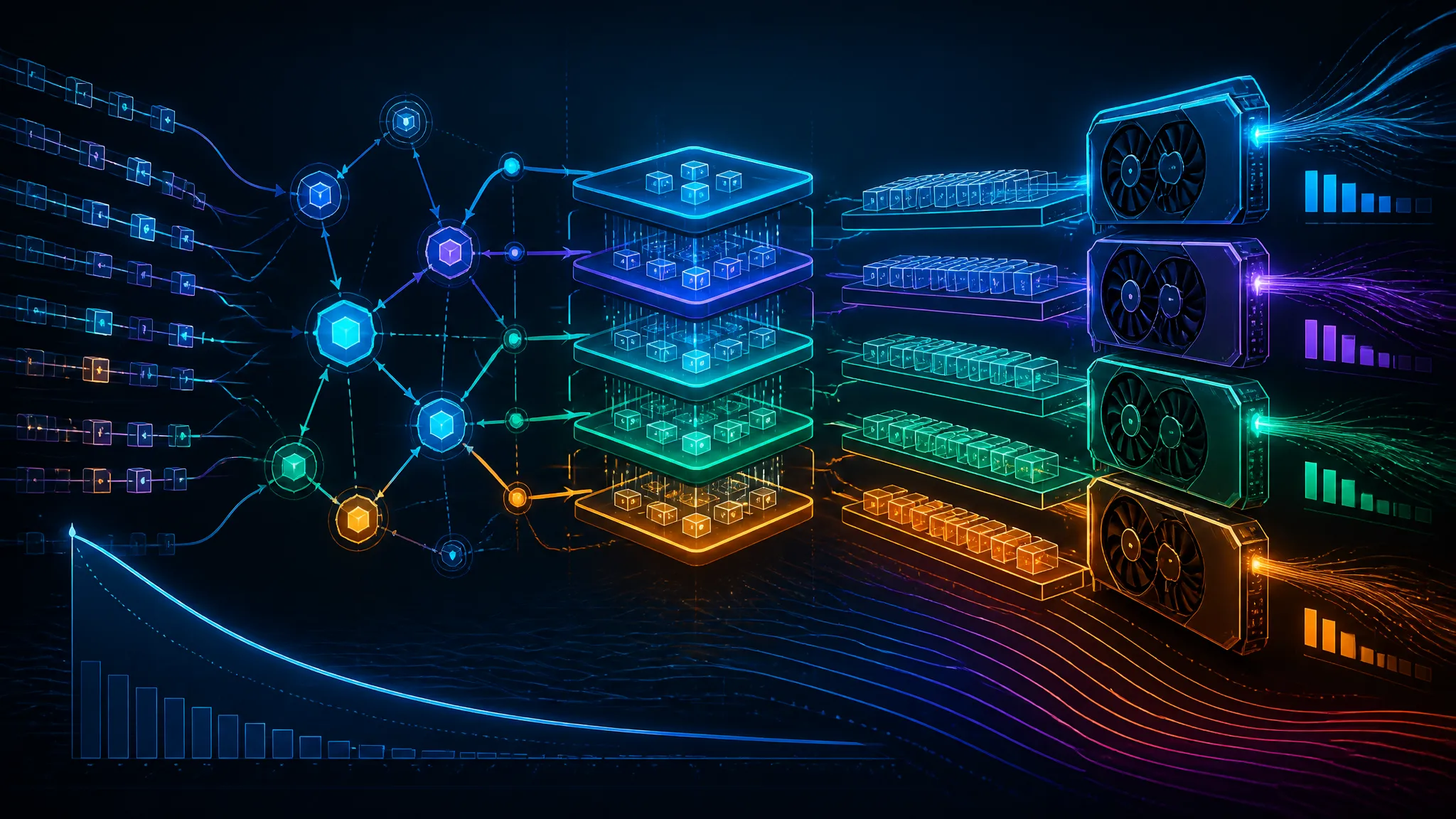
Where Provider Routing, Caching, and Batching Absorb the 80% LLM Price Cut
A breakdown of how provider routing, prompt caching, and request batching determine whether headline LLM price cuts actually reduce production inference costs.

A breakdown of how provider routing, prompt caching, and request batching determine whether headline LLM price cuts actually reduce production inference costs.

A methodology-focused look at the Qwen3.8-27B vs Claude Fable 5 LiveCodeBench Hard comparison, showing how to extend a benchmark harness with multiple seeds, confidence intervals, pass@k, and cost-per-solved-problem scoring so open-model wins are distinguished from run variance and benchmark noise.

Microsoft's approach of repurposing benchmark graders as reinforcement-learning reward models triples enterprise agent reliability, but it also raises reward-hacking and generalization risks that teams must monitor.

A practical analysis of the Agentic AI Foundation's Agent Skills, Open Responses, OpenEnv, and OpenSandbox projects, mapping what each solves for agent interoperability and what remains unresolved for builders.

Build a JavaScript red-team harness that adversarially tests coding agents for monitor tampering, privilege escalation, and evasion before deployment.

A practical benchmarking guide for evaluating llm-d 1.0 on Kubernetes across p99 latency, tokens per second per GPU, autoscaling behavior, and cost per million tokens.

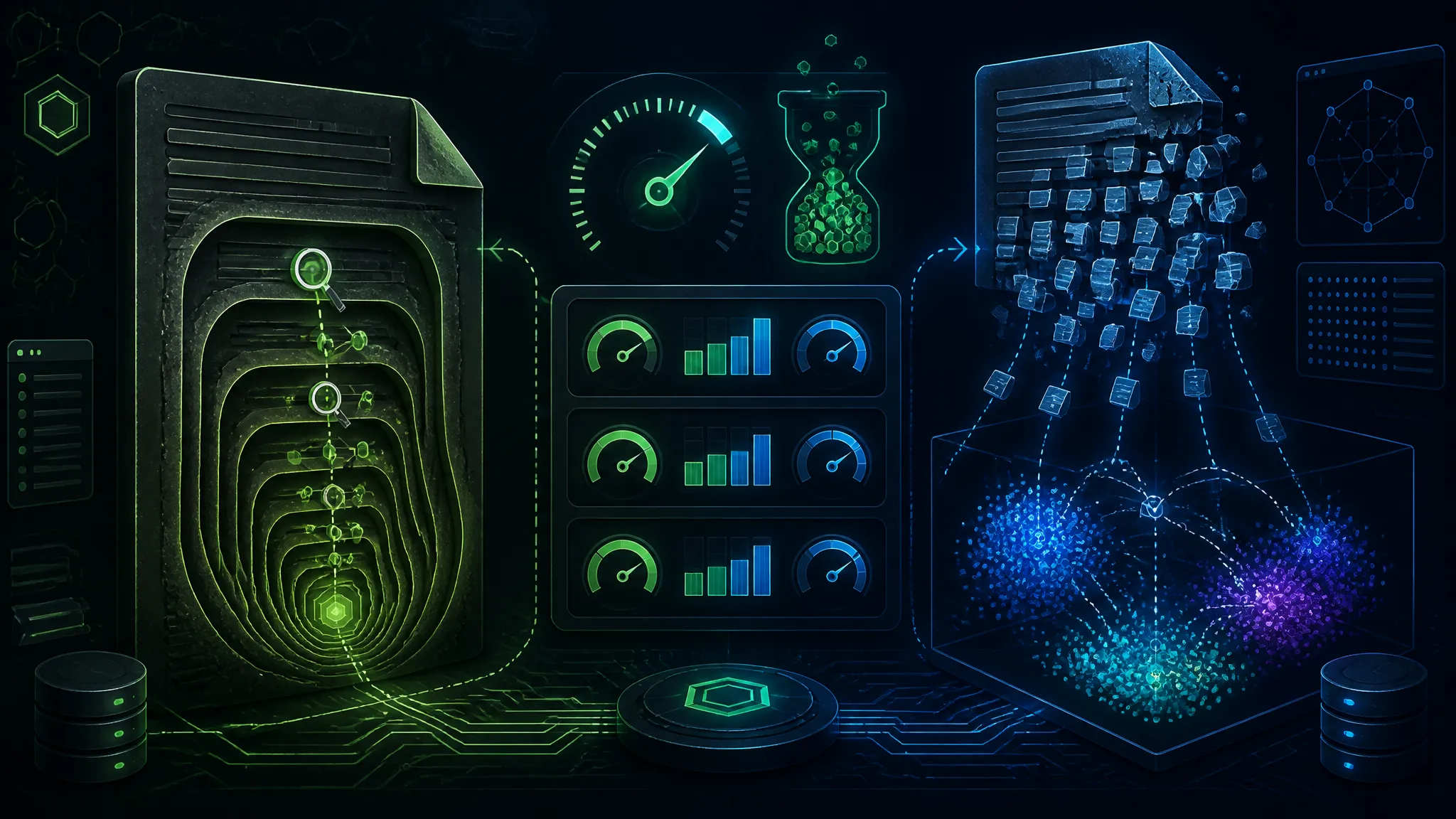
This post reproduces Cloudflare Clairic’s 49% pipeline-cost claim with a practical extraction benchmark comparing specialized System One extraction against reasoning LLM calls on cost, latency, and accuracy.

A hands-on benchmark of Atria Dawn’s long-context API across 128K, 256K, and 512K windows, measuring multi-hop retrieval accuracy and p95 latency for production engineering decisions.

A hands-on benchmark of Liquid AI's LFM2.5-24B-A2B mixture-of-experts model that tests whether its reported 184 tokens per second survives contact with real agent turn latency, including tool calls, retries, and growing context.

A practical guide to building eval gates that let you swap in cheap open-weight models like DeepSeek, Kimi, and GLM for agent tasks only when task-level accuracy, tool-call reliability, and cost-per-success metrics clear a defined threshold, set against the AI token economy's first deflationary…

Prompt-level guardrails can't stop dangerous tool calls in TypeScript agent loops because risk emerges across multi-step trajectories, so developers need runtime monitoring of agent actions like the trajectory-based detection approach Snowflake researchers propose.

A practical evaluation stack for RAG and agent systems that goes beyond public leaderboards, covering task-specific faithfulness checks, adversarial retrieval tests, output auditing for cherry-picked results, and longitudinal regression tracking for post-release model drift.

A practical engineering walkthrough of how to propagate agent, team, and customer identity through trace spans so LLM inference usage can be metered, budgeted, alerted on, and charged back without igniting organizational turf wars.

A hands-on guide to severing live network egress from Node/TypeScript agent evaluations by intercepting fetch, undici, DNS resolution, and child_process spawn, and wiring those interceptions into an audit log that fails the run the moment a real-world side effect occurs.

A practical pre-production audit checklist for AI agents covering tool permissions, secrets handling, data boundaries, audit logs, and automated evaluation, prompted by reports that 88% of firms run agents in production while only 14% actually govern them.

A hands-on Node.js benchmark harness pits Matryoshka-style recursive agentic retrieval against a conventional chunk-and-embed vector search pipeline for querying huge code files, scoring token spend, latency, and answer accuracy to show when recursion wins and when it quietly drains your context…

JetBrains' Mellum2.1, a 12B MoE open-weight coding agent model reporting 47% on SWE-Bench, is worth running locally for narrow CI repair and PR-review loops — but only if you understand where its sparse-activation architecture and small active-parameter budget stop being enough.

How Claude Haiku 5.5's dramatic price cut to $0.10/$0.50 per million tokens forces a re-evaluation of model routing thresholds and RAG fan-out strategies for cost-sensitive LLM applications.

An engineering teardown of where Google DeepMind's EmbeddingGemma 2 — a 740M open-weight multimodal embedding model that runs in 567MB and claims to outperform rivals twice its size — falls short in production RAG retrieval pipelines, from chunking and modality mixing to the gap between benchmark…

A practical look at what Reflection AI's 501B-parameter Beam MoE, with only 23B active parameters per token, actually costs in VRAM, throughput, and dollars per token when self-hosted for agentic coding workloads.

A hands-on look at why benchmark wins like Cloudflare's Clef-vs-Jev claim deserve scrutiny, paired with Google's anti-memorization technique and a practical checklist of held-out generation, dynamic task synthesis, and contamination probes for evals that can't be gamed.

A practical walkthrough of how the 47% quarterly decline in AI inference prices reported by EpochAI reshapes marginal cost modeling, batching, caching, and model routing decisions for subscription-based AI coding agents.

MIT and Sakana AI's SIFT framework uses an LLM judge to reduce evaluation costs for self-improving coding agents, balancing judge accuracy, compute overhead, and reward hacking risks.

A hands-on test of whether Amazon's 2B Strands Decider can reliably gate JavaScript agent tool calls when stacked against explicit prompt-based rules, and where the lightweight decision layer wins or breaks.