What CVE-2026-55255 Reveals About Trust Boundaries in Langflow-Based AI Workflows
Open with the real issue: Langflow can turn a workflow editor into a trust-boundary bypass
I do not think the main lesson in CVE-2026-55255 is “yet another bug in yet another AI tool.”
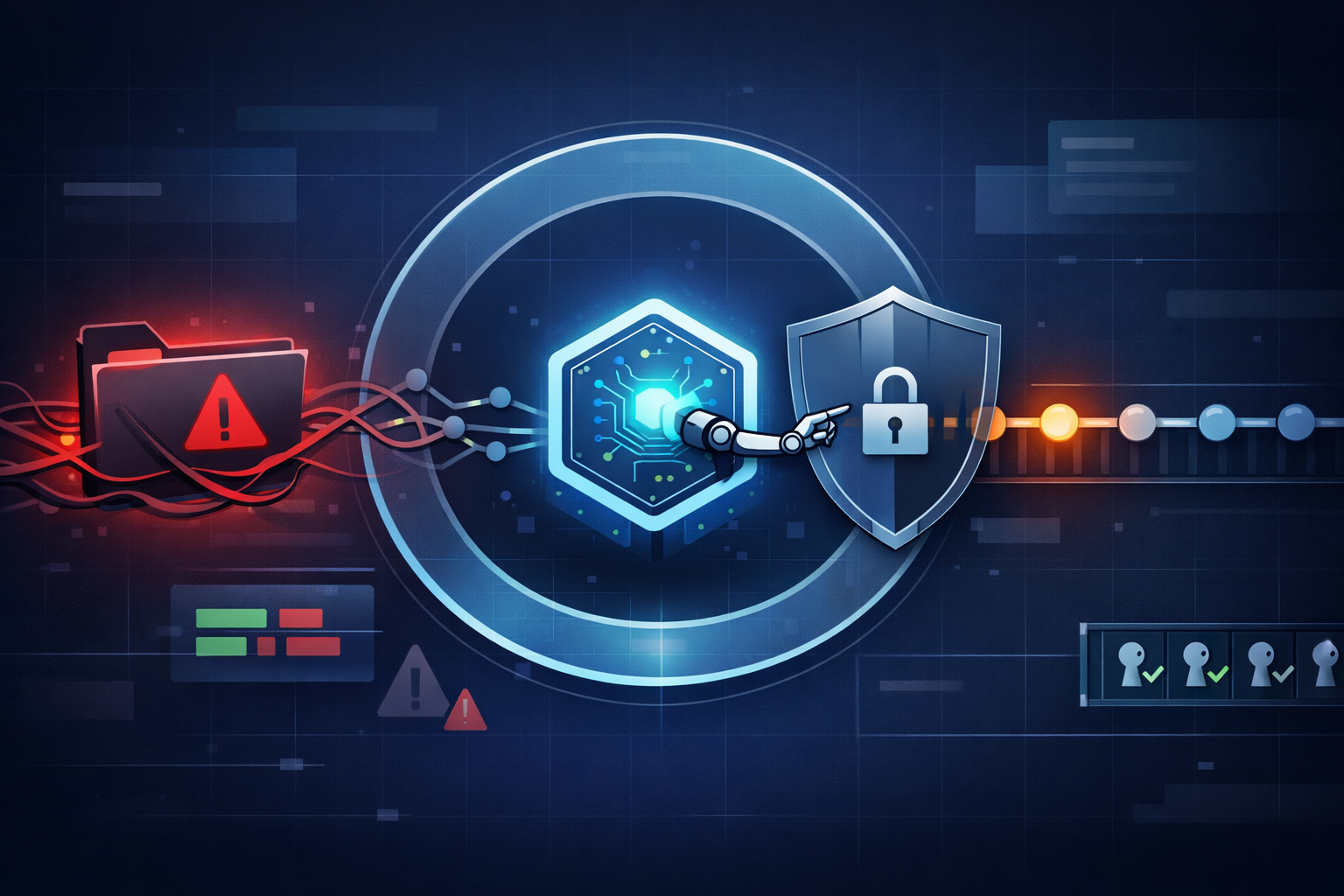
The sharper point is this: a workflow editor becomes a trust-boundary bypass the moment untrusted flow content starts influencing things that should stay backend-only — connector choice, outbound requests, execution context, logs, or secret retrieval. At that point, the UI is no longer just a UI. It is part of the control plane.
The public reporting I saw today says attackers are using a Langflow flaw for credential harvesting and names it CVE-2026-55255. That part is confirmed from the source material I was given. What I do not have from that material is the exact vulnerable code path, the exact request sequence, or the full vendor advisory. So I want to stay precise here: I can analyze the trust failure without pretending I have the whole exploit story.
My view is straightforward: if a Langflow deployment treats flow definitions, prompt content, tool parameters, and runtime secrets as if they all belong to the same trust level, it is already one bad edge case away from exposure.
What Langflow is in practice, and where secrets usually enter the graph
Langflow is useful because it lets people build AI workflows visually: prompts, model calls, tool nodes, connectors, memory, retrievers, and other runtime pieces. That same flexibility is what makes it risky. The graph is not just data; in practice, it often becomes executable policy.
In a real deployment, secrets usually enter the graph through familiar paths:
- API keys for LLM providers
- tokens for SaaS connectors
- service account credentials for internal systems
- database credentials for retrieval or persistence
- environment variables injected at runtime
- logged execution artifacts that accidentally capture headers or payloads
The problem is not that secrets exist. The problem is that workflow authors may be able to shape where those secrets go, or cause them to appear in places a lower-privilege user can read.
User input, tools, connectors, and runtime credentials are not the same trust level
These are not equivalent trust domains, even if the builder places them side by side.
| Source | Example | Trust level | Should it see secrets? |
|---|---|---|---|
| User input | chat message, file upload, form field | untrusted | no |
| Workflow content | node parameters, prompt templates, flow JSON | semi-trusted at best | usually no |
| Connector config | OAuth token, API key, endpoint URL | privileged | yes, but only through backend control |
| Runtime credentials | service account, env secret, vault reference | highly privileged | only through server-side mediation |
The usual mistake is to let a node parameter that began as user-controlled text later decide which secret gets fetched, which URL gets called, or which header gets emitted. That is a boundary collapse, not just a bug.
Why AI workflow builders are especially easy to misconfigure
Workflow builders create three habits that make this class of issue easy to miss:
- They encourage drag-and-drop composition, so the trust model stays implicit.
- They blur the line between content and configuration, because both sit in the same graph.
- They make reuse feel safe, so people copy flows across environments without re-auditing the connectors behind them.
I have seen the same pattern in other orchestration systems. The visual editor is not the problem by itself. The problem is that visual composition hides the fact that a low-trust node is now on the same path as a credential-bearing node.
What the report says about CVE-2026-55255
The source material I received is thin, so I am keeping this narrow.
What is confirmed from the report summary:
- The issue is tracked as CVE-2026-55255.
- Help Net Security reports that attackers are using a Langflow flaw for credential harvesting.
- The report is current as of July 8, 2026.
What I do not have from the provided material:
- the exact endpoint or code path
- the precise secret type involved
- whether the flaw requires authentication
- whether the bug is in flow import, execution, logging, or connector handling
- whether a vendor advisory or patch note exists in the source bundle
The credential-harvesting path described in the reporting
The phrase “credential harvesting” matters. It suggests the bug is not just about breaking availability or corrupting a workflow. It suggests the attack ends with a secret leaving the boundary it was supposed to stay inside.
In a system like Langflow, that could happen a few ways:
- a flow causes a secret to be included in a request to an attacker-controlled service
- execution output or debug logs leak token-bearing headers or connector metadata
- a malformed workflow causes credential values to be rendered in a place a lower-privilege user can read
- a connector or tool node accepts input it should have rejected, then reuses privileged runtime state
I am not saying the report proves each of those paths. I am saying those are the usual ways a credential-harvesting bug shows up in workflow automation software.
Why this looks like a boundary failure, not just a single bad endpoint
A single bad endpoint is easier to fix and easier to reason about. A boundary failure is worse because it is systemic.
If untrusted workflow data can influence secret-bearing behavior anywhere in the chain, then the real issue is not “this route needs an auth check.” It is “the platform does not consistently separate user-controlled content from privileged execution.”
That is why I read this class of flaw as architectural. The endpoint may be the visible symptom, but the deeper issue is usually that the platform never drew a hard line between composition and authority.
How an attacker would chain the flaw in a real deployment
I am staying on the defensive side here and avoiding abuse details. But at a high level, the chain is easy to picture.
From hostile workflow content to secret exposure
A realistic path starts with a flow the victim imports, edits, or executes. The malicious content does not need to look obviously dangerous. In many systems, the dangerous part is a field that gets evaluated later:
- a connector URL
- a header template
- a tool argument
- a prompt fragment
- a callback destination
- a loggable error path
If that field can reach an outbound request or a secret lookup without server-side validation, the attacker may be able to make the platform reveal something it should never send outside the trust boundary.
From exposed credentials to connected cloud or internal systems
Once a token or service account is exposed, the rest is standard post-exploitation, not AI magic.
A stolen API key can grant access to:
- cloud storage
- model accounts
- ticketing systems
- source control
- messaging systems
- internal data APIs
That is why credential harvesting is serious even if the initial bug looks narrow. The first leak is often the least interesting part. The real problem is what the stolen secret can reach next.
What I would verify in a Langflow deployment without going offensive
These checks are safe, and they tell you whether the deployment has the right shape.
Check whether untrusted workflow data can reach outbound requests
I would inspect the code and configuration for any place where flow fields can influence network calls.
Useful search patterns:
grep -R -nE "fetch\(|axios|requests|httpx|urllib" .
grep -R -nE "flow|node|connector|tool|prompt" .
What I am looking for is not just a request call. I am looking for a request call built from data that originated in a user-editable flow. If I can trace user-controlled text into URLs, headers, or request bodies without a validation step, I treat that as a red flag.
Review who can create flows, edit connectors, and read execution logs
The permissions model matters as much as the code.
A quick review list:
- Who can import flows from another workspace?
- Who can edit connector settings after a flow is published?
- Who can view raw execution logs?
- Who can see failed run payloads?
- Who can access debug mode in production?
If the answers are broader than the actual business need, the blast radius is probably too large.
A practical log review command might look like this:
grep -R -nE "api[_-]?key|secret|token|authorization|bearer" /var/log/langflow
I would not assume the absence of obvious secret strings means the logs are safe. Redaction failures often show up as partial tokens, endpoint metadata, or exception traces instead of the full secret value.
Confirm whether secrets are scoped per flow, per user, or per environment
This is a big one.
If the same secret store backs every flow in the environment, then any workflow that can indirectly reference a connector may be able to reach secrets outside its intended scope. That is not always a bug, but it is a design choice that needs to be explicit.
I want to see the following in a production setup:
- secrets bound to the smallest viable scope
- clear ownership of each connector
- environment separation between dev, staging, and prod
- no implicit fallback from “missing secret” to “use whatever is available”
A backend-side mediation pattern is the right shape here:
async function runConnector(userId, connectorId, input) {
  const connector = await authz.loadConnector(userId, connectorId);
  const secretRef = connector.secretRef;

  if (!authz.canUseSecret(userId, secretRef)) {
    throw new Error("not authorized");
  }

  const secret = await vault.get(secretRef);
  return await connectorClient.call(connector, input, secret);
}
That is not enough by itself, but it shows the right boundary: authorization and secret lookup happen on the server, not in the flow editor.
Concrete impact: what breaks when the boundary collapses
Credential harvesting
This is the direct impact described by the reporting. If a workflow bug leaks connector material, tokens, or service credentials, the attacker gets a reusable foothold. That is much more valuable than a one-off prompt manipulation issue.
Lateral movement through API keys and service accounts
The next step is often lateral movement. A single credential can unlock systems that were never supposed to be reachable from the workflow tier.
I would especially worry about:
- cloud resource APIs
- data warehouses
- internal admin tools
- CI/CD systems
- messaging and ticketing integrations
Hidden blast radius in shared AI infrastructure
Shared AI infrastructure makes this worse. Teams often reuse:
- one Langflow instance for multiple projects
- one connector set across multiple environments
- one logging pipeline for all execution traces
That means one boundary failure can expose more than the immediate application. It can expose the platform around it.
Defenses that actually reduce risk
Put authorization and secret access on the backend, not in the UI
The UI can help users assemble a flow, but it should not decide whether a secret is available. That decision belongs in backend code with explicit authorization checks.
If a node needs a secret, the backend should:
- resolve it by reference
- verify the caller is allowed to use it
- inject it only at execution time
- keep it out of client-visible state
Minimize connector permissions and isolate runtime egress
Secrets should be narrow, not omnibus.
I would recommend:
- per-connector credentials instead of shared super-tokens
- least-privilege API scopes
- separate credentials for dev and prod
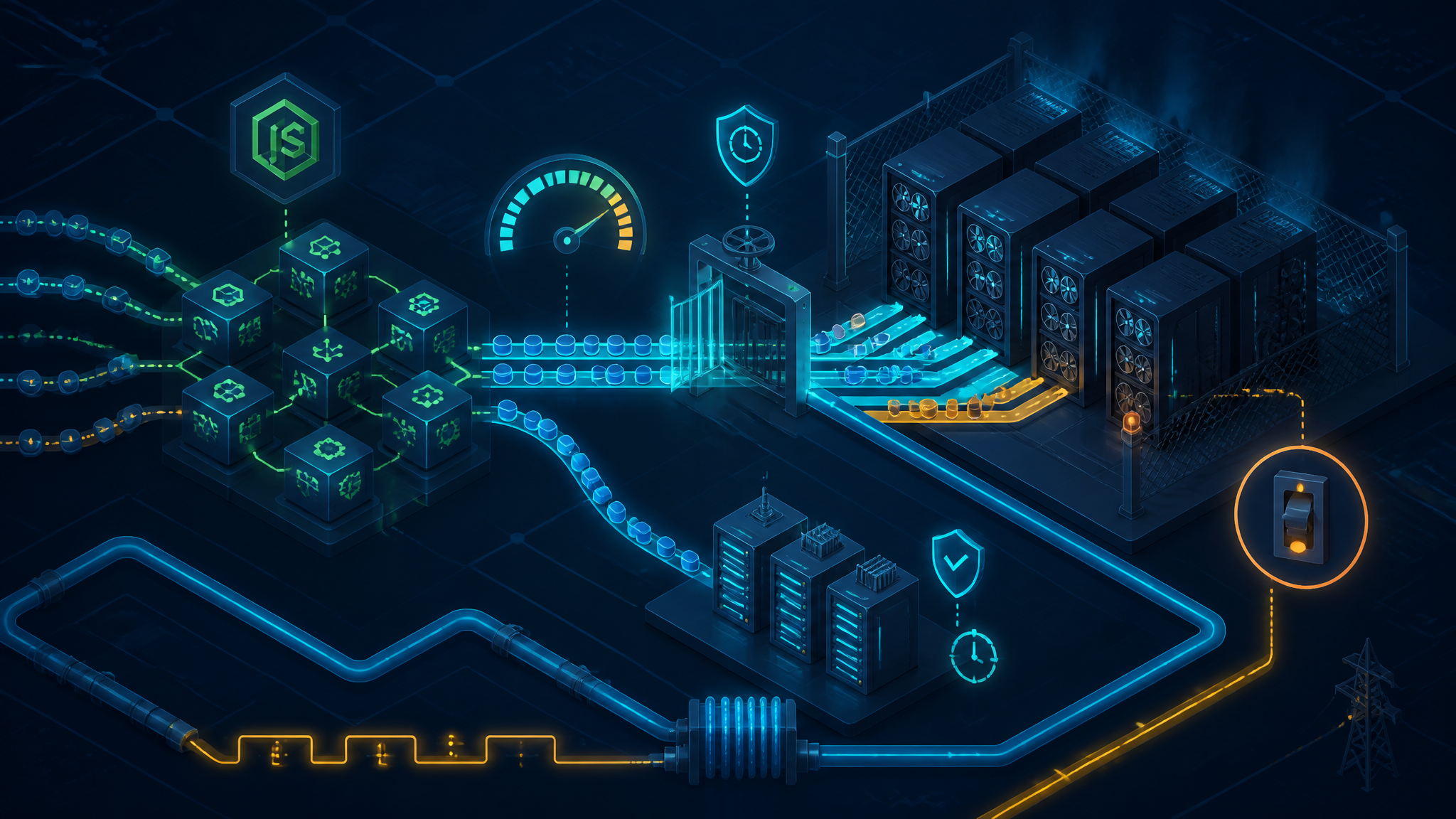
- outbound egress controls so the runtime can only reach approved destinations
- network segmentation for internal tools and data stores
If the workflow runner can talk to everything on the network, then every parsing bug becomes a possible exfiltration path.
Add logging, secret redaction, and execution review for suspicious flows
Good logging is not just about observability. It is a defense control.
A mature setup should:
- redact tokens, cookies, and authorization headers
- avoid dumping full request bodies for privileged actions
- flag unusual connector destinations
- review imported flows before enabling them in production
- keep an audit trail for flow changes and execution context
A workflow that suddenly starts reaching out to new domains or new connectors should get the same attention you would give a suspicious service account.
What is confirmed, what is inferred, and what still needs vendor details
What I can confirm from the source material:
- Help Net Security reported on July 8, 2026 that attackers are using a Langflow flaw for credential harvesting.
- The issue is identified as CVE-2026-55255.
- The material I was given does not include a vendor advisory or a technical root-cause write-up.
What I infer:
- the bug likely involves a trust boundary between flow content and privileged execution state
- workflow systems like Langflow are especially prone to this class of issue because content and configuration are easy to mix
- the real risk is not the editor itself, but the path from untrusted graph data to secret-bearing behavior
What still needs vendor confirmation:
- the exact vulnerable component
- whether the issue affects import, execution, logging, connectors, or all of them
- the precise remediation steps and fixed versions
Conclusion: AI workflow tools need the same boundary discipline as any other production system
My read is that CVE-2026-55255 is less about “AI security” as a special category and more about a very old mistake in a new wrapper: trusting low-integrity content to touch high-integrity secrets.
If I were reviewing a Langflow deployment, I would not start by asking whether the UI looks safe. I would ask where the secrets live, who can influence the execution graph, what reaches the network, and what gets logged when something fails.
That is the real test. If the answers are fuzzy, the boundary is already too soft.