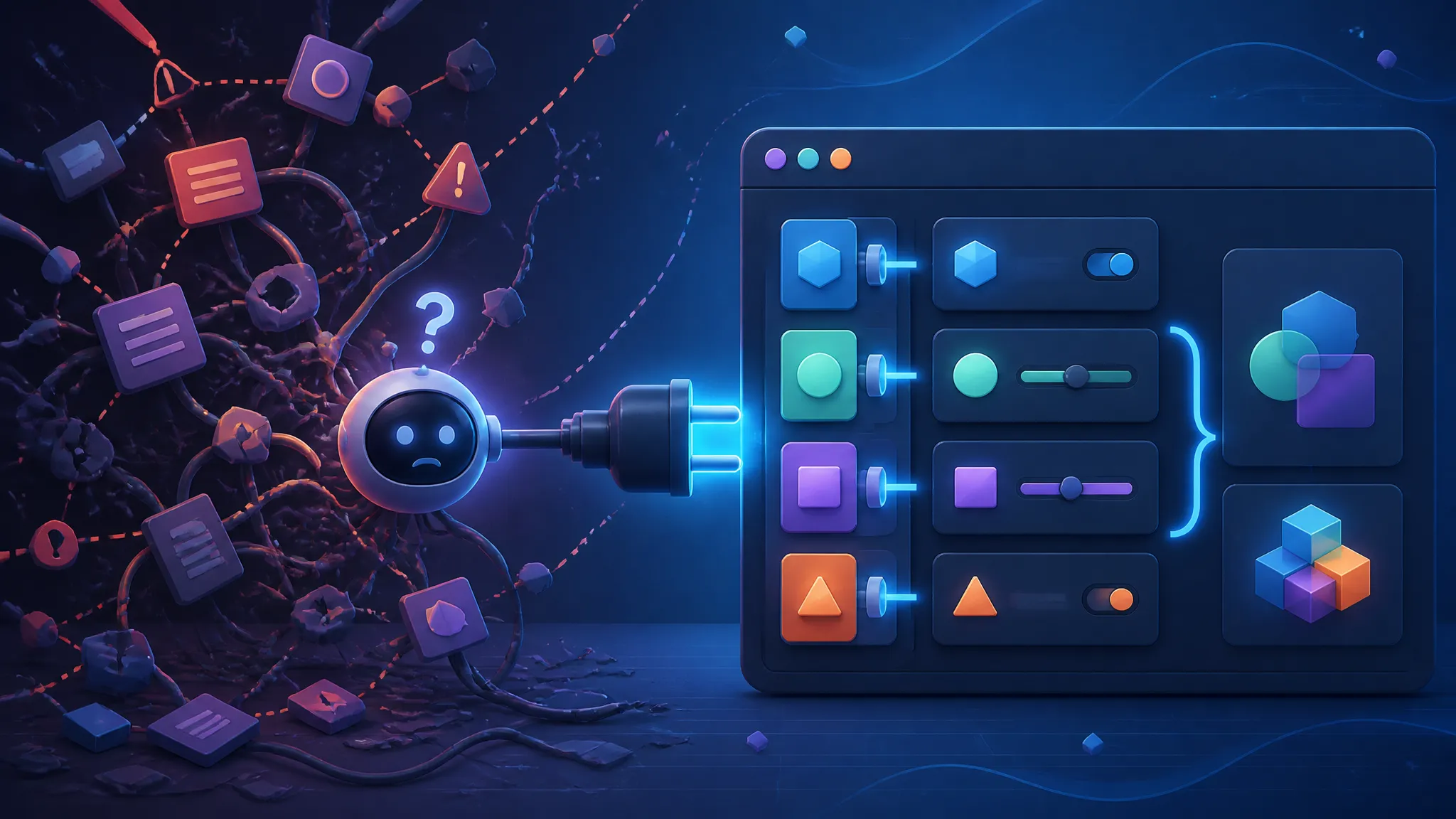
The Real Risk of Vibe Coding: Failing to Understand the Web Platform
Why vibe coding feels productive at first
Vibe coding feels fast because it optimizes for motion, not understanding. You ask for a UI, get a working screen, and can click around right away. That feels like progress.
The real risk shows up when generated code moves from “looks right” to “depends on web platform behavior.” At that point, the browser, the DOM, and the server contract are the actual spec. If you do not inspect them, you can ship code that only works in the happy path the model guessed.
I see this most often in web-development projects that treat the DOM like the source of truth. The UI says one thing, the server expects another, and the browser quietly fills in the gap until production traffic exposes the mismatch.
The web platform is the real contract
DOM state is not application state
A button being enabled does not mean the user is authorized. A hidden field does not mean the value is trusted. A component state variable does not mean the backend agrees.
The DOM is just a view of state. It can be stale, edited, or replaced. If your generated code assumes the rendered UI is the truth, you are already on thin ice.
Client-side checks do not enforce security
This is where a lot of generated code goes wrong:
if (user.role !== "admin") {
  button.disabled = true;
}
That helps UX, but it is not a security control. Anyone can re-enable the button, call the function directly, or send the request outside the browser entirely. The server still has to verify the role.
Event handlers, fetch calls, and storage behave differently than they look
Generated code often treats onClick, fetch, localStorage, and form submission as if they were stable business logic primitives. They are not.
- Event handlers can fire more than once.
fetchis async and can race other state changes.localStorageis shared by tabs and easy to corrupt.- Form submission can serialize values you did not intend to trust.
Once you understand that, a lot of “mysteriously broken” vibe-coded apps become predictable.
A small example that works in the UI but fails in production
Hidden assumptions in form handling
Say a generator gives you this pattern:
function saveProfile(form) {
  const data = new FormData(form);
  data.set("plan", "pro");
  return fetch("/api/profile", {
    method: "POST",
    body: data,
  });
}
In the UI, it looks fine. The user clicks save, the request goes out, and the page updates.
But the hidden assumption is obvious: the client is deciding the plan. If the backend trusts plan=pro, a free account can upgrade itself by changing the request. If the backend ignores it, the UI still lies to the user.
How a backend mismatch turns into a bug
The bug is not the fetch call. The bug is the mismatch between what the frontend suggests and what the backend actually enforces.
A safer version is boring:
async function saveProfile(form) {
  const data = new FormData(form);
  data.delete("plan"); // backend owns billing state
  const res = await fetch("/api/profile", {
    method: "POST",
    body: data,
    credentials: "include",
  });

  if (!res.ok) throw new Error("save failed");
}
Now the backend owns the sensitive field, and the client stops pretending otherwise.
Technical risks developers miss when they do not inspect the platform
Authorization hidden behind disabled buttons
Disabled buttons are one of the most common false signals in generated apps. They make the interface feel controlled, but they do not prevent direct request replay.
If you care about access control, test the endpoint with a second account or a raw request. If the action still succeeds, the UI was decoration.
Race conditions in async UI flows
Vibe-coded async flows often assume operations happen in order:
- submit form
- set loading state
- wait for response
- navigate away
Real browsers do not guarantee your assumptions. A user can double-click. The component can unmount. Two requests can return in the wrong order. A slower response can overwrite a newer one.
The fix is usually not fancy. Track request identity, cancel stale work, and treat loading state as advisory, not authoritative.
Storage and session mistakes
Generated code also loves localStorage for anything that feels convenient. That is fine for theme preference. It is not fine for permissions, billing state, or long-lived trust.
If the browser stores a value that changes server behavior, ask one question: who validates it? If the answer is “the client,” you have found a bug.
How to test generated code instead of trusting it
Inspect requests, state, and server responses
When I review generated code, I start with the network tab, not the component tree. Look at:
- request payloads
- response codes
- whether the server returns the real source of truth
- whether the UI is derived from server state or invented locally
That usually exposes the first bad assumption quickly.
Reduce the example until the bug is obvious
Strip the app down to one form or one button. Remove styling. Remove animation. Remove the framework sugar if needed.
If the issue only becomes visible after simplification, it probably lived in the platform interaction all along.
Verify behavior with a second account or a mocked backend
A second account is better than a dozen screenshots. It shows whether the backend enforces the same rules the UI implies.
If you cannot test against a real second account, use a mocked backend that returns surprising values:
- delayed responses
- rejected requests
- reordered responses
- stale session data
That is where weak assumptions usually break.
What disciplined vibe coding looks like
Ask where the trust boundary is
Before you accept generated code, ask:
- What data comes from the browser?
- What does the server have to re-check?
- What state exists only in memory?
- What happens if the request is repeated or delayed?
Those questions are simple, but they stop a lot of bad code from shipping.
Read the actual browser and server behavior
Do not stop at “the UI works.” Read the request, the response, and the server-side validation. If the browser and backend disagree, the backend wins.
Keep generated code, but verify the assumptions
I am not ضد vibe coding. It is useful when you want a fast draft. The mistake is treating the draft as evidence.
Use generated code to move faster, then verify the parts that depend on the web platform:
- authorization
- state transitions
- async ordering
- storage boundaries
Conclusion
The real risk of vibe coding is not that the code looks sloppy. It is that it can look correct while misunderstanding how the browser and server actually behave.
If you test the platform, not just the UI, you catch the bugs that matter: hidden authorization gaps, stale state, race conditions, and client-side trust leaks. That is the difference between a fast prototype and software you can defend.