The Grafana Token Leak: A Case Study in CI/CD Secret Hygiene
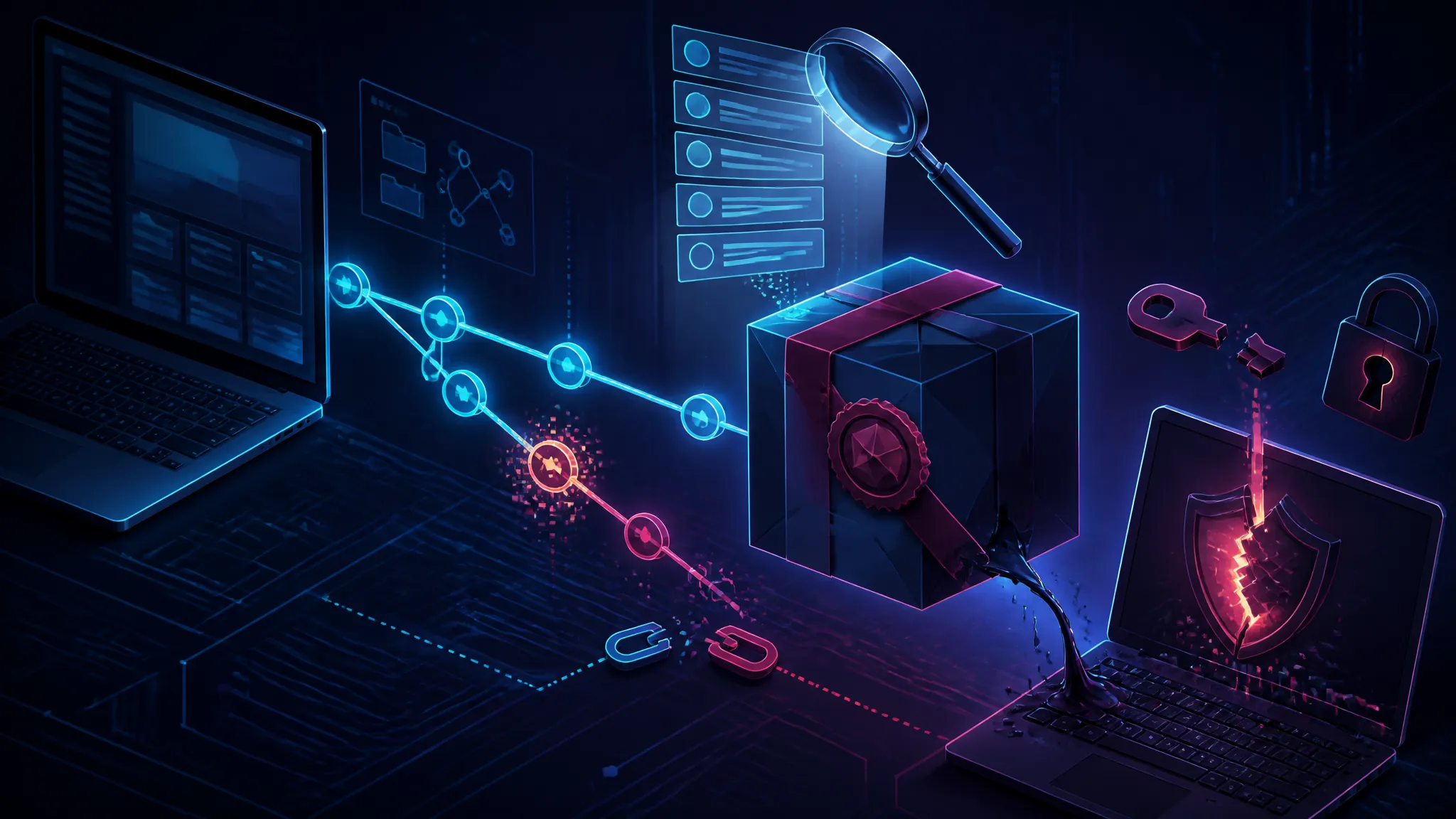
Grafana Labs said a stolen GitHub token gave attackers access to its codebase, and the extortion attempt came after that access was already in place. The useful lesson is not the ransom demand. It is how one compromised CI/CD secret turned into a repository-scale incident.
What happened at Grafana Labs
Public reporting says a GitHub token was compromised and then used to access Grafana's private code. Grafana said it refused to pay the ransom demand. That fits a familiar pattern: token theft first, extortion second.
The important part is not that GitHub is uniquely risky. It is that GitHub access often sits close to build systems, automation, and source distribution. If a token can read enough repositories, secrets, or workflow output, an attacker does not need a clever exploit. They just need your trust in a credential.
Why a GitHub token became a full-codebase incident
Token scope and repository access
GitHub tokens are not interchangeable. A fine-grained token, a classic PAT, a GitHub App installation token, and a machine user all have different permissions and revocation paths. The failure mode is usually the same: the token had more reach than the job that used it needed.
A token with repo read access can expose proprietary code, issue history, release notes, and sometimes configuration files that were never meant to leave the organization. If that same token touches actions, packages, or environment secrets, the blast radius gets much larger.
What attackers can do once they land in GitHub
Once an attacker has valid GitHub access, they can often do more than clone code:
- enumerate private repositories
- read workflow files and infer infrastructure
- inspect release pipelines and artifact names
- search commit history for old secrets
- pull package metadata and dependency relationships
- target maintainers with believable follow-up phishing
That is why the incident matters even if no production system was directly modified. Source access is still a serious compromise.
CI/CD secret hygiene is the real control plane
Common ways tokens leak in pipelines
I usually start audits in the boring places:
- secrets stored in long-lived environment variables
- tokens echoed during debug logging
- credentials baked into build images
- tokens copied into test fixtures or sample config files
- actions that print shell traces with
set -x - artifacts that bundle
.npmrc,.pypirc,.netrc, or deployment manifests
The leak is often accidental. The impact is not.
The difference between read access and blast radius
Read-only access sounds harmless until you map what the token can actually read. A single repository may contain:
- source code
- CI logic
- signing material references
- deployment targets
- internal service names
- backup paths
That is the blast radius. A token does not need write permission to hurt you if it can expose the structure of your system.
| Secret type | Typical risk | Better alternative |
|---|---|---|
| Long-lived PAT | Hard to revoke cleanly, broad scope | Short-lived GitHub App or OIDC token |
| Shared deploy key | Reused across jobs and repos | Per-environment identity with narrow scope |
| Logged env secret | Ends up in build output and artifacts | Masked secrets with log review |
| Human maintainer token | Expands personal compromise into org access | Separate automation identity |
How to audit your own GitHub and CI/CD secrets
Inventory tokens, apps, and service accounts
Make a list of every credential that can touch GitHub, artifact storage, or deployment tooling. Include human accounts, bot accounts, GitHub Apps, and cloud identities. If nobody can explain why a token exists, that token is probably a legacy risk.
Check for overbroad scopes and long-lived credentials
Look for tokens with more scope than the job needs. A build job usually does not need owner-level repository access. A release job usually does not need broad read access to unrelated private repositories. Long-lived secrets should be the first thing you try to remove.
Look for secret exposure in logs, artifacts, and build output
Search for tokens in:
- CI logs
- archived artifacts
- container layers
- debug dumps
- crash reports
- build caches
A useful test is to rotate one secret, then ask where the old value still appears. If the answer is "somewhere in CI," you do not have secret hygiene yet.
Defensive patterns that reduce the blast radius
Short-lived credentials and OIDC
Where possible, replace static tokens with short-lived credentials issued at runtime. OIDC-based federation is a strong default for cloud and deployment access because it removes the need to store a reusable secret in the pipeline.
Repository permissions, branch protections, and environment controls
GitHub permissions should be narrow by default. Use branch protections, required reviews, and environment approvals to keep a token from turning into an unattended release path. If a workflow can publish from any branch with one secret, the workflow is doing too much.
Rotation, revocation, and detection after compromise
If you think a token is exposed, revoke first and investigate second. Then rotate dependent credentials, invalidate sessions, and review audit logs for unusual repo reads, workflow edits, or package downloads. Detection is useful, but revocation is what stops the bleeding.
Do not treat a leaked read-only token as low impact. In CI/CD, read access often includes source, workflow logic, and the map of everything else worth stealing.
What this incident means for open source maintainers
Open source teams often run with a small security margin. Maintainers have fewer people, more automation, and more public metadata to protect. That makes token discipline more important, not less.
If you maintain a public project, the practical baseline is simple: separate human and machine access, minimize scopes, rotate aggressively, and assume every workflow log will eventually be searched by someone you did not invite.
Conclusion
The Grafana incident is a reminder that the weakest link is often not a zero-day. It is an overtrusted token sitting inside a system built to move fast.
If you want one actionable takeaway, make it this: audit credentials by blast radius, not by convenience. A token that can read your codebase can also read your architecture, your habits, and sometimes the next compromise path.
That is why CI/CD secret hygiene is not a cleanup task. It is part of the control plane.