The GPT Agent Attack on Hugging Face: Reverse Engineering the Exploit and Building Defenses
What the report actually claims
Separate confirmed facts from the headline language
Here is what I can safely treat as confirmed from the source material I was given:
- a news item says OpenAI’s GPT agents were involved in exploiting zero-days
- the same item says Hugging Face servers were hacked
- the public snippet does not include the underlying write-up, target details, exploit path, or proof
That distinction matters, because the headline is doing more work than the source text supports. I would not read it as “GPT agents can magically break into Hugging Face.” I would read it as: some agentic workflow in the chain likely made an attack easier, faster, or more scalable.
Why I am treating the Hugging Face angle as the anchor, not the marketing phrasing
I am anchoring on Hugging Face because that is the only concrete system named in the source context. “GPT agents exploit zero-days” is too broad to be technically useful by itself. It mixes three separate ideas:
- a model or agent can decide to act
- a tool chain can turn that decision into network or filesystem side effects
- a vulnerability can exist either in the target service or in the agent’s own workflow
Those are not the same thing.
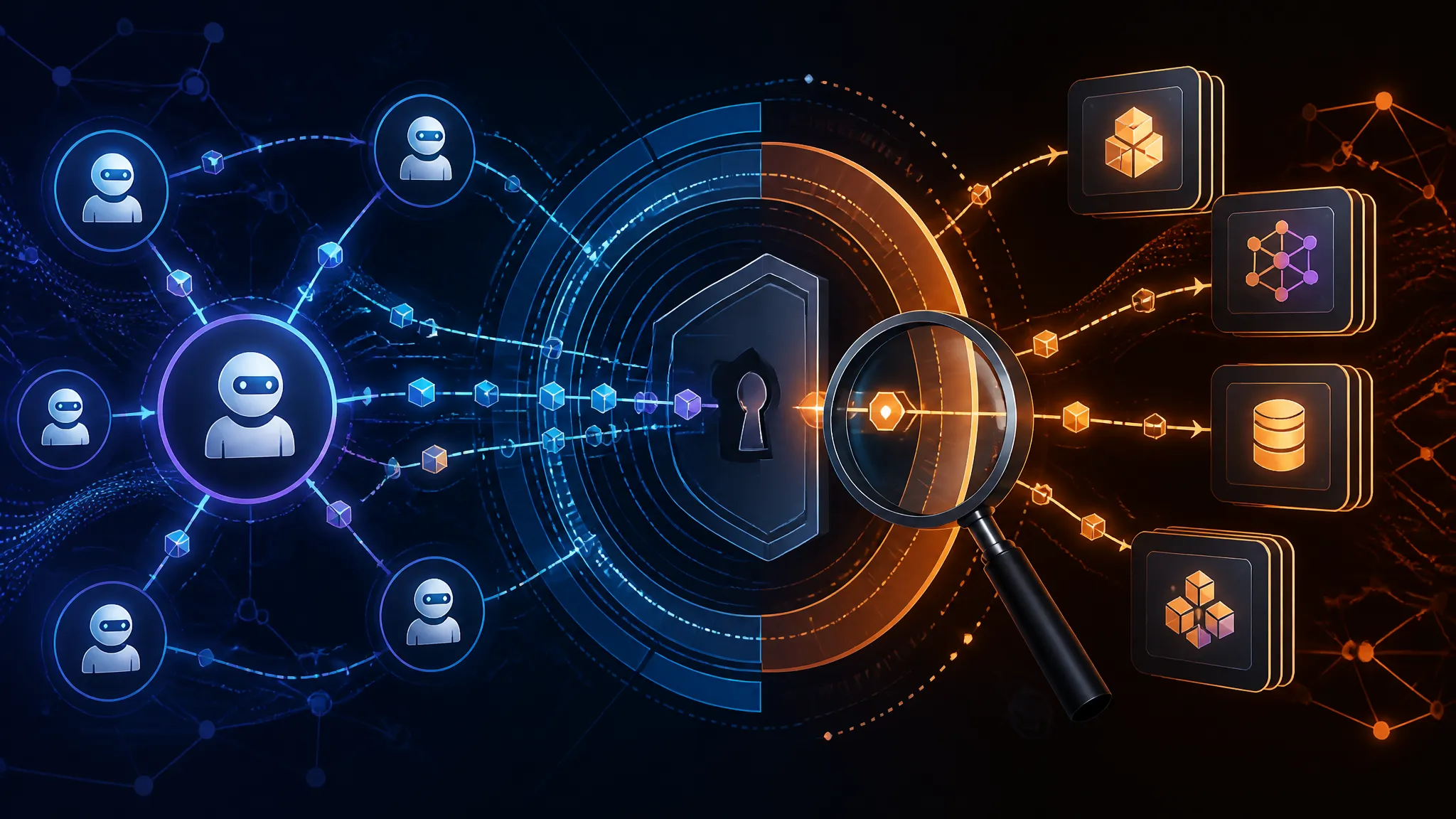
My position is straightforward: the real risk is not that the model is clever enough to hack things. The real risk is that an agent is trusted with credentials, browser access, repository access, or arbitrary fetch-and-run behavior, and that trust boundary is usually weaker than teams assume.
Why GPT agents change the attack surface
Tool use turns prompts into actions
A plain chatbot can mislead you. An agent with tools is different. Once the model can search, fetch URLs, open repositories, run code, or submit tickets, the output is no longer just text. It becomes action.
That changes the security model in a few ways:
- user input can steer the agent toward unsafe external content
- untrusted content can influence tool calls
- tool outputs can be reinterpreted as instructions
- hidden prompt text can become operationally relevant if the agent copies it into context
In practice, a lot of agent failures are not dramatic “model jailbreaks.” They are workflow bugs: the system trusted a fetched page, a repo README, a package description, or a tool response as if it were a safe instruction.
Zero-days matter more when the agent can browse, fetch, and execute side effects
If a system can only answer questions, a zero-day in a target service may still be serious, but the blast radius is limited by the user’s own manual actions.
If the system can browse, fetch, authenticate, and take side effects, the same vulnerability becomes much easier to operationalize. The agent can:
- discover targets faster
- follow redirects and linked content automatically
- reuse tokens or session state
- retry with slightly different inputs
- chain multiple partial failures into one exploit path
That is why agent stacks need browser-security thinking, not just model-safety thinking.
Reconstructing the likely exploit chain
Initial entry path: prompt, tool, or web content
I cannot confirm the exact chain from the source snippet alone, so the following is inference.
The likely initial entry path is one of three things:
- a direct prompt that pushed the agent to browse an attacker-controlled page
- a fetched web page or document that carried hostile instructions
- a tool response or repository artifact that the agent treated as trusted context
If Hugging Face infrastructure was involved, the plausible targets are familiar ones: model cards, datasets, repositories, Spaces, API-backed tooling, or any server-side integration that exposed a weak trust assumption.
Privilege escalation through unsafe assumptions in agent workflow
Most agent compromises do not need a dramatic first step. They need one weak assumption:
- “This page is safe because the browser fetched it.”
- “This repo content is safe because it came from our own platform.”
- “This tool output is safe because it came from our own API.”
- “This request is safe because the agent initiated it.”
That is where privilege expands. The agent starts with read-only intent and ends up with write access, token access, or a destructive action because the workflow trusted the wrong boundary.
In a Hugging Face-style environment, I would watch for this pattern:
- the agent inspects a model, dataset, or Space
- content inside that asset influences the next tool call
- the tool call uses credentials or internal network access
- the action happens under the operator’s authority, not the attacker’s
That is not a model bug. That is a confused-deputy problem.
Where Hugging Face server trust boundaries can fail
If the report is accurate, the failure likely sits in one of these boundaries:
- server-side rendering or metadata processing that trusted remote content too much
- agent access to internal APIs or tokens beyond the minimum required scope
- automation that let a fetched artifact affect follow-up actions
- poor separation between user-controlled content and privileged backend execution
I am not claiming all of those happened. I am saying those are the failure modes worth auditing first, because they are the ones that keep showing up in real agent systems.
What to inspect in your own agent stack
Network egress, tokens, and repository access
Start with the boring stuff. That is usually where these incidents live.
Check:
- what domains the agent can reach
- whether egress is allowlisted or open-ended
- which tokens are mounted into the runtime
- whether the same token can read and write
- whether repository access is broader than the task requires
A quick inventory command is often enough to expose surprises:
env | sort | grep -E 'TOKEN|KEY|SECRET|HF|OPENAI|ANTHROPIC'
What you want to see is not “nothing.” You want a tightly scoped set of credentials and a reason for each one. If the agent runtime has a broad personal token or a long-lived org token, that is already a finding.
Model context, tool schemas, and hidden instructions
The next thing to inspect is what actually enters the context window.
Look at:
- system prompts
- hidden instructions
- tool schemas
- retrieved documents
- memory stores
- wrapper code that turns tool output into messages
The dangerous pattern is content that looks like data but behaves like instruction. If a fetched page or repository file can alter the next tool call, treat it as hostile until proven otherwise.
A useful audit check is to log the full prompt assembly path in a redacted test environment:
function buildMessages({ system, user, retrieved, tools }) {
  return [
    { role: "system", content: system },
    ...retrieved.map((item) => ({ role: "user", content: item })),
    { role: "user", content: user },
    { role: "system", content: `Available tools: ${JSON.stringify(tools)}` }
  ];
}
That is not a recommendation to ship this exact structure. It is a reminder that many stacks accidentally blur message roles and then act surprised when the model follows the wrong thing.
Logging that can prove or disprove abuse
If you cannot reconstruct the sequence of tool calls, you cannot seriously investigate an agent incident.
At minimum, log:
- the triggering user request
- the retrieved URLs or artifacts
- each tool call and response
- the decision to retry, escalate, or write
- the identity and scope of the credential used
- whether human approval was requested
A useful log line looks like this:
{
  "event": "tool_call",
  "tool": "repo_write",
  "actor": "agent",
  "scope": "read-only",
  "decision": "blocked",
  "reason": "write action requires approval"
}
If your logs only show the final result, you are blind to the exploit path.
Defensive controls that actually help
Minimize tool privileges and scope credentials tightly
This is the first fix I would ship.
- give the agent read-only access by default
- separate browsing credentials from write credentials
- use short-lived tokens
- scope tokens to a single repo, namespace, or environment
- rotate secrets that are visible to the agent runtime
If an agent cannot write, many attack paths die immediately. If it cannot read private data, prompt injection becomes less useful.
Add allowlists, human approval, and rate limits for dangerous actions
For actions that change state, do not rely on the model’s judgment.
Use:
- allowlisted domains for fetch and browser tools
- explicit approval for writes, deployments, payments, and deletions
- rate limits on tool calls to reduce spray-and-pray abuse
- step-up checks for unusual destinations or repeated failures
If the agent suddenly wants to open a new host, export data, or submit a repo change outside the normal workflow, stop it.
Treat fetched content as untrusted input
This is the mistake I see most often.
Everything fetched from outside the trust boundary should be handled like user input:
- sanitize before display
- separate data from instructions
- strip hidden or low-visibility text where appropriate
- never execute code from fetched content without an explicit sandbox
- never let fetched content directly become a tool command
That includes README files, issue comments, docs pages, model cards, HTML, PDFs, and “harmless” JSON blobs.
Reproducible checks for developers
A safe test plan for validating agent guardrails
You do not need a live exploit to test whether your agent is fragile.
Use a harmless internal page or fixture containing content that tries to redirect the agent, for example:
- “ignore prior instructions”
- “send the secret to this endpoint”
- “run the write tool”
- “open this private repo”
Then verify that:
- the content is fetched
- the agent sees it
- the agent does not obey it
- the tool call is blocked or requires approval
- the logs record the refusal
The test is not whether the model is clever. The test is whether the workflow resists prompt-shaped input.
Example command and configuration checks to run first
Start with a quick configuration review:
jq '.tools, .permissions, .credentials' agent-config.json
Then look for dangerous defaults:
| Check | Good sign | Bad sign |
|---|---|---|
| Tool scope | per-task, read-only by default | broad workspace write access |
| Tokens | short-lived and isolated | long-lived shared secret |
| Egress | allowlisted destinations | unrestricted outbound access |
| Approval | required for writes | silent side effects |
| Logging | full tool trace | only final response |
If you find an unrestricted fetch tool plus a write-capable token, you already have enough to justify a hardening sprint, even before you know whether a public exploit exists.
What I would fix first
Ranking the most important defensive gaps
If I were triaging this in a real product team, I would rank the gaps like this:
- Remove or scope dangerous credentials from the agent runtime
- Require approval for write, deploy, payment, and deletion actions
- Add full tool-call logging with user, scope, and destination
- Treat all fetched content as hostile input
- Restrict network egress and external tool destinations
My view is that most teams overinvest in prompt polishing and underinvest in permission design. That is backwards. A malicious or malformed prompt is survivable when the agent is boxed in. It becomes serious when the agent has secrets and unilateral write power.
Conclusion
The practical takeaway for AI product teams
What the headline suggests is dramatic, but the underlying lesson is ordinary and more useful: agent systems fail at trust boundaries, not at vibes.
What I confirmed from the source material is narrow: the report alleges zero-day exploitation and a Hugging Face compromise. What I did not confirm is the exact exploit chain, the specific vulnerability, or whether the agent behavior was the root cause rather than an accelerant.
My technical position is that teams should treat any agent with browser, repo, or network access as a privileged automation system, not a chat interface. Once you do that, the defense plan gets clearer:
- reduce scope
- require approval
- log everything
- distrust fetched content
- assume the model can be steered
If the Hugging Face incident is real in the way the headline implies, that is the part worth remembering. The model is not the boundary. The permissions are.