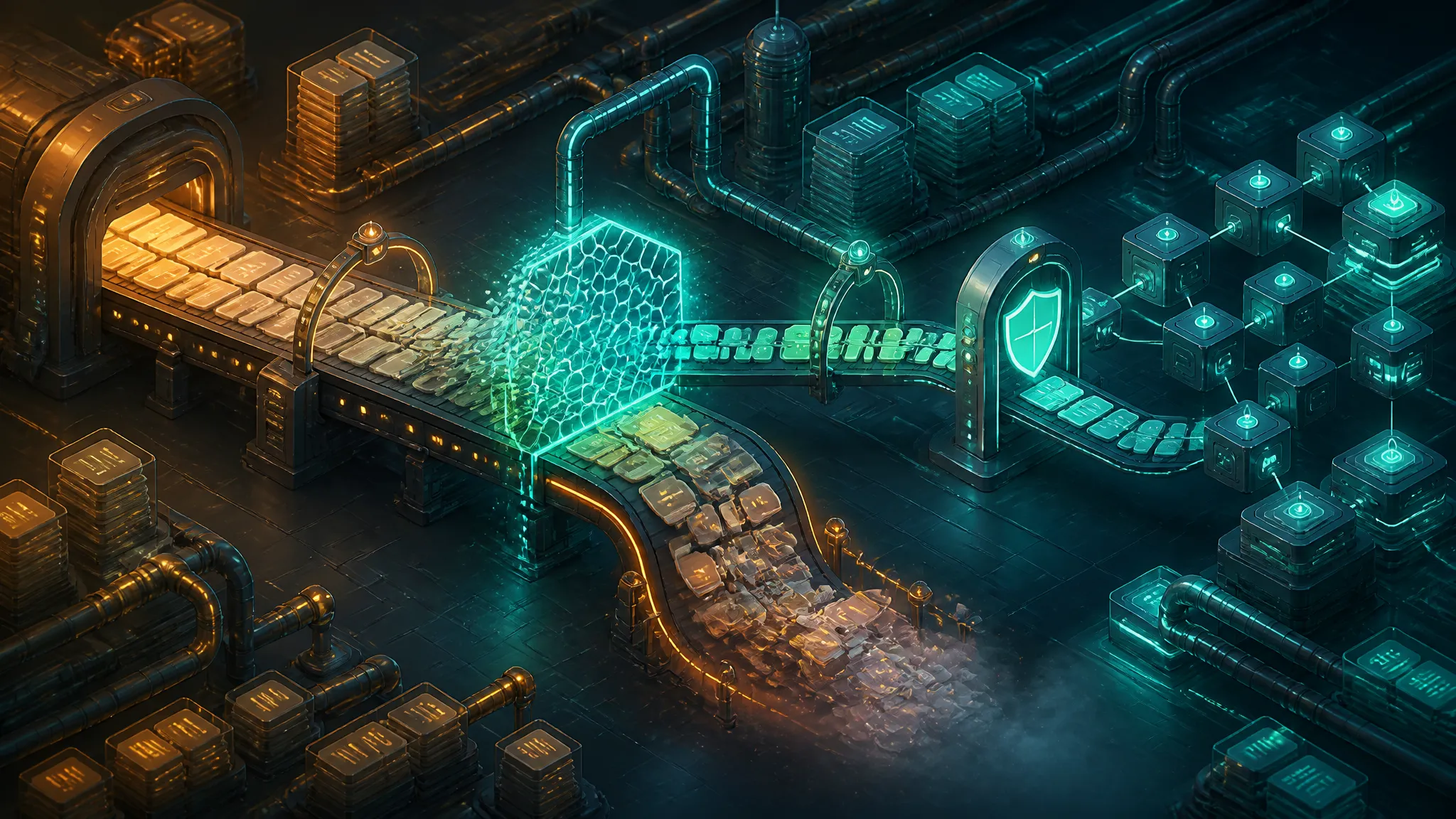
Security Considerations for AI-Generated Infrastructure-as-Code (IaC)
AI-generated Terraform or CloudFormation can look fine until it quietly opens a bucket, widens an IAM role, or exposes a network path nobody planned for. The problem is not that a model wrote the code. The problem is that generated infrastructure often sounds reasonable enough to skip the review that would have caught the mistake.
Why AI-generated IaC changes the risk profile
With hand-written IaC, there is usually some memory of intent: who asked for it, which ticket drove it, and what constraints were already agreed on. Generated IaC weakens that chain. A model can produce syntactically valid code that matches the prompt but not the real policy.
The failure mode is subtle. The output may deploy cleanly and still be wrong in a way that only shows up later:
- a security group allows
0.0.0.0/0 - an S3 bucket is public by default
- a KMS key exists, but nothing uses it
- logs are configured, but retention is too short to be useful
The code passes because it is structurally valid. The problem is semantic, not syntactic.
Where the security failures usually appear
Over-permissive resources and default-open access
This is the easiest class of bug to miss. Generated IaC often favors “make it work” over “make it narrow.”
Common examples:
- IAM actions like
* - security groups that allow all inbound traffic
- storage resources without block-public-access controls
- load balancers or APIs exposed without an explicit allowlist
The dangerous part is that these defaults are often reusable. One sloppy module gets copied into three more environments before anyone notices.
Missing encryption, logging, and ownership controls
A model can create the resource and forget the controls around it.
Look for:
- encryption at rest not enabled
- TLS not required on endpoints
- CloudTrail, audit logs, or flow logs missing
- no retention policy
- no tags or owner metadata
If a generated stack creates data storage, assume encryption, logging, and retention are missing until you verify them.
Broken assumptions in modules and variables
AI output often invents variables or module inputs that look reasonable but do not match the real environment. That creates a second risk: the code may be secure in isolation but unsafe when wired into existing modules.
Typical issues:
- a variable defaults to
truefor public access - a module expects a subnet list, but gets the wrong tier
- a variable intended for a dev account is reused in prod
- a conditional disables controls in the name of flexibility
This is where you need to read the call graph of the infrastructure, not just the resource block.
What to validate before any plan reaches production
Static checks with linters and policy-as-code
I start with automated checks because they catch the obvious problems fast.
Use:
terraform fmtandterraform validatetflintfor provider-specific mistakescheckov,tfsec, orterrascanfor known insecure patterns- policy-as-code with Sentinel, OPA, or custom CI rules
The point is not to trust the tools blindly. It is to stop the easy misses before a human spends time on them.
A simple rule set should flag:
- public ingress without an exception
- missing encryption flags
- wildcard IAM actions
- resources without required tags
- logging disabled on sensitive services
Semantic review of IAM, network, and data paths
Static tools do not understand intent well enough. You still need a human pass on the security shape of the plan.
I look at three paths:
| Path | What to trace | Typical failure |
|---|---|---|
| IAM | who can do what | overly broad role or trust policy |
| Network | what can reach what | open ingress or unintended egress |
| Data | where sensitive data goes | unencrypted storage or public exposure |
If the infrastructure moves credentials, customer data, or backups, the review needs to show the exact boundary where that data is protected.
Safe test runs in ephemeral environments
Do not test generated IaC first in a shared or long-lived account. Use an ephemeral environment with disposable data.
A good test run should confirm:
- the plan matches the intended footprint
- the resource count is sane
- the created endpoints are not public unless required
- the logs and alerts actually appear
- teardown works cleanly
That last item matters more than people expect. If deletion fails, drift and surprise tend to follow.
A practical review workflow for generated Terraform or CloudFormation
Prompt review and scope limits
The prompt is part of the artifact. If you let the model infer too much, it will invent architecture.
Keep prompts narrow:
- specify the cloud and service
- name the required security baselines
- forbid public exposure unless explicitly needed
- define the account or environment
- name the approved module set
If the prompt says “create a secure VPC,” that is too vague. Say what secure means in your environment.
Diff review against approved baselines
Generated IaC should not be reviewed as a blank page. Compare it against a known-good baseline.
Look for:
- new resources not requested
- changed defaults in modules
- relaxed security groups
- removed logging or tagging
- altered trust policies
A diff review makes it easier to spot the one line that quietly changed the security posture.
Human approval and change tracking
No generated stack should go straight from model output to apply. The human approval step needs to be explicit, not ceremonial.
Track:
- who requested the generation
- what prompt was used
- which output was approved
- which reviewer signed off
- which environment received the change
This gives you accountability when the plan is technically valid but operationally wrong.
Governance controls that reduce drift and surprise
Templates, guardrails, and module allowlists
You get better results when the model is constrained to approved building blocks.
Useful controls include:
- pre-approved templates
- an allowlist of modules
- enforced naming and tagging rules
- mandatory encryption and logging defaults
- banned patterns for public exposure
The more opinionated the framework, the less room there is for creative insecurity.
Separation of duties for generation and deployment
The person prompting the model should not be the only person approving and applying the result. That separation matters even in small teams.
A clean split is:
- engineer generates the draft
- reviewer checks intent and security
- platform or ops approves deployment
- CI/CD applies with scoped credentials
That is boring on purpose. Boring is good here.
Audit trails for prompts, outputs, and apply actions
If you cannot reconstruct how a bad resource got deployed, you do not really have governance.
Keep records of:
- the original prompt
- the generated files
- review comments
- policy results
- plan output
- apply logs
When something goes wrong, those records tell you whether the model was the problem or the controls around it were.
What to do when the generated code is wrong
Reject it, fix the prompt, and regenerate from a tighter spec. Do not patch a badly scoped output with random edits unless you can explain every change.
If the issue is structural, add a guardrail:
- a policy rule
- a module constraint
- a baseline template
- a review checklist item
If the issue is recurring, the prompt is probably too open-ended.
Conclusion
AI-generated IaC can save time, but it also compresses the distance between “looks correct” and “deployed everywhere.” The safe way to use it is to treat the output like untrusted draft code: lint it, reason about it, test it in disposable environments, and require a human to approve the security shape of the plan.
The model can draft infrastructure. It should not be allowed to decide your trust boundaries.