Security Answer Autopsy: What Buyers Notice When You're Vague
Why vague security answers fail fast
I've watched a lot of security questionnaires stall on one familiar line: “We take security seriously.”
That sentence does not answer the question. Buyers are not scoring confidence. They are checking whether the answer ties back to a control, an owner, and some proof that the control actually runs.
The issue is not just style. Vague responses make it hard to tell whether you have:
- a policy only
- a real operational control
- a control that is partly manual
- a control that does not apply to the product they are buying
That uncertainty slows review, and sometimes it gets treated as a risk by default.
What buyers actually check
Most buyers are doing three quick checks, even when the questionnaire looks formal.
Evidence, not adjectives
They want artifacts. That might be a policy, a screenshot, a ticket, a report, a SOC 2 excerpt, or a dated process record. The real question is simple: can someone verify the claim?
A good answer names the control and points to proof:
- MFA enforced in the admin console
- quarterly access review ticket
- log retention setting in the cloud account
- vulnerability scan cadence with a sample report
A vague answer leans on words like “robust,” “enterprise-grade,” or “industry-standard” and stops there.
Scope, ownership, and dates
Buyers also check scope. They want to know whether the statement applies to production, all employees, contractors, or just one internal system.
Then they look for ownership. Who runs the control? Security, IT, platform, or engineering?
Finally, they care about freshness. A control documented in 2022 with no sign of review since then starts to look like shelfware.
Common vague-answer patterns
"We take security seriously"
That usually means nothing concrete follows.
If you say this, the next line should be specific:
- “All production access requires SSO and MFA.”
- “Secrets are stored in AWS Secrets Manager and rotated on a 90-day schedule.”
- “Alerts from the SIEM are reviewed by on-call security within one business day.”
The goal is not to sound impressive. The goal is to make the claim testable.
"We are compliant" without context
Compliance is not a control. It is usually a snapshot of a control set, and it often applies to a defined scope.
If you mention compliance, say:
- which framework
- which product or environment is in scope
- whether the certificate covers the service the buyer uses
- the date of the latest assessment
Without that, “compliant” just creates more questions.
"Our team handles that"
That answer hides ownership instead of naming it.
Buyers want to know whether “our team” means:
- a named role
- a specific vendor
- a rotating duty
- an outsourced service desk
If the control depends on people, say who approves, who reviews, and what happens when they are unavailable.
How to answer with useful precision
State the control, the owner, and the proof
A useful pattern is:
- control: what exists
- owner: who runs it
- proof: what shows it is active
Example:
Production deployments require peer review and CI checks. Engineering owns the workflow, and the merge policy is enforced in GitHub with branch protection rules and audit logs.
That tells the buyer what is true, where it lives, and how they can verify it.
Separate policy from implementation
Policy says what should happen. Implementation says what actually happens.
A lot of weak answers blur those together:
- “We have a password policy.”
- “We have access reviews.”
- “We have logging.”
Better:
- “Our password policy requires MFA for all staff accounts.”
- “The implementation is enforced by the identity provider, not by user instruction.”
- “Access reviews run quarterly and are tracked in Jira.”
That distinction matters because buyers know policies can exist without enforcement.
Say what is automated and what is reviewed
This is where most real risk shows up.
If a control is automated, say how:
- enforced by SSO
- blocked by CI
- rotated by secret manager
- monitored by cloud alerts
If it is reviewed manually, say by whom and how often:
- weekly alert triage by security
- monthly access review by IT
- quarterly incident review by leadership
That split shows maturity. It also shows where the weak spots are if they want to dig deeper.
A simple buyer-ready answer template
Use this structure when you need to answer quickly:
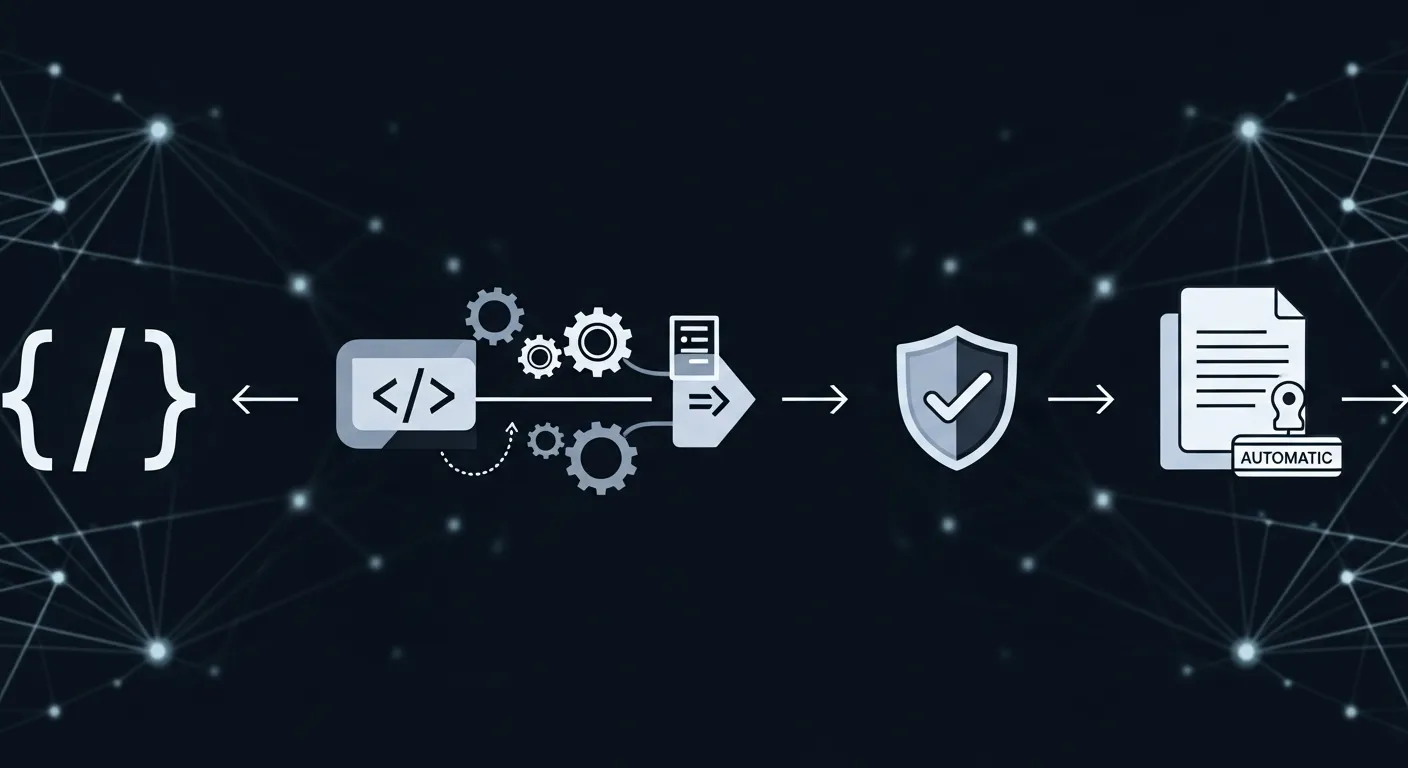
[Control] is enforced by [system or process]. [Team or role] owns it. We verify it through [artifact, report, or log], and it is reviewed [frequency].
Example:
MFA is enforced for all internal staff accounts through our identity provider. IT owns the control. We verify enforcement through admin console settings and monthly access checks.
That is not flashy, but it is usable.
Checklist before you send the response
Before you hit send, check each answer against this list:
- Does it name the actual control?
- Does it say who owns it?
- Does it distinguish policy from enforcement?
- Does it include scope?
- Does it mention a date, frequency, or review cycle?
- Can you point to evidence if asked?
- Would a buyer still have to guess what you meant?
If the answer is yes to any of those last two, rewrite it.
Closing notes
The strongest security responses are usually plain. They do not oversell. They do not hide behind compliance language. They say what exists, who runs it, and how it is checked.
That is what reduces friction.
If you want faster review, stop writing like you are defending the company in abstract terms. Write like someone who expects the next question to be, “Show me.”