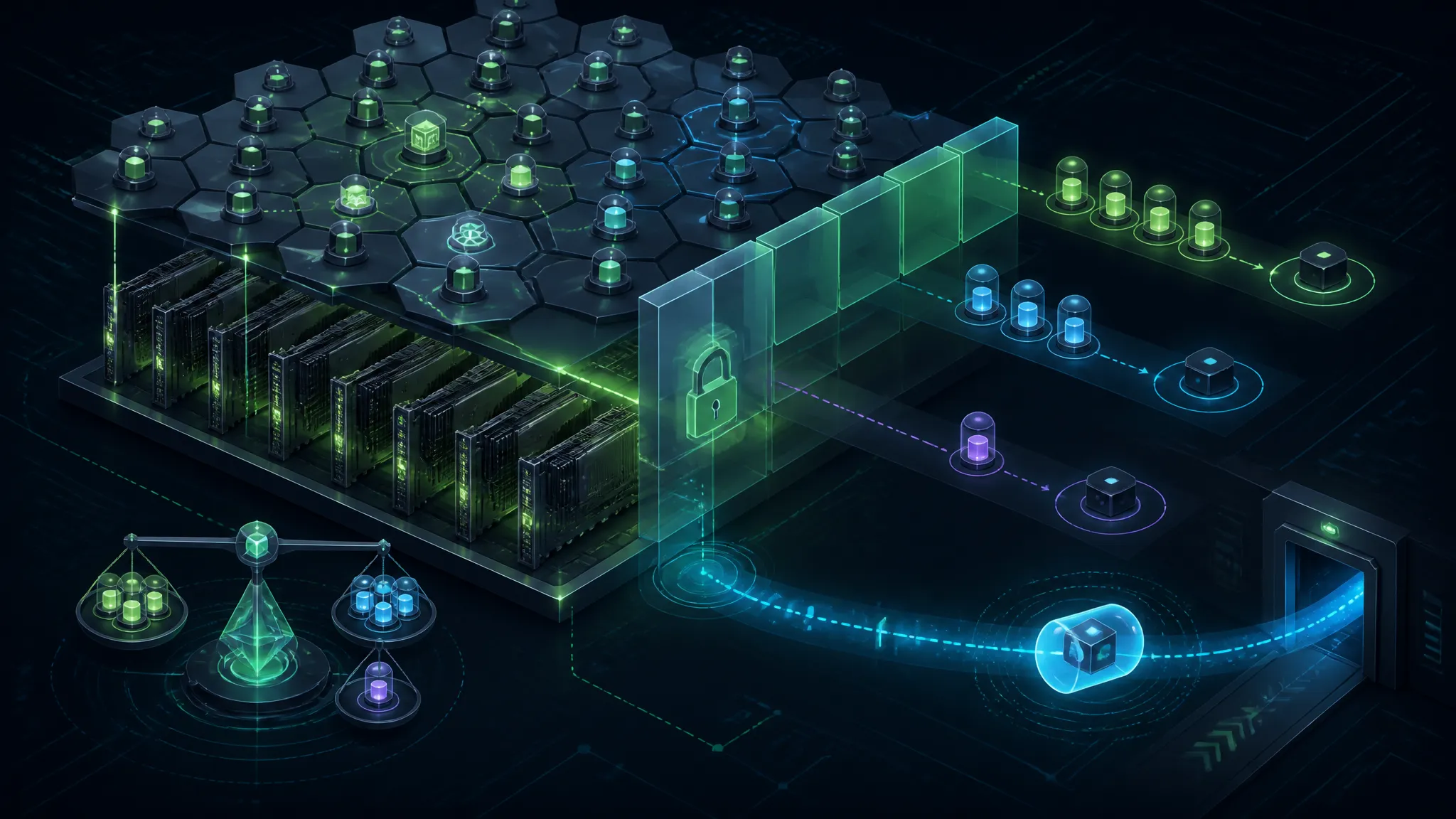
Lessons from the Hugging Face AI Agent Breach: Locking Down Model Access
The public seed on this story is thin, and that matters.
What I can confirm from the source material is narrow: a report from The Hacker News says Hugging Face was breached by an autonomous AI agent. What I cannot confirm from the snippet alone is the exact path, the affected repo, whether private weights were exposed, or whether “autonomous” means fully self-directed rather than a scripted tool chain with some agent branding.
My view is blunt: the buzzword is not the point. The real issue is that model repositories now sit on the same trust boundary as source code, package registries, and CI secrets. If you let an agent touch them, you need real authorization controls, not UI guardrails.
What the report says and what is actually confirmed
Confirmed from the public context available here:
- A report claims Hugging Face was breached.
- The reported actor was an autonomous AI agent.
- The target was a large AI model repository.
Not confirmed from the snippet:
- Which repository or namespace was involved.
- Whether the compromise was read-only exposure, unauthorized upload, or account takeover.
- Whether the agent was external, internal, or operating through another compromised tool.
- Whether any model artifacts, tokens, or metadata were actually exfiltrated.
That distinction matters because the security lesson changes with the failure mode. A read leak says one thing. A write-path takeover says something harsher. A namespace confusion bug says something else again. Since the public context is limited, I’m staying on the control-plane lesson: model access needs to be treated as an authorization problem first, and an AI problem second.
Why autonomous agents change the model-access threat model
Traditional users are slow. Agents are fast, repetitive, and willing to follow instructions a human would stop to question.
That changes three things:
- Volume: an agent can enumerate repos, retry failed requests, and chain actions faster than a reviewer can notice.
- Distance: the person who typed the prompt is not always the person who approved the access.
- Ambiguity: the agent may mix content retrieval, metadata lookups, uploads, and admin actions in one session.
In a normal app, a bad authorization check usually needs a user to click the wrong thing. With an agent, the tool itself becomes the clicker.
The deeper problem is that model repositories are not just storage. They’re versioned, permissioned artifacts with public/private boundaries, org ownership, visibility settings, forks, upload flows, and often webhooks or CI hooks around them. Once an agent can read and write in that ecosystem, a weak scope definition becomes a security bug multiplier.
Where model repositories usually get authorization wrong
Public versus private model boundaries
The first place I would check is the read boundary.
A lot of systems get “public” and “private” right in the UI but wrong in the API. The UI hides the button, the API still leaks metadata. Or the reverse: the list view hides the repo, but a direct fetch endpoint still returns the object if you know the name.
Common failure modes include:
- private repo names showing up in search or autocomplete
- preview endpoints disclosing metadata that should be gated
- cached snapshots remaining visible after visibility changes
- download URLs working after the repo was switched to private
If a repository is private, every route that can reveal it has to enforce that decision server-side. Hiding it in a React component does not count.
Token scope, delegation, and write access
This is where the breach story gets more operational.
A single broad token is often treated as “good enough” for both humans and agents. That is the wrong default. If a token can list repos, download artifacts, upload new ones, edit metadata, and manage org settings, then it is not a token. It is a skeleton key.
The safer pattern is to separate:
- read-only tokens for fetching models or metadata
- upload-scoped tokens for CI or publishing workflows
- admin tokens for humans only
If your agent uses a human personal access token, you’ve already lost the least-privilege argument. If the token survives across sessions, device changes, and prompt contexts, it will eventually be reused somewhere you did not intend.
Agent tools that can act faster than review
Agents become dangerous when the tool layer auto-corrects for failure.
A few examples I would specifically test for:
- automatic retries after
401or403 - silent token refresh with a broader replacement token
- tools that fall back from “read” to “write” if the read path fails
- upload steps that are queued without human confirmation
- helper functions that merge “check repo state” and “mutate repo state” into one call
If the agent can keep trying until it finds a permission path that works, the policy is not controlling the agent. The agent is stress-testing the policy.
A safe way to audit model-access controls
Check the read path, then the write path
I usually start with a matrix: same resource, different token, different verb.
Use staging or a test org, not production. A minimal shell harness is enough:
#!/usr/bin/env bash
set -euo pipefail

API_BASE="${API_BASE:?set API_BASE}"
REPO="${REPO:?set REPO}"

read_token="${READ_TOKEN:?set READ_TOKEN}"
write_token="${WRITE_TOKEN:?set WRITE_TOKEN}"

echo "== read access =="
curl -sS -D - \
  -H "Authorization: Bearer $read_token" \
  "$API_BASE/repos/$REPO" \
  -o /tmp/read-body.txt | sed -n '1,5p'
echo "--- body ---"
cat /tmp/read-body.txt

echo
echo "== write access with read token =="
curl -sS -D - \
  -X POST \
  -H "Authorization: Bearer $read_token" \
  -H "Content-Type: application/json" \
  -d '{"name":"test-artifact"}' \
  "$API_BASE/repos/$REPO/uploads" \
  -o /tmp/write-body.txt | sed -n '1,5p'
echo "--- body ---"
cat /tmp/write-body.txt
What I want to see in a healthy system:
| Request | Expected result | Why it matters |
|---|---|---|
GET with read token | 200 | Read access works without overreach |
POST upload with read token | 403 or 401 | Read token cannot mutate state |
POST upload with write token | 200 or 201 | Write scope is real and distinct |
GET with revoked token | 401 | Revocation actually cuts access |
If a read token can upload, the boundary is broken. If a revoked token still works in one path, the authorization cache is stale. If the UI blocks the action but the API accepts it, the UI is cosmetic.
Verify server-side authorization instead of trusting the UI
This is the old mistake wearing a new wrapper.
You should always test the request itself, not the button. Open devtools, capture the network call, and replay it with a lower-privilege token. Then repeat it outside the browser.
If the backend returns 403, good. If the backend accepts the request while the UI hides it, you have a missing server-side control. If the UI warns but the API still succeeds, the warning is not a defense.
Look for account-to-account confusion and repo takeover paths
This is the part I would call likely, not confirmed, because it depends on implementation details.
I would test these scenarios:
- Namespace transfer: move a repo from a personal account to an org, then verify old tokens lose access.
- Slug reuse: delete a repo, recreate the slug under another account, and verify stale permissions do not follow the name.
- Invite acceptance: invite a user or bot account, then revoke the invite and confirm cached access disappears.
- Cross-account identity mixups: make sure authorization keys off immutable account IDs, not display names.
If the system uses human-friendly labels too early in the authorization path, repo takeover bugs become much more plausible.
Hardening steps that actually reduce risk
Short-lived credentials and least privilege
This is the first fix I would ship.
Give agents short-lived credentials that expire quickly and are tied to a narrow scope. Do not give them long-lived personal tokens. If the agent only needs to fetch public models, it should not even know what an upload token looks like.
If your platform supports audience restrictions, repo binding, or session scoping, use them. If it does not, that gap should be on the roadmap.
Separate read, upload, and admin permissions
A good model hub should make the difference between these actions obvious in code and in policy.
- Read: fetch metadata and download artifacts
- Upload: publish new model files or revisions
- Admin: change visibility, ownership, collaborators, or org settings
I would not let the same credential perform all three. If your API or SDK makes that too easy, split the workflow.
Require human approval for dangerous actions
Agents can prepare a release. Humans should publish it.
Anything that changes visibility, deletes a repo, adds collaborators, transfers ownership, or uploads a new release candidate should require a human checkpoint. If the agent is acting on behalf of a user, the UI should make that delegation visible and the approval step explicit.
Add logging and anomaly detection for agent activity
If an agent is involved, log it like one.
At minimum, capture:
- principal or account ID
- token ID or credential class
- repo or namespace
- verb and scope
- source IP or runtime
- user-agent or tool name
- decision result
Then alert on patterns such as:
- repeated denied writes
- burst uploads from a new agent
- cross-namespace access
- new credentials followed immediately by admin actions
- access from unusual regions or runtimes
When something goes wrong, logs are the difference between “we think an agent did it” and “we know exactly how it happened.”
What developers should change in agent-driven apps
Constrain tools with allowlists and explicit scopes
Do not hand an agent a generic HTTP tool and hope for the best.
Allowlist the destinations it may contact. Restrict the verbs it may use. Make write tools separate from read tools. If an agent only needs to inspect model metadata, it should not be able to upload, delete, or modify visibility.
A good rule is simple: if the agent does not need the capability to finish the task, it should not have a tool for it.
Treat model downloads and uploads as security events
A model repository is not a passive asset store.
Downloads from private repos and uploads to shared repos should both be treated as security-relevant events. That means audit trails, alerts for unusual volume, and provenance checks for uploads. If your platform stores metadata about the source of a model artifact, make sure that metadata is validated instead of merely displayed.
Build failure cases into tests, not just policy docs
This is where most teams are weak.
Write tests for:
- read-only token cannot upload
- revoked token cannot still fetch snapshots
- renamed repo does not inherit stale permissions
- transferred repo does not keep old owner privileges
- UI-denied action also fails at the API layer
Policy docs are useful, but tests catch regressions. I would trust a CI failure far more than a security paragraph in a handbook.
What I did not verify from the public report
I did not verify:
- the exact Hugging Face endpoint involved
- whether any private models or weights were actually exposed
- whether the agent exfiltrated data, modified artifacts, or only enumerated them
- whether the attack was external, internal, or chained through another system
- whether the issue was on Hugging Face’s infrastructure, a connected workflow, or a third-party integration
The public seed does not provide those details, so I’m not going to pretend otherwise. The defensive lesson still stands: if an agent can touch model repositories, authorization has to be explicit, scoped, and enforced on the server.
Further Reading
Conclusion
My position is straightforward: this kind of incident is less about “AI went rogue” and more about familiar access-control mistakes getting faster and harder to notice.
If you build or operate agent-driven systems, do not trust the prompt layer to keep you safe. Lock down repo access with real scopes, separate read from write, require human approval for dangerous actions, and test the failure cases directly. That is how you keep a model repository from becoming an agent-controlled mutation surface.