How the Claude Code GitHub Actions Flaw Can Compromise Your Repo and What to Change in Your Workflows
What the Claude Code GitHub Actions flaw is, and what the public report claims
The public report published on 2026-06-02 says Claude Code’s GitHub Actions integration has a flaw that can let attackers compromise repositories. That is a broad claim, so I want to keep the wording tight.
What I can say with confidence from the source material is narrower: the report points to a repository-level risk in GitHub Actions, not some generic “Claude is unsafe” story. That distinction matters. In practice, the damage depends on how the workflow is wired: which event triggers it, what input it trusts, what permissions it inherits, and whether the job can write back to the repo or reach secrets.
I have not seen the full public exploit mechanics in the source snippet alone, so I would not treat every detail in the report as settled fact. The safe reading is:
- the issue is about a GitHub Actions workflow that uses Claude Code
- attacker-controlled input can apparently reach privileged automation
- if that automation can mutate repository state, the blast radius can become repo compromise
That is enough to justify a workflow review even before the advisory details are complete.
Keep the scope tight: repository compromise through GitHub Actions, not a generic Claude issue
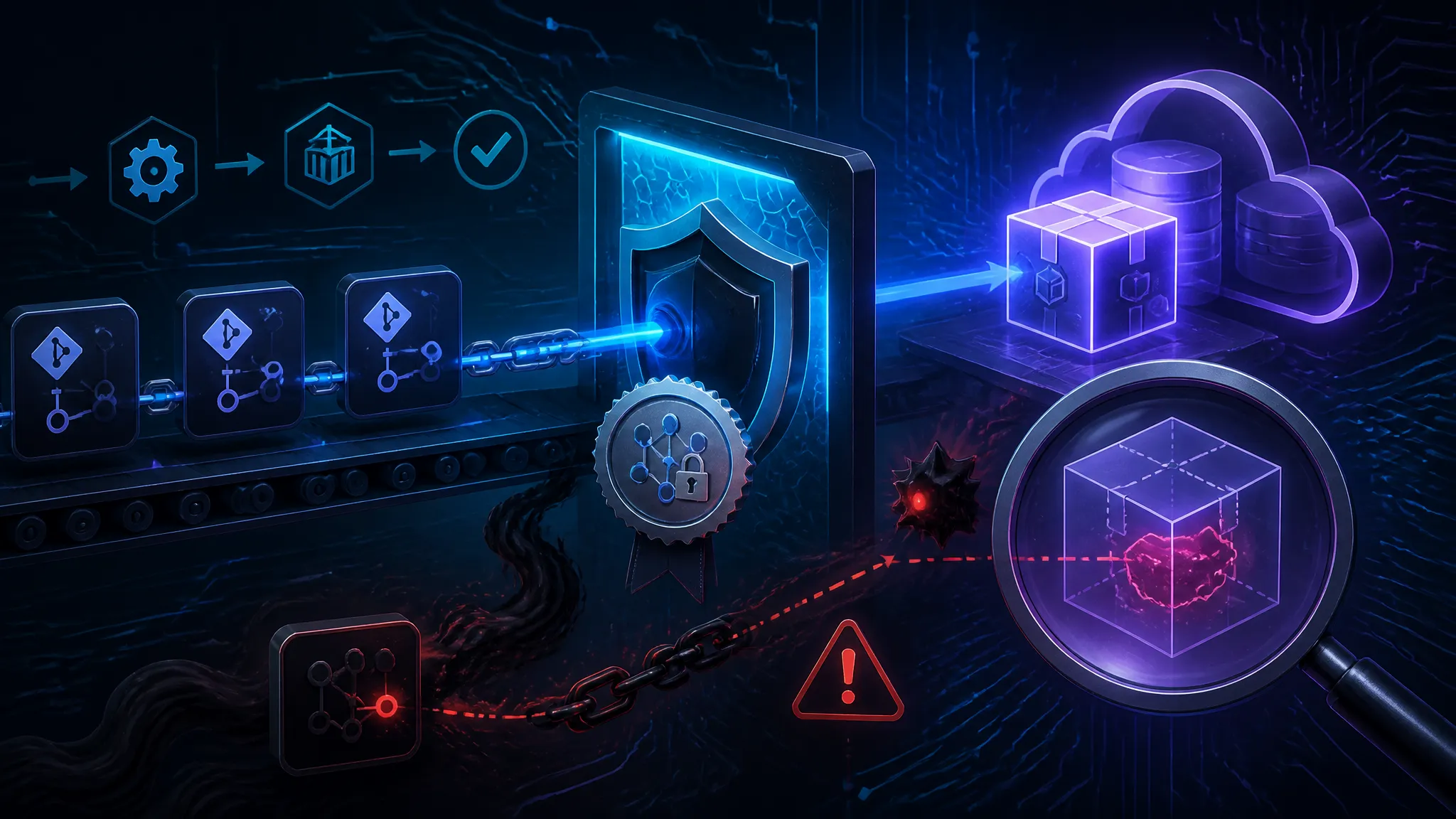
The bug class here is not “an LLM answered badly.” The risk appears when assistant output is connected to execution steps that can touch the repository, publish artifacts, or use secrets.
That means the real target is the workflow boundary:
- untrusted text enters the job
- the assistant processes that text
- the job turns that output into a shell command, file change, commit, or pull request update
- the GitHub token or other credentials make the change durable
If you read the report as a pure model issue, you will miss the part that matters to defenders: CI/CD privilege.
Separate confirmed reporting from inference so the walkthrough does not overstate the advisory
I like to keep two buckets separate:
| Bucket | What we know | What we should not assume |
|---|---|---|
| Confirmed from the public report | A Claude Code GitHub Actions flaw was reported on 2026-06-02, and the headline claim is repository compromise | Exact payload format, exact execution path, and whether the flaw is in prompt handling, command composition, or workflow design |
| Reasonable inference | Any assistant workflow with write permissions and untrusted inputs is dangerous | That every Claude Code workflow is exploitable in the same way |
| Defensive takeaway | Reduce privilege, split read and write stages, and treat prompts as untrusted data | That “AI assistant” means “safe automation” |
That framing keeps us honest and still useful.
Why AI-assisted GitHub Actions are a dangerous trust boundary
I usually start by asking one question: if this job goes wrong, what can it actually touch?
With ordinary CI, the answer is already uncomfortable. With an assistant in the loop, it gets worse, because the job is not only executing code; it is also interpreting language. That gives attackers a second way to shape behavior.
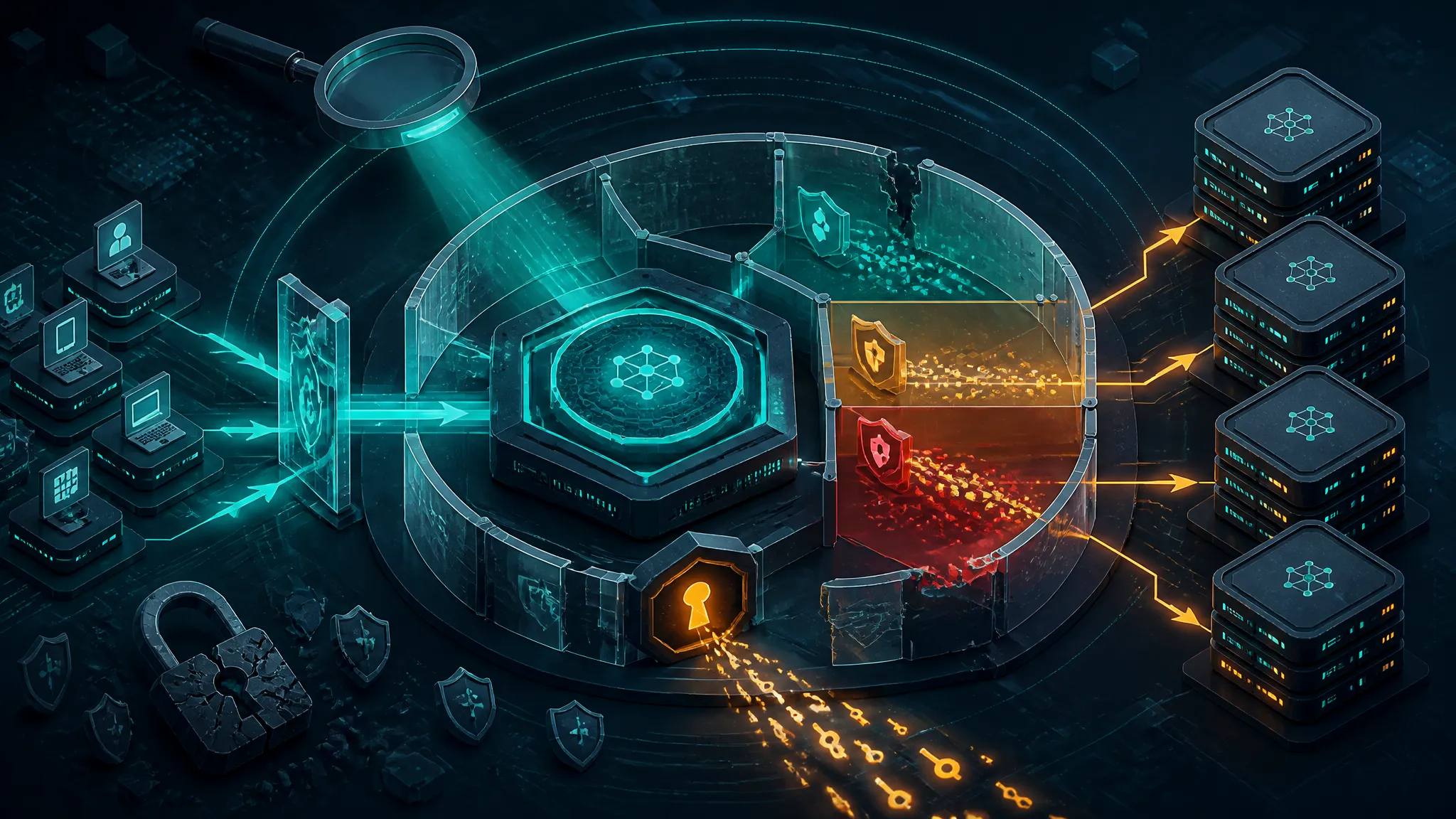
GitHub Actions jobs often inherit repo write access, secrets, and deployment credentials
A lot of workflow files are written for convenience:
contents: writeso the bot can push updatespull-requests: writeso it can comment or open PRs- repository secrets for external services
- environment protection rules that still allow a privileged deployment after the job passes
That setup is normal for release automation. It is not normal for an assistant job that reads issue text or PR comments. Once those two concerns are mixed, the assistant is no longer a helper. It is a privileged operator that can be steered by attacker-controlled text.
Why teams trust assistant actions more than ordinary third-party Actions
I see this mistake a lot: teams review third-party Actions carefully because they look foreign, but they trust an assistant workflow because it feels “first-party” or “internal.”
That is backwards.
An assistant Action is often more dangerous than a generic build step because:
- it accepts natural language, which is easy to hide hostile instructions in
- it may chain multiple tools together
- it may synthesize shell commands from text
- people assume its output is advisory, then wire it straight into execution
So the workflow gets the trust of a maintainer, the reach of a bot, and the ambiguity of a prompt. That combination is exactly what attackers want.
The attack model: how hostile input can turn into repo control
The safest way to think about this is not “how do I exploit Claude?” but “where can attacker text enter, and what can the job do with it?”
Where attacker-controlled text enters the workflow: PR content, issue comments, prompts, and repository files
In real repos, attacker influence usually comes from one of these places:
- pull request titles or descriptions
- issue comments
- review comments
- labels or slash commands
- repository files in an untrusted branch
- artifacts or generated summaries from a previous job
- manual prompt fields in a dispatch workflow
Here is the common mistake: teams treat these sources as metadata, then pass them into the assistant without a validation boundary.
| Input source | Typical workflow use | Why it is risky |
|---|---|---|
| PR body | summarize changes, draft release notes, trigger checks | attacker controls text and can embed instruction-like content |
| issue comment | manual bot command | comment text can be shaped to alter behavior |
| repository file | code review or refactor input | untrusted branch content can influence the assistant |
| workflow dispatch input | human prompt | if exposed publicly, it becomes another injection surface |
The assistant does not need to “understand” the attack for the workflow to fail. It only needs to transform untrusted text into an action.
How an assistant action can transform untrusted text into shell commands, file edits, or pushed commits
The dangerous part is usually not the model’s text answer. It is the bridge from text to execution.
A workflow can cross that bridge in several ways:
- building a shell command from prompt text
- writing model output directly into a file
- using assistant output as a git commit message or branch name
- allowing the assistant to decide which files to edit
- using tool calls that fetch, patch, or push repository state
Once the assistant can write files, it can often make changes that look legitimate enough to pass a quick glance. If it can also push commits, it can turn a soft review problem into a hard compromise.
A simple rule helps here: if untrusted text can influence any of these boundaries, treat the workflow as unsafe until proven otherwise.
Where the blast radius comes from: secrets, tokens, cached state, and write permissions
The impact grows quickly when the job can reach more than the working tree.
The main blast-radius multipliers are:
GITHUB_TOKENwith write permissions- repository secrets for package registries, cloud providers, or deployment systems
- cached state that persists between runs
- artifacts that can be consumed by later jobs
- job summaries or logs that leak metadata about the repo or environment
Even if the assistant never sees a secret directly, a job that can push commits or create pull requests can still compromise the repo. If it can also touch deployment credentials, the issue moves from repo tampering to supply-chain risk.
The GitHub Actions mechanics that make the flaw dangerous
This is where the bug becomes real. GitHub Actions has enough nuance that a workflow can look safe while still running with far more privilege than the author intended.
pull_request versus pull_request_target and why the distinction matters
This distinction has burned teams for years.
pull_requestruns in the context of the pull request and is usually the safer option for untrusted contributions.pull_request_targetruns in the context of the base repository, which means it can access secrets and write-capable tokens from the target repo.
The risk is not just the trigger. It is what you do after the trigger fires.
If a pull_request_target workflow checks out the PR head, reads attacker-controlled files, or feeds the PR content into an assistant that can write back, you have effectively given untrusted input a privileged lane.
That pattern is especially dangerous when a bot is supposed to “help” with review or triage. The intention is benign. The privilege model is not.
contents: write, pull-requests: write, and broad default permissions
Permissions are where a lot of workflow risk hides in plain sight.
If a job has contents: write, it can push commits.
If it has pull-requests: write, it can open or update PRs.
If it inherits broad defaults, every step gets more power than it needs.
I prefer a default-deny posture:
- set workflow defaults to read-only
- grant write permissions only to the exact job that needs them
- avoid using the same job for both inspection and mutation
That separation is not paperwork. It is the difference between “the assistant can analyze a request” and “the assistant can rewrite the repository.”
The hidden risks in checkout, artifacts, caches, and job summaries
A few workflow features deserve special attention:
actions/checkoutpulls repository contents into the runner, which is fine when you trust the source, but dangerous when you do not- artifacts can carry data across job boundaries, so a poisoned input in one stage can shape later stages
- caches can preserve state that an attacker may influence indirectly
- job summaries are visible to users and can unintentionally expose environment details
The mistake is to treat these as convenience features only. They are also data transport mechanisms. In a workflow with an assistant, that means they can become privilege transport mechanisms too.
A safe way to reason about the flaw in your own repo
I would not start with a live exploit test. I would start with a toy workflow and a strict no-secrets rule. The goal is to trace data flow, not to prove compromise.
Build a toy workflow that uses no secrets and no production branches
Here is a minimal pattern I would use in a throwaway repository:
name: assistant-sandbox

on:
  issue_comment:

permissions:
  contents: read

jobs:
  inspect:
    runs-on: ubuntu-latest
    steps:
      - name: Show the raw comment text
        run: |
          printf '%s\n' "${{ github.event.comment.body }}"

      - name: Keep the text as data
        run: |
          node -e 'const msg = process.env.COMMENT_TEXT; console.log("length:", msg.length)' \
            COMMENT_TEXT="${{ github.event.comment.body }}"
This does two useful things:
- it shows where the attacker-controlled string enters the job
- it keeps that string in a data-only path instead of handing it to a shell as executable syntax
The point is not that this exact job is useful. The point is that it makes the trust boundary visible.
Trace the data flow from event payload to action input to execution step
When I audit one of these workflows, I draw the path on paper:
- GitHub emits the event payload.
- The workflow extracts a field from that payload.
- The field becomes an input to the assistant or a script.
- The assistant generates output.
- The next step decides whether that output is data or command text.
- Git or the GitHub API performs the side effect.
The dangerous boundary is step 5. If you cannot explain exactly when a string becomes executable, you do not have a safe workflow yet.
Log the exact command boundaries so you can see where untrusted content crosses into execution
A lot of risk disappears when you force the workflow to print boundaries clearly.
For example:
- log the raw input before any transformation
- log the sanitized version separately
- log the exact command that will run, but not secret values
- fail the job if the command contains characters you did not expect
I like to ask a simple question during review: “Could I hand this string to a teammate and have them predict whether it will be treated as data or code?” If the answer is no, the workflow is too ambiguous.
Reproducing the exposure pattern without creating a harmful demo
The goal here is not to weaponize anything. It is to prove whether the workflow has unsafe reach.
Use a throwaway repository and a harmless prompt that only proves command influence
A safe test case is a throwaway repo with a workflow that accepts a benign string and writes a marker file in a sandbox directory.
You can then check whether the job:
- writes only to the allowed directory
- modifies branch state outside the intended path
- produces a commit without approval
- tries to reach data it should not need
A harmless input like marker-123 is enough to confirm whether the assistant or script path is under control. You do not need an exploit payload to see whether the job is over-privileged.
Observe whether the action can read files it should not need, modify branch state, or expose metadata
I would verify three things in the throwaway repo:
| Check | What you are looking for | Why it matters |
|---|---|---|
| File access | can the job read files outside the expected scope? | broad read access often precedes broader abuse |
| Branch mutation | can it commit or push without human review? | this is the line between analysis and takeover |
| Metadata exposure | can it print token scopes, repo details, or environment hints? | metadata is often enough to plan the next step |
If any of those checks pass when they should fail, the workflow is too powerful for untrusted input.
Verify what changes when permissions are narrowed or the job is split into read and write stages
Then tighten the workflow and rerun the same benign test.
Change one variable at a time:
- remove
contents: write - remove
pull-requests: write - move assistant analysis into a job with read-only permissions
- move commit or PR creation into a separate job that only runs after review
If the unsafe behavior disappears when permissions are narrowed, you have learned something useful: the issue is not only the assistant. It is the privilege shape of the workflow.
Repository indicators that you should treat as high risk
There are a few patterns I now treat as warnings on sight.
Workflows triggered by comments, PR text, labels, or external events
Comment-triggered and label-triggered workflows look convenient, but they are also easy to abuse if they are wired to privileged jobs.
The higher the trust in the trigger text, the higher the risk. Anything that turns a human-readable string into an automation command should be reviewed as if it were untrusted input, because often it is.
Jobs that run assistant tools before review or on untrusted branches
If the assistant runs before a human sees the diff, the bot becomes the first reviewer and the first executor. That is usually the wrong order.
I get nervous when I see:
- assistant tools on forked PRs
- assistant tools on branches from unknown contributors
- assistant tools that can create commits before approval
- assistant tools that run in the same job as release or deployment steps
That is the kind of architecture that turns a helpful feature into an entry point.
Reusable workflows and composite actions that hide privilege inheritance
Reusable workflows are useful, but they can hide where privilege actually comes from. Composite actions can do the same thing.
If you cannot answer these questions quickly, the workflow needs more review:
- Which job owns the token?
- Which step has write access?
- Which action can see secrets?
- Which code path runs on untrusted input?
Privilege inheritance is where a lot of teams get surprised. The YAML looks small. The actual trust boundary is not.
Workflow changes that materially reduce risk
This is the part I would want every team to copy into their own policy.
Set default permissions to read-only and grant write access only to the exact job that needs it
Make read-only the default, not a special case.
That means:
- workflow-level permissions start at read-only
- only one job gets write access
- write access is scoped to the minimal repository action required
If the assistant is only reviewing or summarizing, it should not own a write-capable token. If it must create a patch, let it write a patch artifact, not commit directly.
Split analysis from mutation so the assistant cannot both inspect untrusted input and publish changes in the same job
This is the cleanest design change I know.
One job can:
- read untrusted input
- analyze it
- generate a report or patch artifact
A separate job can:
- run only after review or approval
- apply the patch
- push the commit
- publish the release
If you keep both steps together, the assistant effectively becomes both reviewer and publisher. That is too much power for one execution context.
Pin every third-party Action by commit SHA and review updates like code changes
This is basic hygiene, but it still gets missed.
Use commit SHAs, not floating tags, for third-party Actions. Review updates the same way you review code changes. A tag like v3 is convenient; it is also a moving target.
For assistant workflows, dependency pinning matters even more because the action logic itself is part of the trust boundary.
Keep secrets out of early pipeline steps and use short-lived credentials where possible
If the first stage of the workflow can reach production secrets, the workflow is already too open.
Prefer:
- no secrets in analysis jobs
- short-lived credentials instead of long-lived tokens
- environment protections for any job that must deploy or publish
- OIDC-based access where your infrastructure supports it
The most useful secret is the one the attacker never gets a chance to reach.
How I would redesign a Claude Code workflow for a safer repository
If I were reviewing a Claude Code GitHub Actions setup today, I would redesign it around review first, mutation later.
Put Claude Code in a read-only review job that can suggest diffs but cannot push
I would let Claude Code help with:
- summarizing changes
- drafting review notes
- proposing a patch
- identifying missing tests
But I would not let that job:
- push commits
- open release tags
- publish packages
- access deployment secrets
That keeps the assistant useful without making it authoritative.
Move commit creation, release publishing, and branch updates into a separate human-approved job
Once a patch is approved, a second job can do the actual mutation.
That job should have:
- a very small permission set
- explicit branch protection requirements
- a clear approval gate
- no direct exposure to raw untrusted prompt text
This separation is especially important if the assistant is fed text from comments or PR descriptions. The review job can inspect that text. The mutation job should not.
Require branch protection, signed review gates, and explicit approval for bot-authored changes
Bots are convenient, but bot-authored changes deserve more scrutiny, not less.
I would require:
- branch protection on protected branches
- at least one human review for bot-generated changes
- signed or traceable commits where appropriate
- explicit approval before any workflow with write access runs
If the repository is important enough to automate, it is important enough to gate.
Checks to run before you re-enable the workflow
Before I would let a workflow like this back into production, I would run a short checklist.
Confirm the event trigger cannot be abused by forked PRs or unauthenticated comments
Look at the trigger first.
Ask:
- Can a forked pull request trigger the privileged job?
- Can a public issue comment trigger a write-capable action?
- Can an external event hit the workflow without authentication?
If the answer is yes, you need to know exactly why that is safe. In most repos, it is not.
Enumerate every secret and verify whether the job can actually reach it
Make a secret inventory for the workflow.
For each secret, ask:
- Is it needed in this job?
- Is it available before review?
- Can a step that processes untrusted input read it?
- Does the job ever print related metadata into logs or summaries?
This sounds tedious, but it finds the shortcuts that create incidents later.
Test the least-privilege path with a malicious-but-safe input and confirm the job fails closed
Use a harmless string with odd punctuation, quotes, and shell metacharacters in a sandbox repo. The job should treat it as data, not execution.
Then verify that the workflow:
- does not interpolate the string into a shell command
- does not write outside the approved path
- does not push changes without approval
- fails when write permissions are absent
If a workflow still mutates state with write permissions removed, you found a design bug. If it fails closed, that is what you want.
What this bug says about AI-powered CI/CD tools in general
The lesson here is broader than Claude Code.
The core failure mode is not intelligence; it is confused trust between instruction text and execution context
People often talk about AI tools as if the model is the problem. In practice, the model is usually just the amplifier.
The real failure mode is this:
- instruction text is treated like a trusted command
- command execution is allowed near untrusted content
- repository mutation happens in the same context as interpretation
That is a classic confused-deputy problem, dressed up in modern syntax.
Prompt handling, command execution, and repo mutation should be treated as separate trust domains
If there is one architectural rule I would keep, it is this:
- prompt handling is data processing
- command execution is privileged action
- repository mutation is state change
Do not collapse those into one job unless you are comfortable giving untrusted text a path to write access. Most teams should not be.
Practical defense checklist for teams using assistant Actions
Here is the checklist I would put into a team playbook.
Reduce permissions, isolate jobs, pin dependencies, and review workflow diffs
Start with the basics:
- default to read-only permissions
- split analysis and mutation into separate jobs
- pin third-party Actions by commit SHA
- review workflow changes as carefully as application code
- keep secrets out of early steps
If your workflow mixes review and publish logic, split it.
Add policy checks for tool calls, outbound network use, and branch writes
For assistant-heavy workflows, I would also add policy controls for:
- unexpected shell execution
- unexpected network access
- unapproved git pushes
- unexpected writes outside the working directory
- assistant tool calls that cross into deployment steps
You do not need to block all automation. You do need to know when the assistant is stepping outside its lane.
Treat AI assistant Actions as privileged automation, not as a harmless productivity add-on
That is the mindset shift.
An AI assistant in GitHub Actions is not a chat sidebar. It is automation with a token, a repo view, and usually some path to side effects. If the workflow is wrong, the assistant will faithfully help the attacker use it.
Further reading and verification points
Link the public report, GitHub Actions permission docs, and your internal workflow policy
If you want to verify the mechanics behind this post, start with:
- the public report that surfaced the Claude Code GitHub Actions flaw
- GitHub’s documentation on workflow syntax
- GitHub’s documentation on permissions for the
GITHUB_TOKEN - your internal policy for repository automation and release workflows
Those docs are useful because they show the mechanics that turn a workflow mistake into a repo compromise.
Note any uncertainty in the source and avoid claiming exploit details that were not publicly confirmed
I want to be explicit about one thing: the source material available here is thin. The headline claim is strong, but the precise exploit chain is not spelled out in the snippet I received.
So if you are writing an internal note or incident summary, keep the language tight:
- say what the public report claims
- say what you verified in your own workflow
- say what remains unconfirmed
- do not invent payloads, versions, or hidden behaviors
That discipline matters. It keeps the report useful without turning speculation into fact.