Finding and Blocking RedC2 in Linux CI with npm Security Checks
What the report says about RedC2 in malicious npm packages
The public reporting is still thin, but the headline is enough to take seriously: malicious npm packages were reported to drop a RedC2 Linux implant to steal credentials and move laterally in CI environments.
Separate confirmed claims from what the reporting only implies
Confirmed by the report snippet and title:
- the packages were malicious npm packages
- the payload was described as a Linux implant
- the implant was tied to RedC2
- the stated goals were credential theft and network pivoting
Only implied, or not visible from the snippet:
- the exact package names
- the install path used to trigger execution
- whether the implant used
preinstall,install,postinstall, or another hook - whether “AI-powered” means model use, automation, or just marketing language
That split matters. I would not make the AI label the center of the story until a primary write-up or sample analysis backs it up. The real issue is older and more familiar: a malicious package runs during install, then it reads secrets, then it uses those secrets to move around.
Explain the reported impact in plain terms: credential theft and network pivoting on Linux CI runners
In practical terms, the reported impact looks like this:
- a CI job installs a dependency
- that dependency runs code during installation
- the code searches for tokens, keys, and environment variables
- it can exfiltrate those secrets over the network
- it can then use the runner as a stepping stone into other systems
On a Linux CI runner, that can mean cloud credentials, registry tokens, GitHub or GitLab tokens, SSH material, or access to internal services that a developer laptop would never see.
State the post’s position early: this is a supply-chain and CI hardening problem, not just a malware story
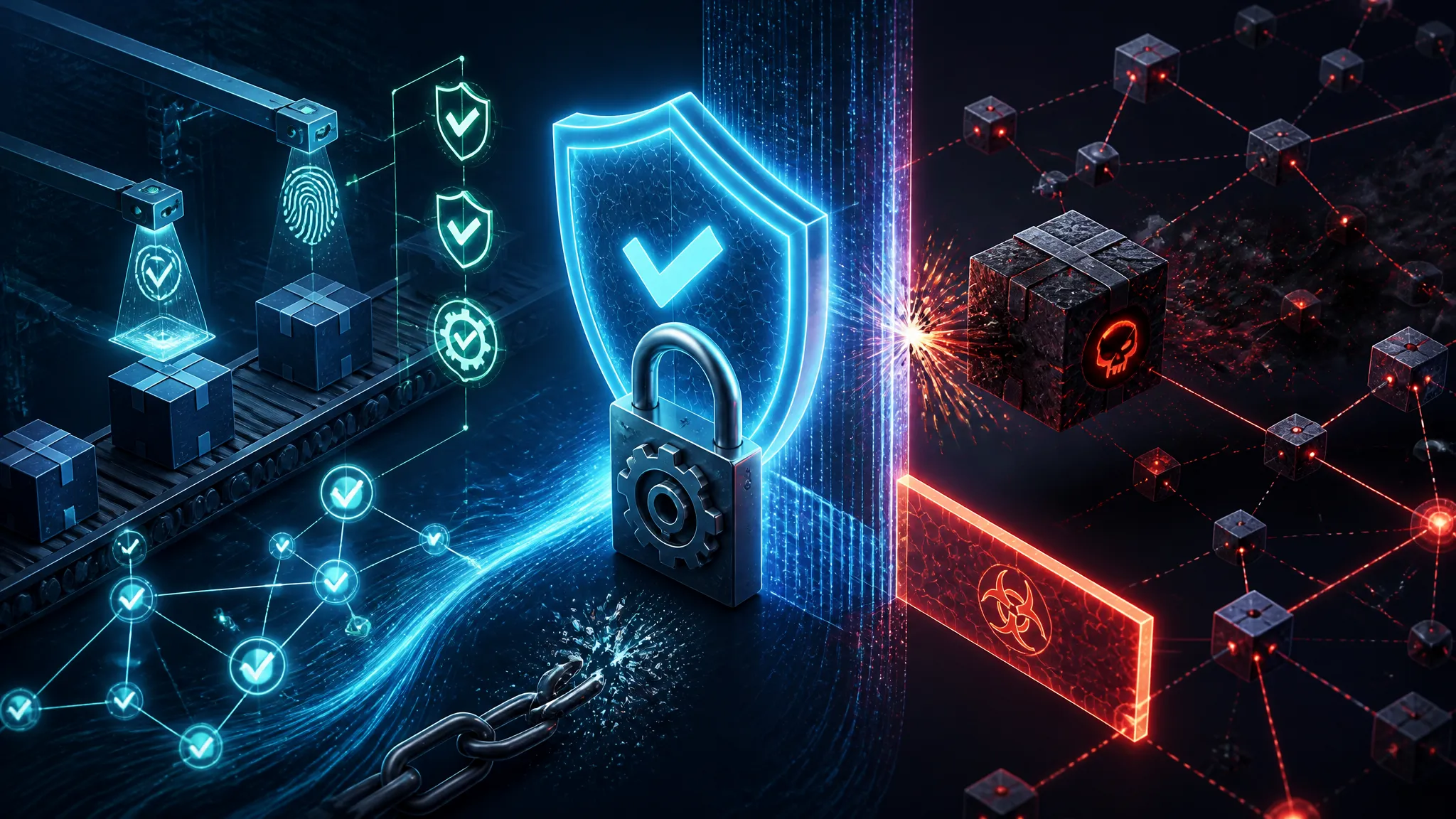
My view is simple: this is not mainly a “bad malware sample” story. It is a supply-chain control problem.
If your pipeline will happily execute arbitrary package lifecycle scripts with secrets mounted and outbound network access open, then the conditions for this class of incident already exist. The right fix is not a clever detection rule after the fact. It is reducing the places where a dependency can become code execution in the first place.
Why CI pipelines are the easiest place for a bad dependency to matter
Show how npm install lifecycle hooks can turn a dependency into code execution
npm packages can execute lifecycle scripts during install. The risky ones are usually preinstall, install, postinstall, and sometimes prepare.
That means a dependency is not just data. It can act like a program in your build.
A minimal example looks harmless until you remember that the script runs automatically:
{
  "name": "demo-app",
  "version": "1.0.0",
  "scripts": {
    "postinstall": "node ./scripts/setup.js"
  }
}
If a transitive dependency adds a similar hook, your pipeline may execute it before your app even starts building.
Explain why Linux CI agents are attractive targets because they often hold cloud tokens, package credentials, and repo access
CI runners are attractive because they combine three things:
-
Secrets
- cloud provider tokens
- npm or container registry credentials
- deployment keys
- repo tokens
-
Trust
- access to source code
- access to build artifacts
- access to internal package mirrors
-
Network reach
- outbound internet for dependency downloads
- access to internal services during integration tests
- access to artifact stores and metadata services
A runner does not need to persist to be useful. If a malicious package can read a secret once and send it out, the job has already paid off for the attacker.
Describe the difference between local developer installs and automated pipeline installs
Local installs are usually noisy and limited. Developers notice odd terminal output, broken builds, or a package that behaves strangely on their workstation.
CI installs are different:
- they are automated
- they are repeated
- they often run with broader credentials than a laptop
- they are less likely to be inspected interactively
So the real question is not “does it work on my machine?” The question is whether your pipeline lets a package do more than install files.
How a malicious package can become a RedC2 foothold
Walk through a realistic install-to-execution flow without giving abuse details
A realistic flow does not need anything fancy:
- a project adds a new dependency, or a transitive dependency changes
npm ciornpm installfetches the package- npm executes a lifecycle script
- the script inspects the environment and local filesystem
- it reads whatever credentials are already present
- it makes an outbound request to report back or fetch instructions
That is enough to establish a foothold. No browser exploit, no kernel exploit, no zero-day is required.
Explain how credential access and outbound network access make the implant useful even on ephemeral runners
Ephemeral runners are not safe by default. They reduce persistence, but they do not stop exfiltration.
If the job can:
- read
AWS_*orGCP_*style environment variables - access
.npmrc,.git-credentials, or SSH material - reach the internet or an internal callback endpoint
then the implant can still do damage inside the lifetime of a single job.
The important part is not longevity. It is timing. A short-lived process can still steal the one token that unlocks a registry, a cloud project, or a release pipeline.
Call out the misleading part of the “AI-powered” label and focus on the underlying tradecraft
The “AI-powered” label is the least interesting part until someone shows what it actually does.
It might mean:
- automated command selection
- dynamic payload generation
- language-model-assisted operator tooling
- or just branding to make the malware sound novel
I would not let that distract from the tradecraft underneath it: run code during install, harvest secrets, and use outbound access.
What npm security checks can actually catch
Use npm audit for known vulnerability metadata, but note that it does not prove a package is benign
npm audit is useful, but only for one job: checking known vulnerabilities in your dependency tree.
It does not tell you whether a package is malicious.
That distinction matters. A dependency can have a clean audit report and still contain a dangerous install script.
npm audit --production
This helps you find CVEs. It does not answer the question, “Will this package execute code I did not expect?”
Inspect package-lock.json, dependency diffs, and unexpected new transitive packages
The lockfile is where dependency drift becomes visible.
Look for:
- new direct dependencies
- new transitive packages with odd names
- version jumps that are larger than expected
- packages that appear only because another package changed its tree
A quick triage command is:
git diff -- package.json package-lock.json
If the diff shows a new package, ask why it exists and who reviewed it. If the package tree changed without a code review, that is a process failure, not a tooling glitch.
Check package scripts, tarball contents, and provenance before trusting a new dependency
Before you trust a package, inspect three things:
-
Scripts
npm view some-package scripts --json -
Packed contents
npm pack some-package --dry-run -
Provenance
- does the registry publish provenance metadata?
- is the package signed or verified by your internal process?
- is the package coming through a trusted proxy?
A suspicious result often looks like this:
{
  "preinstall": "node install.js",
  "postinstall": "node scripts/postinstall.js"
}
That is not proof of malice, but it is a good reason to stop and inspect.
Add a short example of command output that shows a suspicious script or unexpected package change
A dependency review should surface things like this:
$ npm view example-package scripts --json
{
  "preinstall": "node setup.js",
  "postinstall": "node telemetry.js"
}
or this:
$ npm pack --dry-run
npm notice === Tarball Contents ===
npm notice  2.1kB  install.js
npm notice  1.3kB  telemetry.js
npm notice  0.9kB  package.json
If a package claims to be a utility library and ships install-time code plus telemetry, I want a human to review it before CI ever sees it.
A practical detection workflow for Linux CI
Start with a dry-run or sandboxed install and watch for script execution
For a new dependency or a suspicious upgrade, test in a disposable environment first.
Useful patterns:
npm ci --ignore-scriptsfor a baseline install when scripts are not needed- a container or VM snapshot for repeatable testing
- separate jobs for dependency fetch and build execution
If the project truly needs lifecycle scripts, make that exception explicit instead of letting every package run by default.
Review filesystem writes, network egress, and process launches during dependency installation
When I want to know whether a package is doing more than it should, I watch three signals:
- new files written outside the expected build tree
- unexpected child processes
- outbound network calls during install
A simple Linux trace can help:
strace -f -e trace=process,file,network npm ci
If you see processes launching that do not belong to the build, or network activity during install that has no obvious reason, treat it as a red flag.
Show how to flag packages that request unusual permissions or touch secrets-related paths
Watch for packages that read:
$HOME/.npmrc$HOME/.ssh- cloud credential locations
- repo token files
- CI-provided secret directories
You do not need a full malware lab to spot this. A quick strace, a locked-down container, and a known-good baseline are often enough to show when a dependency is acting like a program instead of a library.
Blocking the threat before it reaches the runner
Disable lifecycle scripts by default when the build does not need them
My default recommendation is to disable lifecycle scripts unless the build has a documented reason to use them.
For many applications:
npm ci --ignore-scripts
is a better default than a blind install.
If you need scripts for a small set of packages, create explicit exceptions and review them.
Pin dependencies, enforce lockfiles, and require package review for new or changed direct dependencies
This is the minimum baseline:
- commit lockfiles
- pin versions where practical
- require review for any new direct dependency
- block surprise dependency tree changes in CI
If a PR changes package.json and package-lock.json, that is a security event as much as a build event.
Use a private registry or proxy with allowlisting, provenance checks, and package admission rules
A private registry or proxy gives you a place to enforce policy:
- allowlist known-good packages
- reject unapproved new packages
- require provenance where available
- mirror only what your org actually uses
That will not catch every malicious package, but it moves the decision point from “whatever npm serves right now” to “what our policy allows.”
Reduce blast radius with short-lived tokens, scoped secrets, and outbound network restrictions
Even if a package slips through, you can make the damage smaller:
- use short-lived credentials
- scope secrets to the narrowest possible job
- avoid mounting long-lived human tokens
- restrict outbound access from build jobs where feasible
A runner with no secrets and limited egress is much less interesting than a runner with broad cloud access and open internet.
What to do if a CI job already executed a suspicious package
Treat the runner as compromised until proven otherwise
If a suspicious package already ran, assume the runner is compromised.
Do not start by cleaning files. Start by limiting further access.
Rotate exposed credentials, revoke tokens, and inspect recent package and secret access
Your first actions should be:
- revoke CI tokens
- rotate registry credentials
- rotate cloud keys if they were present
- inspect recent access logs for package, repo, and secret use
If the runner touched deployment systems, include those in the response.
Preserve logs and build artifacts so you can confirm whether credential theft or pivoting actually happened
Before you wipe anything, preserve:
- CI logs
- environment dumps if they exist
- dependency install logs
- network logs
- build artifacts
Those records are what let you answer the hard question later: did the job just run, or did it also steal something and use it?
My conclusion: npm checks help, but policy and runner design do the real blocking
Summarize the recommended baseline for teams shipping Node.js in CI
My baseline for Node.js in CI is:
- lockfiles committed and reviewed
- lifecycle scripts disabled unless required
- dependency changes reviewed like code changes
- package provenance checked where possible
- secrets scoped and short-lived
- outbound network access constrained on runners
npm audit belongs in that stack, but only as one signal.
End with a clear takeaway that detection is useful, but prevention must live in pipeline controls
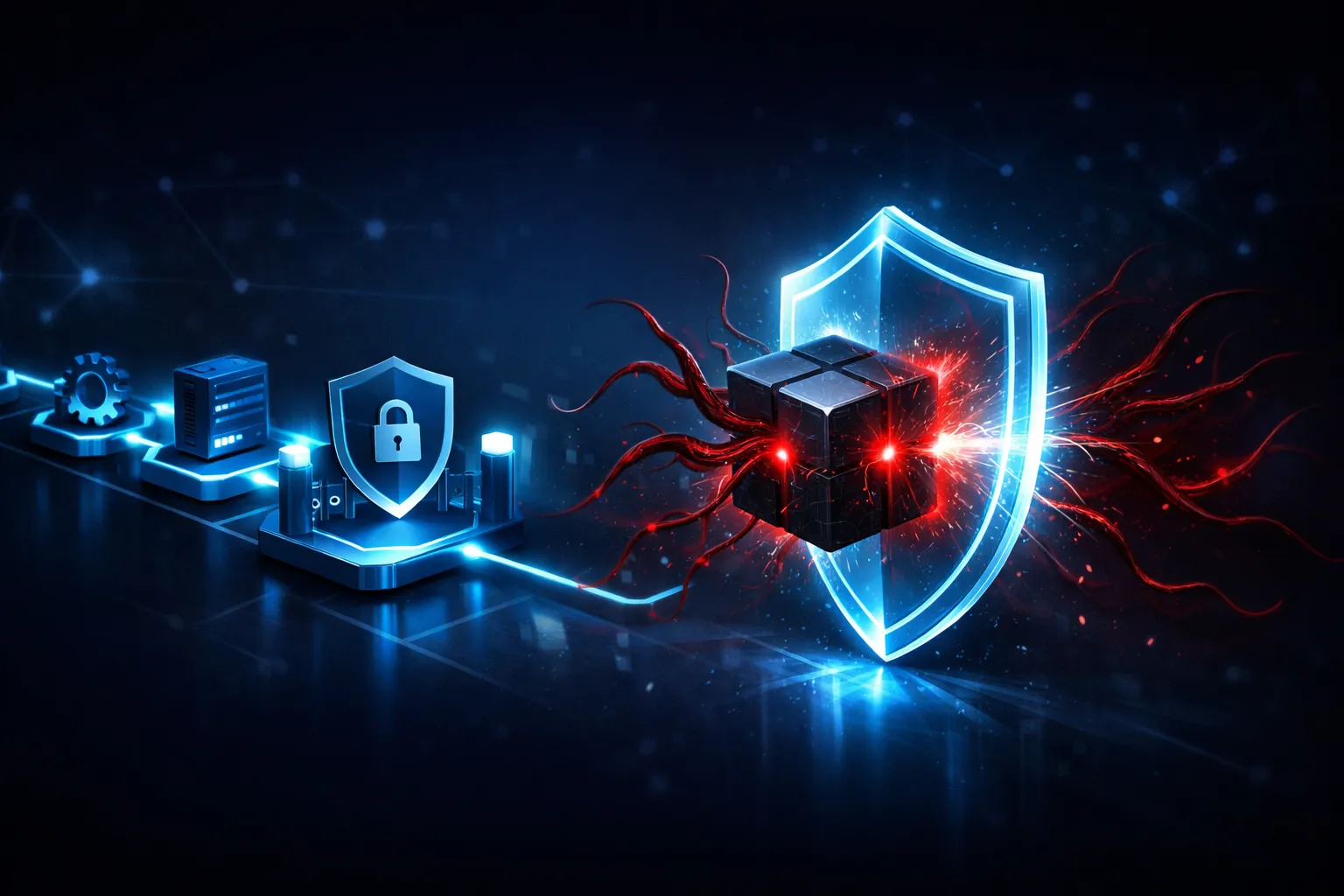
The takeaway is straightforward: detection helps you notice a bad package, but prevention is what keeps it from becoming a runner foothold.
If your pipeline still trusts every install hook by default, then the next RedC2-style package does not need to be clever. It only needs to be installed.
Further reading
Link to primary npm and Node.js documentation on package scripts, auditing, and provenance
- npm docs: scripts
- npm docs: audit
- npm docs: provenance
- npm docs: package-lock.json
- Node.js docs:
package.jsonand scripts
Add any official advisory, package registry guidance, or original research that supports the incident details
I did not have a primary incident write-up or package names in the source material here, so I am not linking a specific advisory for RedC2. If you have the original report or an upstream analysis of the sample, that should be the next source to read before making platform-wide policy decisions.