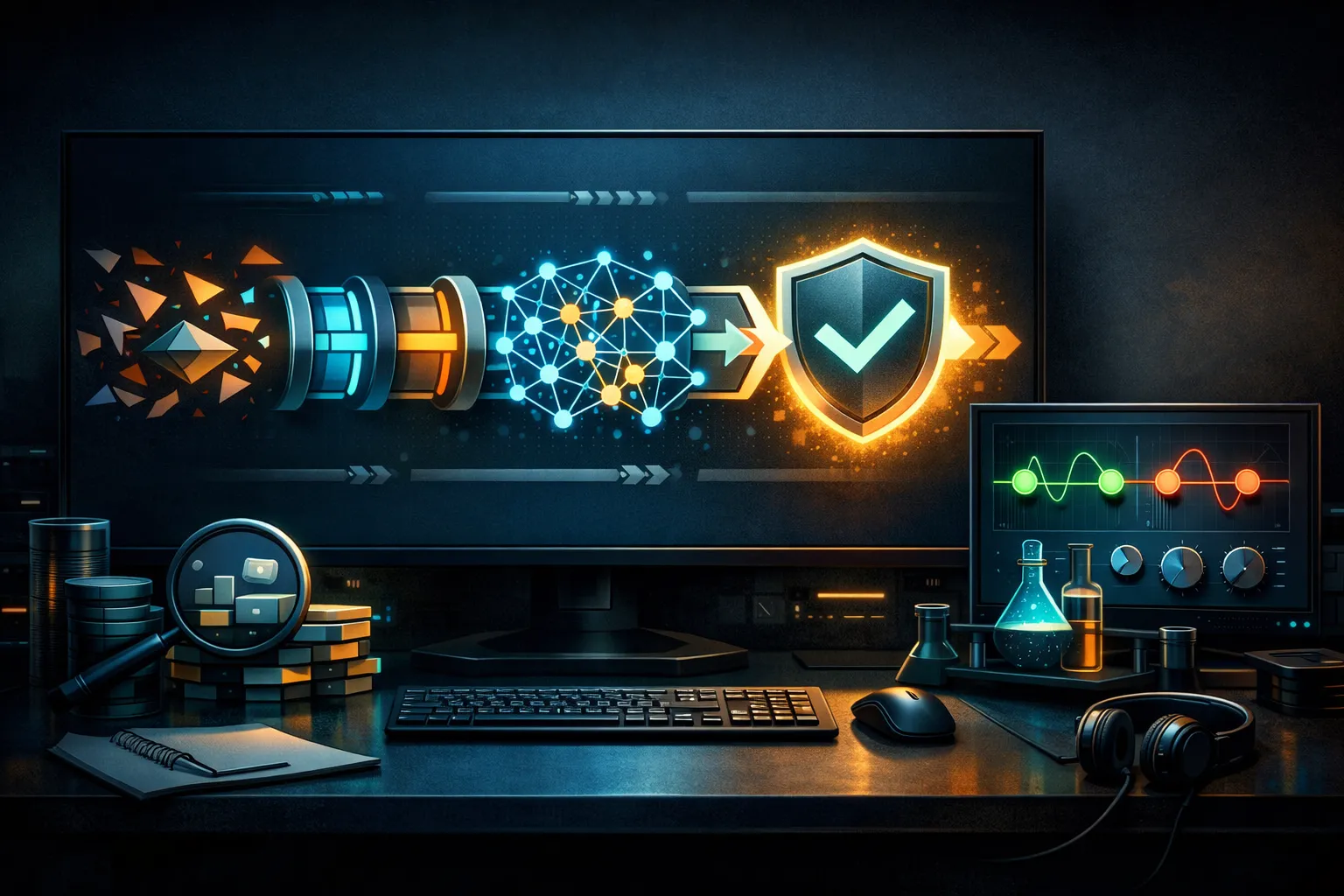
Analyzing the AI Phishing Kit Used Against Spanish Holiday Bookings: A Developer’s Field Guide
The public report is thin, but it still points to a real booking scam pattern. Spain is putting more emphasis on travel cyber awareness because AI-assisted phishing is going after holiday bookings, with Barcelona, Valencia, and Mallorca mentioned as the kind of high-value destinations attackers like to target. That is enough to make one practical point: this is not just a spam problem. It is a trust-boundary problem.
My read is straightforward: AI does not create a new phishing class. It makes the old one cheaper, faster, and more local-looking. For booking platforms, that alone can raise the hit rate.
What the report actually says
What is confirmed in the public write-up is limited:
- Spanish travel cyber awareness is being emphasized.
- The concern is AI phishing around holiday bookings.
- The report names holiday travel in Barcelona, Valencia, and Mallorca as part of the context.
What the public snippet does not confirm:
- the specific phishing kit vendor
- the operator behind it
- the exact delivery channel
- the exact booking brand or platform targeted
- whether the kit is used for credential theft, payment fraud, or both
That difference matters. A lot of coverage collapses “AI phishing” into one bucket. In practice, the risk sits in the workflow, not the label. If an attacker can steer a traveler into a fake booking, payment, or confirmation flow, the message generation is just the opening move.
Why booking platforms are a good target
High-trust moments that phishing copies well
Travel booking is one of the easiest places to fake urgency without looking obviously wrong.
A traveler expects:
- email confirmation links
- SMS or WhatsApp updates from a host, hotel, or agency
- payment retries
- invoice attachments
- identity verification requests
- cancellation or check-in reminders
That gives an attacker a ready-made story. The message does not need to be perfect. It only needs to feel plausible long enough for the victim to click before verifying.
From a system-design angle, booking platforms also have predictable state transitions:
- search
- reserve
- pay
- confirm
- modify
- cancel
- refund
Those transitions are easy to imitate in a fake flow. If the victim already expects a payment failure or document check, the phishing page can blend into the normal lifecycle.
Where attackers gain leverage from seasonal urgency
Holiday travel adds pressure in a way normal commerce often does not.
- People are booking on mobile.
- They are in a hurry.
- They are dealing with foreign currency, foreign phone numbers, and multiple languages.
- They are more tolerant of odd-looking UI if it appears to solve an immediate problem.
- They are more likely to accept a “fix this now or lose your booking” message.
That urgency is the real primitive the attacker exploits. AI just helps tune the message to the target’s language, location, and booking style.
How an AI phishing kit changes the threat model
Automated message generation and localization
The first change is scale.
A conventional phishing crew has to write messages by hand, translate them, and keep them consistent. An AI-assisted kit can generate dozens of versions quickly:
- Spanish, English, and mixed-language variants
- messages tuned to hotels, apartments, or package tours
- location-specific wording that names common travel patterns
- reworded templates for SMS, email, and messaging apps
That does not guarantee quality. It just raises the floor. Awkward grammar and rough translation used to be useful detection signals. AI strips away some of that noise.
What I would not claim is that AI makes phishing undetectable. It mostly makes the social engineering layer less brittle. The technical controls still matter more.
Fake booking flows, payment redirects, and credential capture
The second change is the page sequence.
A typical flow likely looks like this, based on common booking-fraud patterns:
- A lure message claims there is a payment issue, confirmation problem, or travel change.
- The victim clicks to a cloned booking page.
- The page asks for booking reference, email, card details, or identity data.
- The page either:
- forwards the victim to a real-looking payment processor, or
- captures the data directly and then shows a “processing” error
- In some cases, the kit also steals one-time codes or session tokens if the victim is redirected through a fake login step.
The important shift is that the kit may manage multiple collection points, not just a static form. That means the attacker can harvest:
- credentials
- card data
- billing address
- phone number
- booking references
- passport or ID fields
- OTPs or recovery codes
If the kit is connected to a backend panel, the operator can sort victims by value and automate follow-up messages.
A practical attack chain for Spanish holiday bookings
Initial lure channels and message formats
I cannot confirm the delivery channel from the public report, so this is inference based on how this scam class usually works.
The likely channels are:
- email claiming a booking or payment issue
- SMS saying the reservation is at risk
- WhatsApp messages from a “host,” “hotel,” or “support desk”
- social media direct messages for rentals or short-term stays
The message formats are usually short and transactional. They lean on one of four hooks:
- payment failed
- booking needs confirmation
- identity verification required
- cancellation deadline approaching
That pattern works because it maps to something the traveler already expects.
Landing page behavior and data collection points
A realistic phishing page in this space usually does not need advanced malware behavior. It only needs to collect the right fields and keep the user comfortable enough to continue.
The page often asks for:
- booking reference
- email address
- surname
- card number and expiry
- CVV
- address
- phone number
- device and locale metadata
If the attacker wants to extend the session, the page may also proxy or relay a second step, such as a login form or verification code entry.
From the defender’s side, the useful telemetry is not just the final submission. It is the chain:
- referrer
- first-seen timestamp
- redirect path
- user agent
- locale
- ASN or hosting provider
- page template ID
- form field names
That is what helps separate a one-off clone from a broader campaign.
What the attacker does with stolen data
The public report does not say what the operator does with the data, so anything here is conditional.
Likely uses include:
- booking account takeover
- fraudulent payment attempts
- resale of valid reservations
- extraction of refund value
- identity fraud if passport or ID data was entered
If the attacker has only a booking reference and email, they may still be able to trigger support workflows or social-engineer a change. If they also have a card and OTP, the impact gets much worse.
What I would verify on the platform side
Authentication and session controls
If I were auditing a booking platform, I would start with a simple question: what can happen from a bare link or a weakly verified session?
I would check:
- whether booking lookup requires more than booking reference + email
- whether account changes require step-up authentication
- whether session tokens are rotated after sensitive actions
- whether login sessions are tied to device risk signals
- whether password resets or email changes are rate-limited and alerted
| Control | What to check | Why it matters |
|---|---|---|
| Booking lookup | Reference + email alone should not expose too much | Easy to enumerate and easy to phish |
| Sensitive actions | Add step-up for payment, refund, and guest changes | Stops link-only abuse |
| Session binding | Rotate or re-verify on risky transitions | Reduces replay value |
| Alerts | Notify on changes to payout, contact, or card data | Gives the victim a chance to react |
Booking confirmation, payment, and refund workflows
This is where weak designs usually fail.
I would want to see:
- out-of-band verification for refund destination changes
- no sensitive action completed from a generic email link alone
- clear separation between informational emails and action links
- payment retries that happen only inside the authenticated app or a verified domain
- support staff tooling that shows the exact state transition history
The big mistake is treating confirmation emails as authority. They are not authority. They are just a notification channel.
Abuse detection, rate limits, and bot friction
A phishing kit that targets bookings often probes for valid references or account states. That means the platform should watch for abuse patterns, not just login failures.
Useful controls:
- rate limit booking lookups by reference, IP, and ASN
- flag repeated invalid reference/email combinations
- challenge suspicious traffic before revealing booking details
- monitor bursty activity around high-season destinations
- log template changes in booking emails so support can spot spoofed variants
I would also add one blunt rule: if a lookup endpoint tells an attacker whether a booking exists, it is already part of the problem.
What users and support teams should check first
Traveler-side warning signs that still matter
Even with AI-generated text, the old warning signs still help.
Tell travelers to check for:
- mismatched domains
- unexpected payment pages
- requests to move the conversation off-platform
- urgency that does not match the booking timeline
- requests for full card details or OTPs over chat
- language that sounds polished but slightly off in context
The best habit is still the boring one: do not follow the link. Open the booking app or type the known-good domain yourself.
Support playbooks for suspicious booking issues
Support teams should have a script, not improvisation.
When a suspicious booking issue comes in:
- verify the customer through a known-good channel
- check whether the message came from the platform’s real outbound system
- review recent changes to payment or contact data
- freeze sensitive actions if there is uncertainty
- preserve logs and message samples for takedown evidence
If a customer says they clicked a link and entered card details, the response should be immediate containment, not a long support queue.
Defensive design changes that raise attacker cost
Email, SMS, and WhatsApp verification strategy
A practical travel platform should reduce what can be done from a message alone.
Good patterns:
- use branded, signed email from a stable domain
- keep sensitive actions inside the app or authenticated web session
- make action links short-lived and bound to a verified session
- treat SMS and WhatsApp as notification channels, not authority channels
If a booking can be changed, refunded, or re-paid from a message thread, the attacker already has the shape of the exploit.
Domain, certificate, and brand-abuse monitoring
For this kind of scam, early detection is often a domain problem.
Watch for:
- lookalike domains
- newly registered domains that mimic travel brands
- certificates issued for suspicious booking-related hostnames
- fake landing pages with copied booking widgets
- rapid reuse of the same template across multiple destinations
A good monitoring stack should combine DNS, certificate transparency, and content matching. The goal is not perfect prevention. It is reducing the time between first use and takedown.
Better incident logging and rapid takedown evidence
When abuse happens, the defenders who win are the ones with clean evidence.
Log:
- exact URL paths
- timestamped redirects
- screenshot-free HTML captures
- referrer chains
- IP and ASN data
- form field names
- message text and sender metadata
- victim-reported booking identifiers, if appropriate and safe to store
That data helps with registrar complaints, hosting abuse reports, and internal incident review. Without it, every takedown starts from zero.
What is confirmed, what is inferred, and what needs more data
What is confirmed by the public report:
- Spain is treating travel cyber awareness as a current issue.
- AI phishing is being linked to holiday booking scams.
- Barcelona, Valencia, and Mallorca are part of the context.
What I infer:
- the kit likely automates localization and message variation
- fake booking and payment pages are probably involved
- the operator’s goal is likely credential, payment, or booking-data theft
What needs more data before anyone claims certainty:
- the exact lure channel
- the exact victim journey
- the kit operator
- the scale of the campaign
- the real-world loss figures
My position is that the defensive priority should not be “detect AI.” That is the wrong target. The priority is to harden booking and support workflows so a convincing message cannot unlock sensitive actions on its own.